Who is each configuration best suited to?
How much room you need for fresh and frozen food depends more on what you usually store than on the total capacity shown.
Households mindful of their electricity use
If you’re replacing an old or oversized appliance, compare its annual energy consumption and the capacity of each compartment before paying extra for additional features. ADEME notes that refrigeration appliances run continuously, and that an oversized appliance can push up your bills.
Households that use both fresh and frozen food
If your regular shop includes both, a fridge-freezer can bring everything together in one appliance. Just make sure each compartment suits what you actually store.
Households that stock up on frozen food
If you often freeze prepared portions or food bought in bulk, start by checking the freezer capacity and how easy it is to reach your food. A separate freezer also needs a suitable space and adds another appliance that runs continuously.
Brands to compare by model
The features mentioned below apply to specific models or ranges. They don’t replace checking the label and product information for the model you’re considering.
Bosch
Worth looking at if dedicated fresh food zones and fridge-freezer settings are important to you.
- Bosch says its KGN49AIBT fridge-freezer has Total NoFrost and a VitaFresh XXL zone close to 0 °C.
- These features, along with the energy rating and noise level quoted for the KGN49AIBT, don’t automatically apply to other Bosch models.
Liebherr
Worth comparing if you value dedicated fresh food compartments, whether you’re looking for a fridge or a fridge-freezer.
- Liebherr says the BioFresh zone in some models maintains a temperature close to 0 °C for certain foods.
- The 386 l capacity and 34 dB noise level quoted for the RBbsb 525i apply to that model alone; they don’t prove that food will keep better in every situation.
Whirlpool
Worth considering if avoiding manual defrosting is a practical priority for your fridge-freezer.
- Whirlpool says the Total No Frost feature on the W7X 83A W eliminates the need for manual defrosting and includes a FreshBox+ compartment.
- No Frost alone isn’t enough to assess energy use: check the kWh/year figure and capacity of the model you’re considering.
Beko
Worth comparing if the layout of the fruit and vegetable compartment is one of your priorities.
- Beko describes HarvestFresh as three-colour LED lighting installed in a dedicated compartment.
- Don’t assume the food-preservation benefits claimed by the brand apply to every model or use. Also check capacity, noise and annual energy consumption.
Appliances for fresh food, frozen food or both
This selection includes fridge-freezers for keeping fresh and frozen food in one appliance, as well as a convertible chest freezer for dedicated frozen storage. First choose the configuration that suits what you store, then check the energy label for the models on your shortlist.
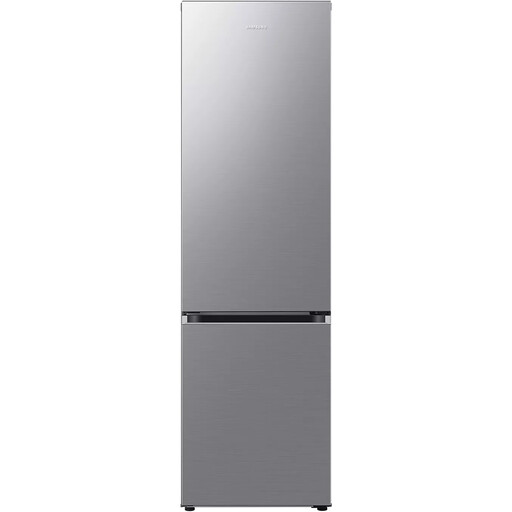 Image unavailable
Samsung RB38C603CS9, 390 L fridge-freezer, class C
Worth considering if you want to keep fresh and frozen food in one fridge-freezer. It has a stated capacity of 390 L; check how that’s split between compartments and the kWh/year figure on the label for this model.
View on Joybuy
 Image unavailable
Haier HTW5618ENMG, 360 L 3-door fridge-freezer
Worth considering if you’re looking for a fridge-freezer with separate storage areas. The model title lists Total No Frost, My Zone, Wi-Fi and a class E rating; check how much room each compartment offers and the annual energy consumption before choosing.
View on Joybuy
 Image unavailable
Candy CFQQ5T817EPS, 467 L 4-door fridge-freezer
Worth considering if your fresh and frozen food stocks justify a 467 L multi-door fridge-freezer and you have enough space for it. The model is listed with Total No Frost and a class E rating; compare the capacity of each compartment and the kWh/year figure.
View on Joybuy
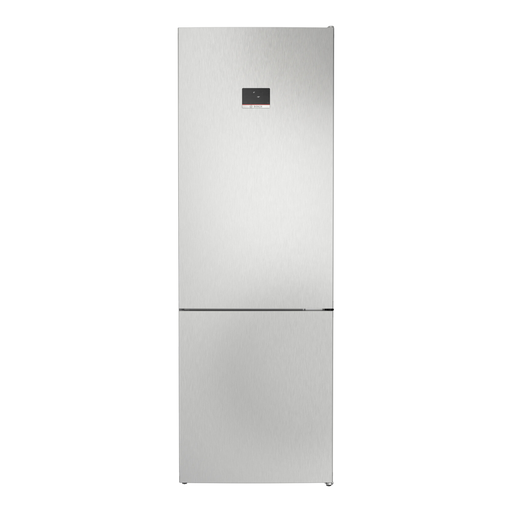 Image unavailable
Bosch KGN497LDF, 440 L fridge-freezer, class D
Worth comparing if you need a fridge-freezer with a stated capacity of 440 L. Check the space available, the separate fridge and freezer capacities, and how the freezer needs to be defrosted: you can’t tell from the fridge-freezer format alone.
View on Joybuy
 Image unavailable
AUCMA, 291 L convertible fridge-freezer chest
Worth considering for dedicated storage if another appliance already meets your fresh food needs. This class E chest freezer is described as convertible between fridge and freezer modes, with a removable basket and defrost drain; check which mode you need, how easy it is to reach inside and its annual energy consumption.
View on Joybuy
Frequently asked questions
Is the energy rating letter enough to compare two appliances?
No. First choose the type of appliance and a suitable capacity, then check its annual energy consumption in kWh. The European Commission says the label for household fridges and freezers also shows compartment capacities and noise levels; its QR code links to model information in EPREL.
Should you choose a No Frost model?
No Frost may suit your needs if you want to avoid manual defrosting and the feature covers the compartment in question. Check exactly what it applies to on the model you’re considering, and still compare capacity and kWh/year.
How can you check whether a fridge can be repaired?
Check the documentation and spare parts information for the specific model. The list of appliances covered by France’s mandatory repairability index, published by the French Ministry of the Economy, doesn’t include fridges or freezers. EPREL may provide further information when it’s available for the model.
What should you arrange for your old appliance when replacing it?
Before ordering, confirm the collection and disconnection options offered by the retailer for your address. Ecologic also lists partner collection points for used electrical equipment, which is then directed to the appropriate recycling schemes.
Will a larger fridge necessarily mean less forgotten food?
No. Extra capacity only helps if the layout suits what you store and how you use it. ADEME recommends checking what food you already have before shopping and tidying your fridge regularly to avoid buying duplicates.


