First, work out how much space you need for fresh and frozen food, based on the size of your household and how often you shop. A table-top or one-door fridge may be enough if you shop little and often. A fridge-freezer suits regular use of both compartments, while a multi-door model calls for careful checks of the available space and delivery route. Whatever you choose, the appliance’s dimensions don’t replace the ventilation and door-opening requirements for that specific model.
Who are these formats for?
Small home and frequent shops
If your kitchen is compact and you tend to buy small amounts, start by measuring the space and checking how the door opens. Que Choisir associates table-top models with studio flats, but their limited capacity still needs to suit your requirements for fresh and frozen food.
Households that shop weekly
If you need to store fresh food for the week as well as a supply of frozen food, compare the capacity of both compartments. Que Choisir recommends choosing a capacity that suits the number of people in your household, how often you shop and how much frozen food you eat.
Households that buy in bulk
If you shop in bulk or less often, a larger model may be a good fit, as long as its internal layout suits the food you store. For American-style fridges, Que Choisir also highlights the importance of checking the space they take up and their energy consumption. Compare these factors model by model.
What sets fridges apart?
First, work out how much storage space you need, then check that the format you’re considering will fit your kitchen and the delivery route. A large total capacity doesn’t tell you how much space there’ll be for fresh or frozen food.
Table-top
Consider this if: you shop little and often and have limited height available.
Bear in mind: storage space is limited, and an ice box won’t necessarily replace a freezer.
Fridge-freezer
Consider this if: your regular shops call for separate spaces for fresh and frozen food.
Bear in mind: width alone doesn’t tell you the depth or how the capacity is divided between compartments.
One-door fridge with freezer compartment
Consider this if: most of your storage is for chilled food and you keep only a small amount of frozen food.
Check: what type of compartment it is before relying on it to freeze fresh food.
Multi-door
Consider this if: you buy in bulk and your kitchen and delivery route can accommodate a large appliance.
Bear in mind: it takes up a lot of space, and you should check each model’s annual energy consumption.
| Factor |
What to check |
Who this matters to |
| Available space |
Measure the width, height and depth, and check how the doors open. Refer to the model’s manual for ventilation clearances. |
In a small kitchen, I want to be able to open the appliance without blocking nearby cupboards, even if that means limiting how much I store. Around 25% of consumers prioritise the space an appliance takes up. |
| Balance of fresh and frozen food |
Compare the usable capacity of each compartment rather than looking at the total capacity alone. |
For my weekly shop, I need enough space for everyday meals without sacrificing my supply of frozen food. Around 31% of consumers prioritise this balance. |
| Big shops and freezing |
Check the freezer capacity and, if you freeze fresh food, the stated freezing capacity in kg/24 h. |
When I leave longer between shops or store a lot of frozen food, a freezer that’s too small forces me to rethink what I can keep. Capacity is the main consideration for around 25% of consumers. |
| Installation conditions and noise |
Check that the climate class suits the room, and look at the stated noise level and ventilation instructions. |
In a studio flat or open-plan kitchen, I want an appliance that’s suitable for the room and won’t bother me in everyday life. Installation and noise are the main priorities for around 19% of consumers. |
Mistakes to avoid before you buy
-
Choosing based on total capacity alone
Two fridges with a similar total capacity can divide the space between fresh and frozen food very differently. Que Choisir also distinguishes between an ice box, which is designed to keep already-frozen food for a limited time, and a freezer suitable for other uses.
Estimate separately how much you’ll store in each compartment. If you freeze fresh food, check the compartment’s specifications and the model’s freezing capacity.
-
Measuring only the final position
An appliance may fit in its space but leave too little room for the doors to open or for air to circulate. With larger models, the route to the kitchen matters too. Que Choisir points out that American-style fridges take up a particularly large amount of space.
Measure the space, access route and door clearance, then compare them with the installation diagram. Follow the ventilation clearances given in the manual for your chosen model.
-
Choosing a multi-door model based only on its stated capacity
A large capacity doesn’t guarantee a layout that suits your shopping habits. You’ll also need to take its dimensions into account. Que Choisir notes that American-style models generally use more energy than standard formats.
Compare the separate compartment capacities, dimensions and kWh/year listed for each appliance. Then choose a format that genuinely suits your storage needs and kitchen.
Brands to consider by format
Beko
A brand to consider for table-top models for small kitchens and some freestanding fridge-freezers.
- Beko France lists table-top models that are 54 cm wide and, depending on the model, have a reversible door or a 4-star compartment.
- Check these features for the specific model you’re considering. A slim width doesn’t guarantee enough capacity or that the appliance will fit in your chosen space.
Bosch
A brand to consider when comparing freestanding fridge-freezers and how their capacity is divided.
- Bosch’s product information for the KGN36ELEA lists 216 L of fridge capacity and 89 L of freezer capacity, in an appliance measuring 186 × 60 × 66 cm.
- These dimensions and capacities apply to this specific model. Check the depth and compartments of any other model separately.
LG
A brand to consider for multi-door models when your shopping needs call for a large capacity.
- LG’s product information for the GML844PZ6F lists a capacity of 506 L and dimensions of 83.5 cm wide by 73.4 cm deep.
- The same product information lists energy consumption of 392 kWh/year. Compare the energy use and dimensions of the model you’re considering with your needs, rather than assuming these figures apply to the whole range.
Samsung
A brand to consider when comparing different formats, particularly fridge-freezers and multi-door models.
- Samsung France lists multi-door models with different compartment layouts.
- Check the width, capacities and features of the specific model. Features listed for a range won’t necessarily apply to every appliance in it.
Fridges for different storage needs
These Joybuy models include fridge-freezers that divide space between fresh and frozen food, as well as multi-door models if you need more capacity. Check that the format will fit your space before choosing based on the stated capacity.
 Image unavailable
Samsung RB33B612EBN, 344 L black fridge-freezer
Worth considering if you want a fridge-freezer for the fresh and frozen food in your regular shop.
Stated total capacity: 344 L; energy rating E. Check the door clearance and ventilation requirements before deciding where to put it.
View on Joybuy
 Image unavailable
Candy CFQQ5T817EPS, 4-door multi-door fridge-freezer, 467 L
Worth considering for bulk shopping if your kitchen and delivery route can accommodate a large appliance.
Stated total capacity: 467 L; energy rating E and Total No Frost feature. Check there’s enough room to open all four doors.
View on Joybuy
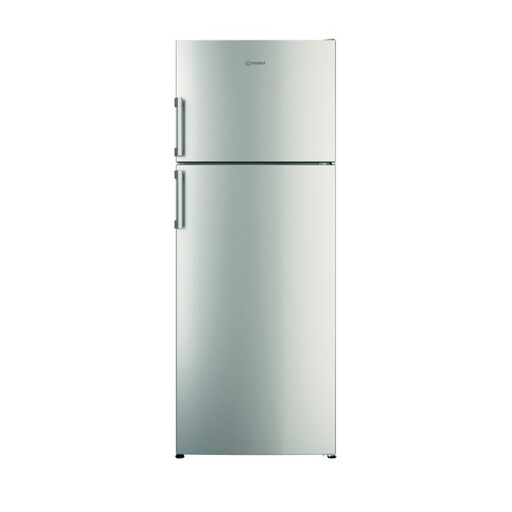 Image unavailable
Indesit IT70 832 S, 437 L freestanding fridge-freezer
Worth comparing if your household needs a large fridge-freezer for fresh and frozen food.
Stated total capacity: 437 L; stainless steel finish and energy rating E. Measure the space, door clearance and ventilation clearances specified for the appliance.
View on Joybuy
 Image unavailable
Samsung RF50C530EB1, 495 L black multi-door fridge-freezer
Worth considering for bulk shopping if you have room for a large appliance and can arrange delivery.
Stated total capacity: 495 L; energy rating E. If you often freeze fresh food, check the freezing capacity in kg/24 h before you choose.
View on Joybuy
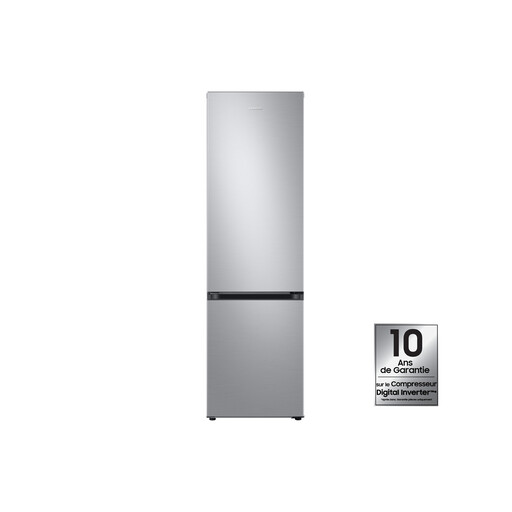 Image unavailable
Samsung RL38C602CSA, 390 L grey fridge-freezer
Worth comparing for regular shopping if you’re looking for separate fridge and freezer compartments in one appliance.
Stated total capacity: 390 L; energy rating C. Check the door clearance and the model’s ventilation requirements for your chosen space.
View on Joybuy
Frequently asked questions
What capacity do I need for the number of people in my household?
As a starting point, Que Choisir suggests 100 to 150 L for one person, then an extra 50 L for each additional person. Adjust this guide to how often you shop, and compare the space for fresh and frozen food separately.
Is an ice box enough if I want to freeze fresh food?
No. Don’t assume an ice box is suitable for freezing fresh food. Que Choisir says it can be used to store already-frozen food for a limited time. Check the compartment’s specifications and freezing capacity if you plan to put fresh food in it.
How much space should I leave around the fridge?
Follow the clearances in the model’s manual rather than relying on a figure that’s supposed to suit every appliance. Electrolux recommends allowing air to circulate around relevant appliances and keeping them away from heat sources. Check the door clearance too.
How do I compare the energy use of two formats?
Compare each model’s annual energy consumption in kWh, taking into account the capacity you need. ADEME presents the energy label as a way to compare fridge specifications. The format name alone isn’t enough to determine which of two specific appliances uses less energy.


