What should you check before choosing?
First decide how much room you need for fresh and frozen food, then check that your chosen style fits your kitchen. Energy use and noise levels can help you choose between appliances suited to the same needs.
| What to consider |
What to check |
What I need |
| Style and capacity |
Compare the usable litres in the fridge and freezer, not just their combined capacity. Que Choisir suggests 100 to 150 L for one person, plus 50 L for each additional person. Adjust this guide to suit your shopping habits, and check how much space each model actually provides for frozen food. |
I mainly store fresh food, so a table-top or single-door model may be enough if its compartment suits my habits. If I regularly freeze food, I’ll look at how a fridge-freezer’s capacity is divided. A multi-door model is for households that need more storage space. |
| Installation |
Measure the height, width and depth, then check the delivery route and the space needed to open the doors or drawers. Follow the ventilation clearance requirements in the model’s instructions. If you’re fitting it into a cabinet, check the recess dimensions too. |
In my kitchen, the appliance needs to fit without blocking a cupboard or making it difficult to open. I need to be able to get it to its intended spot and allow for ventilation. |
| Energy use and noise |
For appliances with a similar capacity and intended use, compare their energy consumption in kWh/year, compartment capacities and noise levels in dB. The European Commission says the energy label for refrigerating appliances has used the A to G scale since 1 March 2021. |
If the fridge is near my living area, I want to know how noisy it is. I’ll also compare its annual energy consumption with the capacity I actually need. |
| Cooling system |
Check whether the model uses static, fan-assisted or fan cooling, and look at the defrosting guidance. With a No Frost model, use suitable containers or drawers for food that may dry out. |
I’d prefer to defrost less often, but I also want to store fresh food properly. The cooling system doesn’t replace the need to check which compartments are available. |
Fridges to explore on Joybuy
These options include high-capacity multi-door models, fridge-freezers and a narrower fridge-freezer. Compare the space for fresh and frozen food, as well as the overall dimensions, against your shopping habits and kitchen space.
 Image unavailable
Candy CFQQ5T817EPS four-door 467 L
If you buy a lot of food at once, compare how the 467 L capacity is divided between fresh and frozen food before choosing this four-door style.
This model is listed with Total No Frost, an E energy rating and Smart Inverter. Check its dimensions, the delivery route, and the door clearance and ventilation space specified in its instructions.
View on Joybuy
 Image unavailable
Haier HTW5618ENMG three-door 360 L
If you regularly shop for fresh and frozen food, check that the way the 360 L capacity is divided between the compartments suits your needs.
This three-door model is listed with Total No Frost, an E energy rating, Wi-Fi and My Zone. Check its depth, door clearance and the ventilation space required where it will be installed.
View on Joybuy
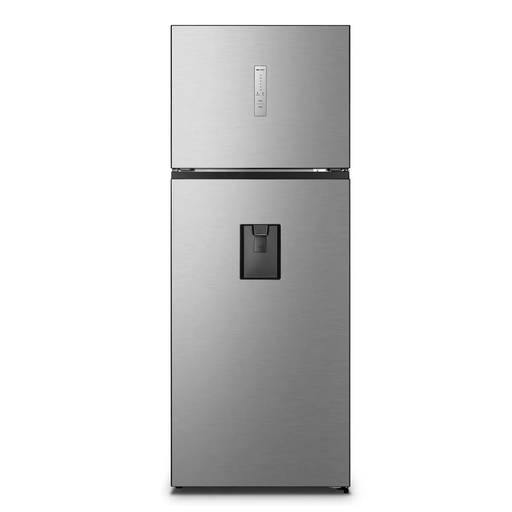 Image unavailable
Hisense FTN461WCE1 467 L
If you shop for several days at a time, check how much room this fridge-freezer offers for fresh and frozen food separately.
This 467 L model is listed with Total No Frost and an E energy rating. Check its dimensions, door clearance and the ventilation space specified in the instructions.
View on Joybuy
 Image unavailable
CHiQ JR263LGE Low Frost fridge-freezer 262 L
If width is an issue but you still want a separate freezer compartment, compare this fridge-freezer with your available space and the amount of frozen food you store.
It is listed with a 70/30 split, a width of 54 cm and a height of 176 cm. Low Frost doesn’t mean you’ll never need to defrost it. Check the care instructions, as well as the depth and clearance required.
View on Joybuy
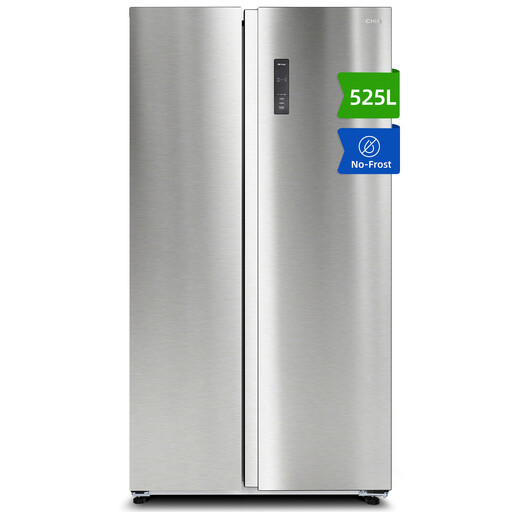 Image unavailable
CHiQ JR525WSE side-by-side 525 L
If you buy a lot of fresh and frozen food, the listed capacity split of 333 L for the fridge and 192 L for the freezer helps you assess the space in each compartment.
This side-by-side model is listed with No Frost, an E energy rating and a noise level of 37 dB. Check its exact dimensions, energy consumption in kWh/year and installation clearances before comparing it with your kitchen space.
View on Joybuy
Frequently asked questions
What should I measure before ordering a fridge?
Measure the space in height, width and depth, then check the delivery route and the room needed to open the doors or drawers. Allow for the ventilation clearances specified in the model’s instructions. For example, LG recommends leaving at least 10 cm around the fridge in its installation guide, but this shouldn’t automatically be applied to other appliances.
How do I compare the energy consumption of two fridges?
Compare their annual energy consumption in kWh with the fridge and freezer capacities you need. Ideally, compare models intended for similar use. According to the European Commission, the label for refrigerating appliances has used an A to G scale since 1 March 2021. It also provides information specific to each model.
Does No Frost mean I don’t need to cover food?
No. Fan cooling helps limit frost build-up, but uncovered food can dry out. Use suitable containers or drawers, and check the compartments available if you store a lot of fresh food.
Can you reverse the door on every fridge?
No. Check that the model allows you to do this before buying. Bosch says the method varies by appliance; the installation instructions explain how to reverse the door when this option is available.
Does a water dispenser on a large fridge need a water connection?
It depends on the model. Check the installation and water supply requirements rather than assuming a plumbing connection is needed just because there’s a dispenser. LG explicitly states that its GSLE90EVAC model requires a water connection.


