A wall on the hinge side
If there’s little room for the door to open away from the wall, look for a specific model that offers a 90° opening without protruding. Then check the open-door diagram to make sure the bins and drawers can be removed.


When placing a fridge next to a side wall, choose a model whose door opens far enough for you to access the bins and drawers. A narrow width alone is not enough. Check the ventilation clearances in the manual too. For an integrated model, make sure the housing, door-panel fixing and airflow are all suitable for your kitchen unit.
The position of the wall and the type of kitchen unit determine what you need to measure before choosing an appliance.
If there’s little room for the door to open away from the wall, look for a specific model that offers a 90° opening without protruding. Then check the open-door diagram to make sure the bins and drawers can be removed.
If the door opens into the way, a reversible door may let you position the hinges on the more suitable side. Check the model’s manual to confirm this is possible. Reversibility alone doesn’t guarantee access to drawers next to a wall.
For an integrated fridge, measure the finished housing and check the door-panel fixing system and ventilation routes. The appliance’s dimensions alone aren’t enough to confirm it will fit the unit.
Start with the door open, then check the installation requirements in the manual. Choosing a fridge isn’t just about how much space it takes up with the door closed.
| Priority | What to check | What I need |
|---|---|---|
| Door opening and drawers | Compare the open-door diagram with the position of the wall. Check the required opening angle and whether the bins can be removed. The manufacturer must specify a door opening without protrusion for the exact model you choose. | I want to open the door and remove the bins without hitting the wall or the neighbouring unit. |
| Door opening direction | Check which side the hinges are on and whether the door is reversible according to the manual. Also check how much space it takes up after reversing it: a reversible door and an opening without protrusion are two separate features. | The door should open towards the clear side without blocking the route through the kitchen. |
| Ventilation | Check the clearances specified for the model, particularly above and behind a freestanding fridge. As brand-specific guidance, Whirlpool recommends 5 cm above and 10 cm behind its freestanding fridges; an integrated model must meet the requirements for its housing. | Even in a tight space, I need to keep the required airflow routes clear. |
| Housing and door panel | For an integrated model, compare the finished housing with the installation dimensions, then check the door-panel fixing system and ventilation through the unit. Electrolux specifies a housing size of 1894 × 560 × 550 mm for the ENP7MD19S; this measurement applies to that model. | I’m looking for an appliance whose door and panel will work with my tall kitchen unit. |
A fridge may fit in the space you’ve set aside but still leave too little room to open the door and remove the drawers.
Compare the open-door diagram in the manual with the wall position and the space in front of the appliance.
Moving the hinges changes which way the door opens, but says nothing about how far the door protrudes or whether you can reach the bins.
If both matter in your kitchen, check that the exact model is reversible and confirm the door’s opening geometry separately.
The airflow routes around or through the unit are part of the installation requirements, even when space is tight.
Keep the clearances specified in the model’s manual unobstructed. For an integrated fridge, check the airflow route through the tall unit too.
An appliance that’s smaller than the opening in the unit may still be unsuitable for the housing, door panel or required airflow routes.
Measure the finished housing, then compare it with the installation dimensions and hinge type specified by the manufacturer.
These examples highlight features specific to certain models; they don’t replace the manual for the model you’re considering.
The freestanding KG39NVX2G is an example of a fridge designed for a position close to a side wall.
The B1RCNE534G is worth considering if a protruding door could be a problem.
For a tall kitchen unit, the installation dimensions are a useful first check.
Bosch’s guidance is a reminder that an integrated fridge must also suit the unit’s hinges and ventilation.
The brand’s guidance distinguishes between ventilation for a freestanding appliance and for an integrated one.
This selection includes integrated models for tall kitchen units and freestanding models whose door opening direction is worth checking against the position of the wall. For each one, check the manual, the space it needs with the door open and the required clearances before deciding where to put it.
 Image unavailable
This integrated fridge freezer is designed for a kitchen with a tall unit. The product title states a capacity of 249 L. Check the housing, door-panel fixing, ventilation and access to the drawers with the door open against your unit.
 Image unavailable
This integrated model is designed to be installed in a compatible unit. Its stated capacity is 252 L. Check the housing dimensions, door-panel hinges, ventilation and whether the drawers can be removed when it’s next to a wall.
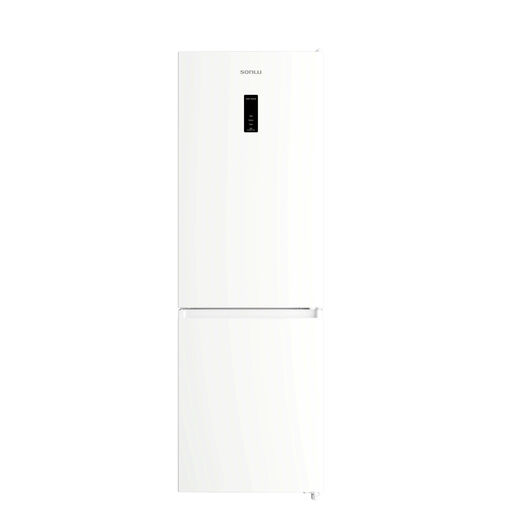 Image unavailable
The reversible door lets you consider which opening direction will work best in your kitchen. According to the product title, this model is 60 cm wide. Check its other dimensions, ventilation clearances and whether you can remove the drawers with the door open too.
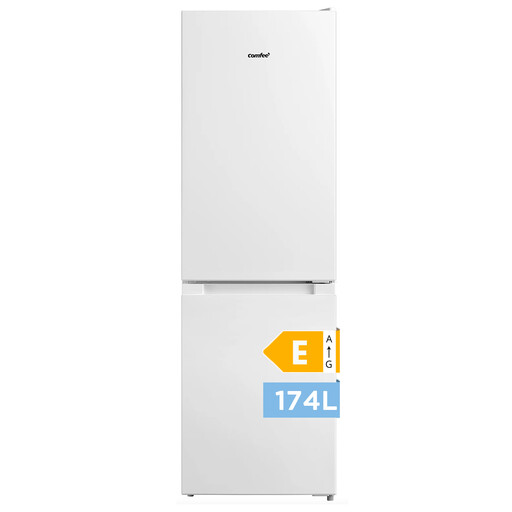 Image unavailable
The reversible door may help you position this freestanding model with the hinges on the side that suits your space. The product title states a height of 150 cm. Before placing it next to a wall, check the ventilation clearances and the space needed to open the door and remove the bins.
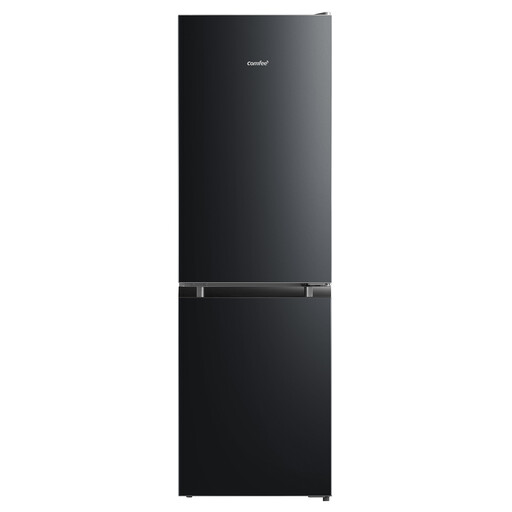 Image unavailable
This freestanding model has a reversible door, so you can choose which side the hinges go on to suit its position. Its stated capacity is 174 L. The manual should also help you check the ventilation and the space available with the door open.
No. The wall could stop the door opening fully or prevent you from removing the drawers. Look for guidance on the exact model and follow its ventilation requirements. For its freestanding appliances, Whirlpool recommends 5 cm above and 10 cm behind.
No. It lets you change which side the hinges are on, but doesn’t guarantee the opening angle or access to the bins. Check these details in the diagram for your chosen model and consult its manual for instructions on reversing the door.
Measure the available width, height and depth, then note the position of the wall and the space needed with the door open, including the handles. For an integrated model, measure the finished housing and check the door panel and airflow routes too. For example, Electrolux specifies a housing size of 1894 × 560 × 550 mm for the ENP7MD19S.
Only if the unit suits the model’s installation dimensions, door-panel fixing and ventilation requirements. In its installation guide, Bosch requires at least 200 cm² of clear space for ventilation behind and beneath the fridge. Check the requirements that apply against the manual for the appliance you choose.