To keep your fridge’s energy use down, compare the kWh/year figures for appliances with similar configurations and capacities, rather than relying on the energy rating alone. A fridge-freezer is a good choice if you freeze food regularly; if you only do so occasionally, check whether you’d really use its freezer capacity. Choose extra features to suit your habits, then check the dimensions and installation instructions for the model you’ve picked.
Who is this choice for?
Households mindful of energy use
You’re replacing an appliance that runs constantly and want a capacity that suits the food you store. The ADEME points out that fridges run day and night, so it’s worth considering annual energy use alongside usable capacity.
People who freeze food regularly
You often store frozen food or prepared portions. Freezer capacity matters just as much as fridge capacity, so check the two separately rather than choosing a fridge-freezer based only on its total capacity.
Households with a compact kitchen
You need to get the appliance to its intended spot and leave enough clearance for installation. Measure the access route and available space before following the ventilation instructions for your chosen model.
What should you compare?
First, decide whether you need a proper integrated freezer. Then compare annual energy use and usable capacity across models suited to your needs, before weighing up features and installation requirements.
Fridge
Consider this if: you don’t need a large-capacity integrated freezer.
Bear in mind: depending on the model, there may be no freezer or only a small compartment. You can’t determine energy use from the one-door format alone.
Fridge-freezer
Consider this if: you freeze food regularly and want refrigeration and freezing in one appliance.
Bear in mind: you’ll need space for the freezer and should take it into account when considering the model’s annual energy use.
| Criteria | What to check | Who is it for? |
|---|
| Annual energy use |
The kWh/year figure and energy rating, comparing appliances with similar configurations and capacities. |
When an appliance runs day and night, I want to assess its energy use over time without compromising on the space I need. Around 36% of consumers would put this first. |
| Capacity and freezing |
The separate usable capacities of the fridge and freezer, and whether you’ll really use the freezer. |
If I regularly store frozen food or prepared portions, I need enough space for both without choosing an appliance that’s too large. Capacity would be the top criterion for around 29% of consumers. |
| Size and installation |
The dimensions, the route into the kitchen and the clearances specified in the model’s instructions. |
If I have a fitted space or narrow access routes, I need to know the appliance will fit through and can be installed properly before choosing its capacity. This would be the priority for around 21% of consumers. |
| Features and maintenance |
The defrosting system and dedicated compartments, depending on the food you store and how much maintenance you want. |
If defrosting or organising fresh food is a key consideration for me, I look for a feature I’ll genuinely use. Around 14% of consumers would make this their priority. |
Mistakes to avoid
-
Choosing a bigger model “just in case”
Unused capacity doesn’t help you store food. The ADEME notes that an appliance’s size can affect its electricity consumption.
Think about the food you store and how often you freeze it, then compare usable capacity in litres with the kWh/year figures for similar models.
-
Assuming an extra feature means lower energy use
No Frost or a freshness zone may meet a need for easier maintenance or better organisation, but their presence doesn’t mean a model uses less energy.
Choose features that suit your habits and check the appliance’s stated annual energy use.
-
Ordering before measuring the space
The appliance’s dimensions alone won’t tell you whether it will fit through the access routes or have enough ventilation in an alcove. For example, the Beko B5RCNA345HXB1 manual specifies clearances for that particular model.
Measure the access routes and the space available, then check the instructions for your chosen model and the retailer’s delivery options.
Fridge brands to know
Bosch
The range includes freestanding fridge-freezers, with features and capacities varying by model.
- Bosch’s range includes the KGN39AIAU, which features Total NoFrost and VitaFresh.
- This model’s specifications don’t represent the whole range, so compare the product details and dimensions of the model you’re considering.
Beko
Depending on the model, Beko’s UK fridge-freezer range includes AeroFlow or HarvestFresh features and a choice of food storage compartments.
- These features give you options for finding a configuration that suits the food you store.
- Beko’s claims about improved food storage are the brand’s own, so check the features and kWh/year figure for the specific model.
Whirlpool
The range includes freestanding and integrated fridge-freezers, with different cooling configurations depending on the model.
- Whirlpool’s W9C841COX features Dual No Frost and FreshBox compartments.
- Neither these features nor the energy rating stated for this model applies to all Whirlpool fridge-freezers.
Fridge-freezers on Joybuy
These models combine refrigeration and freezing. Their capacities and features vary, so start by choosing the capacity you need, then compare the annual energy use and installation requirements of each model.
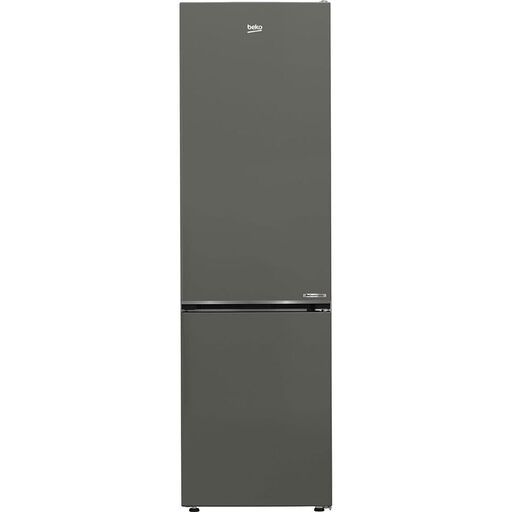 Image unavailable
Beko B5RCNE406HG, 355 L fridge-freezer
Worth considering if you want an integrated freezer and Total No Frost. The model name indicates a total capacity of 355 L and an energy rating of C. Check the separate usable capacities and kWh/year figure on its label.
Check the manual for ventilation clearances before installation.
View on Joybuy
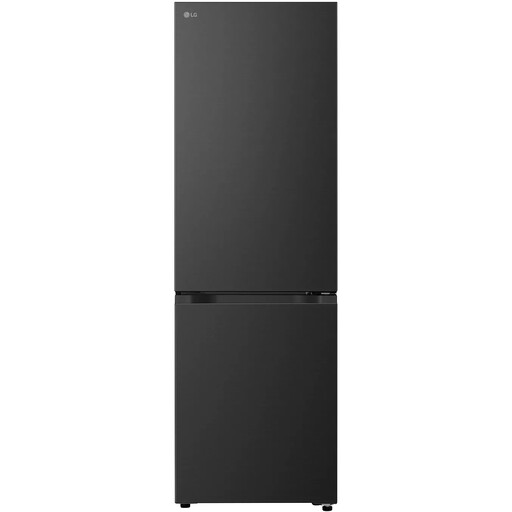 Image unavailable
LG GBBS312AEV, 333 L fridge-freezer
Worth a look if you’re after a fridge-freezer with No Frost. The product name indicates a capacity of 333 L and an energy rating of A. Compare its kWh/year figure and usable capacities with appliances suited to the same storage needs.
Check the dimensions and ventilation instructions in the manual before deciding where to put it.
View on Joybuy
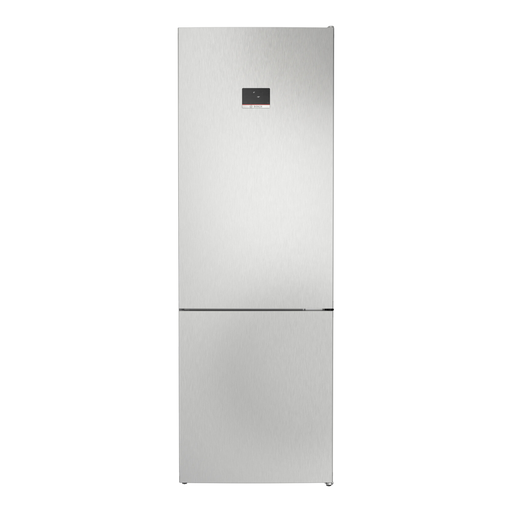 Image unavailable
Bosch KGN497LDF, 440 L fridge-freezer
Worth considering if your storage needs justify a total capacity of 440 L. The product name indicates an energy rating of D. Compare the kWh/year figure and the split between fridge and freezer space before opting for this capacity.
Also check the dimensions and clearances specified in the manual.
View on Joybuy
 Image unavailable
Candy CFQQ5T817EPS, 467 L 4-door fridge-freezer
This multi-door model is worth considering if you need a total capacity of 467 L and want Total No Frost. The product name indicates an energy rating of E. Check the kWh/year figure and the capacity of each compartment rather than judging energy use by total capacity alone.
Check that the doors can open fully in your kitchen and allow for the clearances specified in the manual.
View on Joybuy
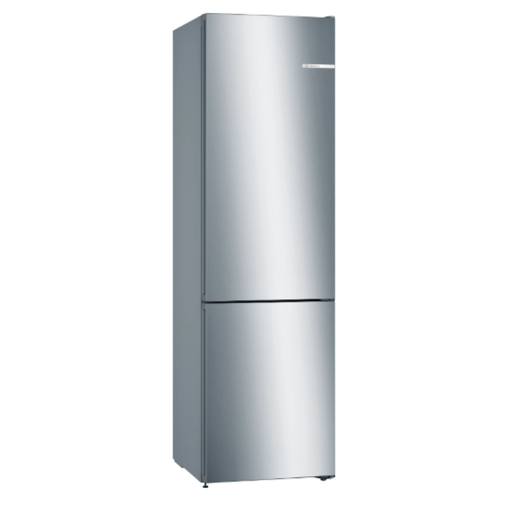 Image unavailable
Bosch KGN39VLEB, 368 L fridge-freezer
Worth comparing if you’re looking for a fridge-freezer with a total capacity of 368 L. The product name indicates an energy rating of E. Check the model’s label to compare its kWh/year figure with those of fridge-freezers that offer the capacity you need.
Before installation, check the manual for the required clearances and permitted ambient temperature range.
View on Joybuy
Frequently asked questions
Is the energy rating enough to choose a fridge?
No. Check the annual energy use in kWh/year and usable capacities too, then compare appliances with similar configurations. The European Commission’s EPREL database includes annual energy use and compartment capacities, which can help you check what each model offers.
Does a fridge-freezer always use more energy than a fridge without a freezer?
Not necessarily when comparing any two models: each appliance’s capacity and features matter. If you freeze food regularly, compare the kWh/year figures and separate capacities of fridge-freezers suited to your needs. Otherwise, consider fridges without a large integrated freezer too.
Do all models need the same amount of ventilation space?
No. Follow the instructions for the model you choose. For a recessed installation, the Beko B5RCNA345HXB1 manual calls for at least 5 cm between the appliance and the ceiling, as well as the side walls. Don’t automatically apply these measurements to another model.


