Buying priorities
Fridge only
Choose this if: you mainly store fresh food and already have a solution for frozen items.
Bear in mind: on its own, it does not cover the regular freezing of prepared portions.
Fridge freezer
Choose this if: you want to store fresh shopping and a moderate quantity of frozen portions in a single footprint.
Bear in mind: check the freezer capacity separately, as it may not be sufficient for intensive meal preparation.
Separate freezer
Choose this if: freezing portions or bulk purchases is a regular requirement alongside a fridge.
Bear in mind: you will need a second space and should compare the energy consumption of all the appliances together.
First compare fresh and frozen capacity, then the installation requirements and energy consumption of similarly sized models.
| Priority |
What to check |
Your needs |
| Usable capacity |
Compare the litres in the fridge and freezer compartments separately. Also look at the drawers, bins and shelves if you use boxes and portions in different sizes. |
I want to avoid overfilling the area I use most, whether that is for fresh shopping or portions to freeze. |
| Measurable consumption |
Read the kWh/year on the label, along with the capacities and noise level. The A to G energy scale is useful, but it does not replace comparing models with similar capacities. |
I want to limit the consumption of an appliance that runs continuously, without judging its usage from its category alone. |
| Stock organisation |
Check how easily you can see the food, how the compartments are separated and the available storage options. ADEME recommends checking your existing stock before shopping to avoid duplicate purchases. |
I want to see what is already available so I can adapt my shopping and find prepared portions easily. |
| Installation and noise |
Measure the height, width, depth, delivery access and ventilation clearances specified by the manufacturer. Also check the sound emissions shown on the label. |
My appliance needs to fit in the kitchen without obstructing the walkway or becoming too noticeable in an open-plan room. |
Joybuy products
These Joybuy options include fridge freezers for shopping and prepared meals, as well as a separate freezer to complement an existing fridge.
 Image unavailable
CHiQ JR263LGE 262 L Low Frost fridge freezer
A compact option for organising the weekly shop and a few frozen portions.
187 L fridge capacity, 75 L freezer capacity, 54 cm width, reversible door, adjustable shelves and three freezer drawers.
The Low Frost system means the freezer requires manual defrosting, stated to be approximately once or twice a year. It is designed for use between 16 °C and 38 °C.
Joybuy
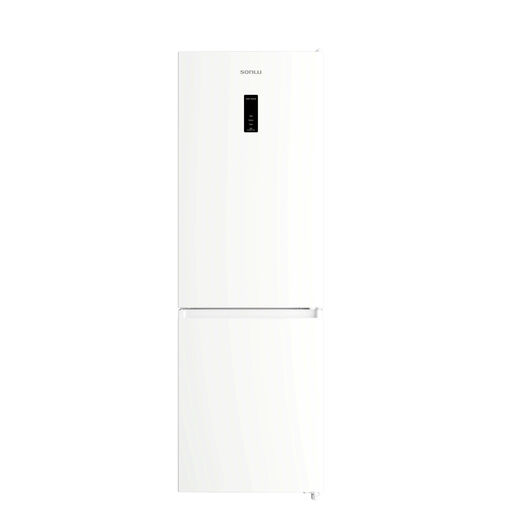 Image unavailable
Sonlu CD-350RW 310 L fridge freezer
This fridge freezer offers more room for regular frozen portions while retaining a separate fresh-food compartment.
211 L fridge capacity, 99 L freezer capacity, 60 cm width, reversible doors, electronic temperature control and inverter compressor.
Check the kWh/year, height, depth, noise level and installation clearances on the label and technical specification sheet.
Joybuy
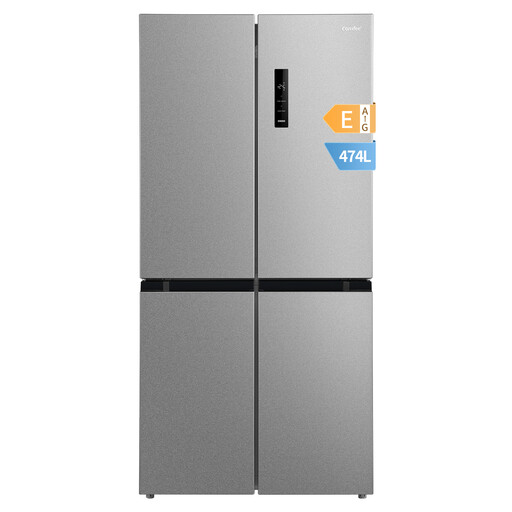 Image unavailable
COMFEE' RCF470LS2EU(E) 474 L four-door fridge freezer
Large overall capacity for households storing a wide range of shopping formats and prepared dishes.
Advertised total capacity of 474 L, four doors, vegetable drawer with three temperature settings and flexible freezer drawers.
At 838 mm wide, check the space, access points and ventilation, as well as the split between fresh and frozen capacity, before choosing this format.
Joybuy
 Image unavailable
Sonlu CC-520WE 444 L fridge freezer
This large-capacity model is designed to store shopping and prepared meals in one appliance.
Advertised total net capacity of 444 L, Total No Frost, advertised consumption of 289 kWh/year, rapid cooling and an advertised noise level of 40 dB.
Check the split between fresh and frozen capacity, along with the installation dimensions and clearances, before fitting it in your kitchen.
Joybuy
 Image unavailable
Heinrich's 161 L No Frost freezer
A dedicated addition for regularly freezing prepared portions or bulk purchases.
161 L dedicated to frozen food, No Frost protection, three drawers, two shelves, LED display, alarm and reversible door.
It requires an existing fridge for fresh food; add its annual consumption to that of the fridge and also check its dimensions and noise level.
Joybuy
Frequently asked questions
How should I compare the consumption of a fridge freezer with that of a separate fridge and freezer?
Add together the kWh/year shown on the labels of the two separate appliances and compare the total with the kWh/year of a fridge freezer offering similar fresh and frozen capacities. ADEME gives average benchmarks of 180 kWh/year for a fridge, 315 kWh/year for a fridge freezer and 300 kWh/year for a freezer; these category averages cannot be used to distinguish between two specific installations.
What must the energy label on a fridge or freezer sold in France show?
The European label uses the A to G scale and displays, among other details, annual consumption in kWh, compartment capacity and sound emissions. The European Commission explains that its QR code links to EPREL, the European database providing additional information about models marketed in the European Union.
How much freezer capacity should I allow for preparing meals in advance?
Estimate the number of portions and the desired storage period, then check the litres available in the freezer compartment. Ubaldi suggests approximately 50 L per person for normal frozen-food use and around 100 L when a household genuinely freezes food; adapt this guide to your cooked portions, bulk purchases and how often you freeze food.
Can I dispose of my old fridge with household waste?
No. A fridge is covered by the waste stream for waste electrical and electronic equipment. Information from the French Ministry for Ecological Transition reminds us that these appliances may contain components with environmental implications and can be recycled; arrange a take-back or suitable collection service when replacing yours.


