Households doing a weekly shop
You want a practical balance between fresh food, leftovers and frozen items without having several appliances. Start by checking the fridge and freezer capacities separately on fridge-freezer models.


For weekly shops combining fresh and frozen food, a fridge-freezer is often the most versatile format. A single-door fridge is a better choice when fresh food is the priority, while a separate freezer makes sense if you regularly keep frozen supplies. Compare the usable capacity of each compartment, the overall footprint, noise levels and kWh/year: the European energy label lets you check these details on a consistent basis.
You want a practical balance between fresh food, leftovers and frozen items without having several appliances. Start by checking the fridge and freezer capacities separately on fridge-freezer models.
If you prepare portions in advance or regularly buy in bulk, check whether the freezer compartment in a fridge-freezer is sufficient before adding an upright or chest freezer.
If you rarely freeze food, a single-door fridge with suitable fresh-food capacity and practical storage may make more sense than a large, half-empty fridge-freezer.
Consider it if: your shopping is mainly fresh food, you rarely freeze items or you already have a separate freezer.
Bear in mind: a small freezer compartment cannot replace dedicated space for prepared portions or frozen-food supplies.
Consider it if: you want to store fresh food, leftovers, prepared meals and frozen items in two separate compartments.
Compare: the total capacity can hide an inadequate split between fridge and freezer space.
Consider it if: prepared portions or bulk purchases regularly exceed the capacity of your integrated freezer.
Bear in mind: this is a second appliance that runs continuously and requires a suitable location.
| Priority | What to check | Your needs |
|---|---|---|
| Usable capacity | Compare the fridge and freezer capacities in litres separately. UFC-Que Choisir suggests 100 to 150 L for one person, followed by around 50 L for each additional person; adjust this according to your shopping routine and frozen-food supplies. | I want to avoid running out of space after shopping without keeping an appliance that is too large and mostly empty. |
| Temperature and storage | Check the settings, temperature display, drawers and shelves. Anses recommends between 0 and +4 °C in the coldest area and advises against overloading the appliance so that air can circulate. | I want to find food easily and keep chilled products in the right conditions. |
| Continuous consumption | Compare the A to G energy rating, kWh/year, capacities and noise levels between appliances of a similar type and capacity. The European Commission states that this information appears on the energy label. | I am looking for equipment suited to my actual stock levels, without unnecessarily adding appliances that run continuously. |
| Access to frozen food | For a separate freezer, examine the cooling system, drawers, baskets and power-cut storage time. For a chest freezer, also check how easily you can reach food stored at the bottom. | I want to find frozen portions easily and minimise manual defrosting. |
Two appliances with the same total capacity can offer very different amounts of fridge and freezer space. A household that prepares lots of portions may run out of freezer space in a fridge-freezer that appears spacious overall.
Make a list of a typical week’s fresh and frozen food and prepared portions, then compare the net litres of each compartment, the drawers and the available width in your kitchen.
A large appliance or unjustified second freezer increases ongoing energy consumption without guaranteeing better stock organisation.
Choose the capacity based on your actual shopping routine and supplies. Compare kWh/year and the energy label between appliances intended for the same use and with similar capacities.
Fan-assisted cooling or No Frost can make maintenance easier, but it does not replace correct temperature settings, air circulation or storing sensitive foods in the coldest area.
Think of No Frost as a convenience feature, and check the settings, drawers and temperature display too. After installation, check the actual temperature and avoid overloading the appliance.
Larger capacities may require more width, depth, handling space and clearance around the appliance.
Measure the location, delivery route and clearances required in the manual before ordering your chosen model.
In France, Bosch offers freestanding standard-width fridge-freezers, including the KGN39VLCT with 260 L of fridge space and 103 L of freezer space.
Liebherr offers single-door fridges and fridge-freezers, with ranges that include selected BioFresh compartments and frost-free models.
In France, Whirlpool offers built-in and freestanding fridge-freezers in several capacities, with storage or fan-assisted cooling features depending on the model.
This Joybuy selection brings together single-door fridges, fridge-freezers and separate freezers, helping you adapt fresh-food storage and frozen supplies to your habits.
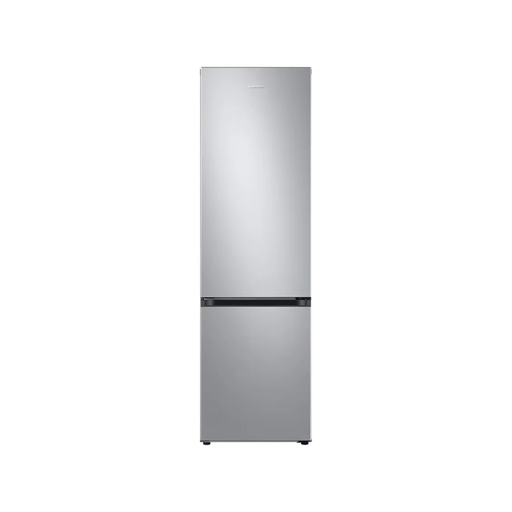 Image unavailable
A fridge-freezer for weekly shops, with fresh and frozen food organised in separate compartments.
The product name states a capacity of 390 L and a D energy rating.
This capacity may be excessive if your shopping and supplies remain modest; also check ventilation clearances and the delivery route.
 Image unavailable
A fridge-freezer option for households that prioritise fresh food while keeping a few portions and frozen items close at hand.
The product name states a capacity of 262 L, Low Frost technology and a width of 54 cm.
The freezer may be too small for substantial supplies, and the Low Frost system still requires periodic manual defrosting.
 Image unavailable
A chest freezer designed to complement a fridge when frozen supplies or prepared portions consistently require more space.
The product name states a capacity of 291 L, convertible fridge or freezer operation, a removable basket and a five-level digital control.
Convertible operation does not create a fresh-food zone and a freezer zone at the same time; you will also need to allow enough floor space and clearance to open the lid.
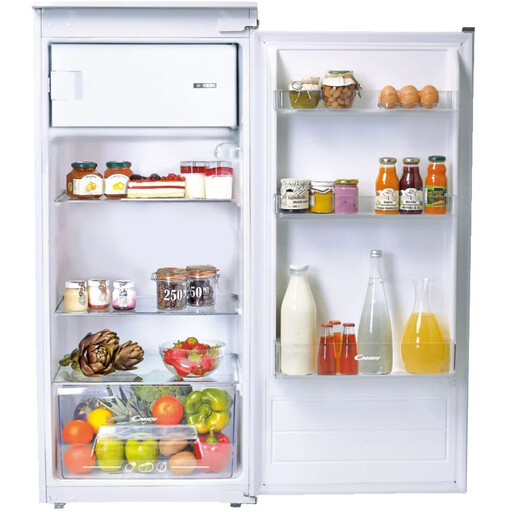 Image unavailable
A single-door appliance to consider if fresh food is the priority and freezing is secondary or already covered by another appliance.
The product name states a total capacity of 179 L.
Its small freezer compartment is not suitable for regular supplies of prepared meals or frozen food; confirm the available temperature settings before buying.
 Image unavailable
A separate freezer with compartmentalised storage for households that regularly keep batches of frozen food or batch-cooked portions.
The product name states 161 L, No Frost protection, three drawers, an LED display and a temperature range of −14 °C to −22 °C.
As with any second appliance, its capacity should match regular use; check the dimensions, noise level and climate class for your location.
Anses recommends a temperature between 0 and +4 °C in the coldest area. Check it regularly with a thermometer if the appliance does not provide a reliable reading, and place the most perishable foods in the coldest zone.
No. Extra capacity can help if your shopping and prepared portions justify it, but Anses also advises against overloading the fridge to encourage cold-air circulation. Choose a capacity that lets you see and organise your supplies without buying an oversized appliance.
Compare the A to G rating, annual consumption in kWh/year, the capacities of the fresh and frozen compartments, and noise emissions. The European Commission recommends comparing appliances with similar capacities and configurations.
It becomes worthwhile when your frozen supplies or prepared portions consistently exceed the freezer compartment in a fridge-freezer. A chest freezer offers plenty of capacity but requires more floor space, while an upright model generally makes access easier with drawers; also check power-cut storage time and the climate class.
Anses recommends freezing food when you buy or prepare it, rather than at the end of its use-by date. Follow the date information and product-specific instructions, as domestic freezing does not eliminate most micro-organisms.