One person or a couple who mainly buy fresh food
If frozen food takes up little space in your shopping, consider a fridge or a model with a small freezer compartment. The fridge capacity should be your main consideration.


When replacing your fridge, first work out how much space you need for fresh and frozen food. A fridge-freezer suits regular freezer use, while a fridge or a model with a small freezer compartment may be enough if you rarely freeze food. Then compare the capacity of each compartment, the dimensions and the annual energy consumption of similar-sized models. Only consider extra features if they suit your habits.
If frozen food takes up little space in your shopping, consider a fridge or a model with a small freezer compartment. The fridge capacity should be your main consideration.
If you shop less often, freeze portions or always keep frozen food to hand, look at fridge-freezers and compare the litres available for fresh and frozen food separately.
If your kitchen is short on space or you want to avoid paying for capacity you won't use, check the dimensions, annual energy consumption and interior layout of the model you're considering.
UFC-Que Choisir distinguishes between fridges, models with a freezer compartment at the top, and fridge-freezers. Start by thinking about how you use your freezer, then compare the capacity and features of the models on your shortlist.
Consider this if: you rarely freeze food or already have a separate freezer.
Bear in mind: check whether the model has a freezer compartment, as this format may not include one.
Consider this if: you keep a few frozen items but don't need a large amount of freezer space.
Bear in mind: check the usable capacity of the compartment, particularly if you freeze portions in advance.
Consider this if: frozen food is a regular part of your shopping and you want a dedicated freezer compartment.
Bear in mind: a large total capacity doesn't guarantee the balance of fridge and freezer space you need.
| Criteria | What to check | What I need |
|---|---|---|
| Usable capacity | Compare the fridge and freezer capacities separately, then check the appliance's dimensions. UFC-Que Choisir gives an indicative guide of 100 to 150 L for one person, then around 50 L for each additional person. Adjust this to suit your shopping habits. | I want enough space for my usual shopping without giving a large part of the appliance over to food I rarely store. |
| Freezer space | Check whether there is no freezer, a small freezer compartment or a dedicated compartment in a fridge-freezer. Look at its capacity and check that the drawers are accessible on the exact model. | If I freeze portions or shop less often, I need enough room for frozen food, not just a large total capacity. |
| Energy consumption | The energy label and product information show details such as kWh/year and the capacity of each compartment, as the European Commission explains for the EPREL database. Compare appliances of a similar size and capacity. | A fridge runs all the time, so I want to weigh its annual energy consumption against the space I actually need. |
| Installation | Measure the height, width and depth. Check the route into the kitchen, door clearance and the space required around the appliance, as stated in the manual. | The appliance needs to fit in my kitchen, with the doors and drawers still easy to use once it's installed. |
| Cooling and maintenance | Check the defrosting method for each compartment and whether the storage zones on offer will be useful. For everyday use, Anses recommends keeping the coldest part at 4 °C and avoiding overfilling the fridge. | I'd like to minimise manual defrosting if it's a chore for me, while keeping enough space for food and allowing air to circulate. |
Two appliances with a similar total capacity may allocate space differently between fresh and frozen food. The European energy label lists these compartments separately.
Think about a typical week's shopping, then compare the usable capacity of each section rather than focusing only on the headline figure.
No Frost relates to frost build-up and defrosting; the feature alone doesn't mean one fridge is more energy-efficient than another.
If you want to avoid manual defrosting, check which compartments the feature applies to, then compare the kWh/year figures for similar-sized models.
An appliance may have the right capacity but still block a doorway when opened or be too large to get to its intended spot.
Measure the space and the delivery route. Check the exact model's dimensions, door opening direction and the clearances specified in its manual.
Choosing the right model doesn't replace setting it correctly and arranging food so that air can circulate.
Anses recommends keeping the coldest part at 4 °C, storing foods that need careful temperature control there and avoiding overfilling the fridge.
These examples from different manufacturers show which features to compare. Each detail applies to the model named, not to the entire brand range.
The KGN49AIBT fridge-freezer is an example of a model with generous space for both fresh and frozen food.
The GTD7043MC is an example of a large-capacity, two-door fridge to consider in light of the space available.
The RB34T600CSA/EF fridge-freezer is an example of a layout to consider when depth is a constraint.
These models include fridge-freezers and multi-door fridge-freezers for storing fresh and frozen food. Compare their capacity and the space they take up with your shopping needs before looking at extra features.
 Image unavailable
Worth considering if you regularly store fresh and frozen food and have room for a four-door appliance. The model name indicates Total No Frost and an energy efficiency rating of E. Check the dimensions and how the capacity is divided before choosing.
 Image unavailable
If you want to split your shopping between fresh and frozen food, check that each compartment offers enough space for your needs. The model is listed with Total No Frost, Wi-Fi, My Zone and an energy efficiency rating of E. Decide whether these features are useful for your habits.
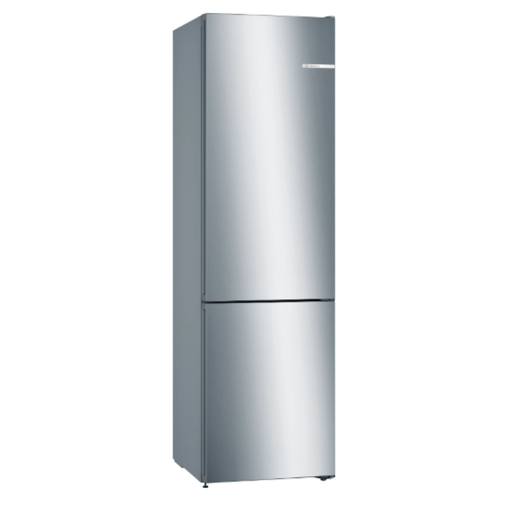 Image unavailable
This fridge-freezer offers separate storage for fresh and frozen food. Before replacing your appliance, check how its 368 L capacity is divided and make sure there's enough height in your kitchen.
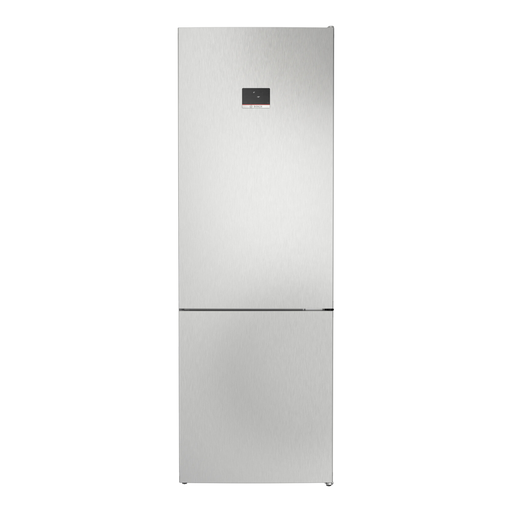 Image unavailable
If you need a 440 L fridge-freezer, compare the space for fresh and frozen food with your usual shopping needs. Also check its dimensions and the freezer's defrosting method if you want to avoid manual defrosting.
 Image unavailable
Its stated width of 54 cm is worth considering if space is tight, but remember to check the clearance required; the model is 176 cm tall. Its Low Frost freezer needs occasional manual defrosting, so bear this in mind if you use the freezer often.
Anses recommends keeping the coldest part at 4 °C. Check the manufacturer's manual to find out where this is. Store meat, fish and prepared dishes there, and avoid overfilling the appliance so air can circulate.
No. Also compare annual energy consumption in kWh and the capacity of each compartment, ideally between appliances with a similar layout. The European Commission's EPREL database lists these details for models covered by energy labelling.
No, this feature alone doesn't mean an appliance uses less energy. If you want it to avoid manual defrosting, check which compartments it applies to and compare the kWh/year figures of similar-capacity models separately.
According to the DGCCRF, the statutory guarantee of conformity applies to new, second-hand and refurbished goods sold by a business to an individual. The seller is responsible for any lack of conformity present when the goods are delivered. Any commercial guarantee is separate from this statutory protection.