Who are these options for?

Households that mainly store fresh food

If you shop regularly and keep fresh ingredients and leftovers for a few days, first look at the available fridge space and how easy it is to see what’s on the shelves. A large freezer compartment matters less if you rarely freeze food.

Households that prepare portions to freeze

If you prepare several meals in advance or regularly store frozen food and frozen leftovers, assess the freezer compartment capacity separately. You’ll also need to factor in the space required for a possible extra appliance.

Households that want a better view of their food

If food gets forgotten or you end up buying the same things twice, review your storage and stock-checking habits before increasing capacity. ADEME recommends checking what you already have before shopping and tidying your fridge regularly. It also points out that cooling appliances run continuously.

Which criteria should you compare?

Fridge with a freezer compartment

Consider this: if you mainly keep fresh food and only a few small frozen portions.

Limitation: the compartment may prove too small for regular stock-ups.

Fridge-freezer

Consider this: if fresh food and frozen portions both feature regularly in your shopping.

Limitation: the total capacity doesn’t show how much space each compartment has.

Separate freezer

Consider this: if your prepared portions or frozen food regularly exceed your existing freezer capacity.

Limitation: it takes up extra space and, as ADEME points out, also runs continuously.

Organising your existing appliance

Try this first: if food being forgotten and duplicate purchases are a bigger problem than lack of space.

Limitation: better organisation won’t give you extra freezer capacity.

Criterion What to check Who it matters to
Space for fresh food Compare the fridge compartment’s capacity in litres and the accessible space for your containers, rather than looking at the total capacity alone. When my shopping and fresh leftovers fill the shelves, I want to put them away without losing sight of what’s already been opened. Around 27% of consumers would make fresh-food space their priority.
Freezer capacity Check the freezer capacity in litres separately and see whether your usual portions and purchases will fit. If I prepare meals in advance or regularly keep frozen food, a freezer that’s too small limits what I can store. This would be the main priority for around 27% of consumers.
Storage and visibility Check the shelf heights, drawers and access to containers. Anses recommends not overfilling the fridge, so cold air can circulate. I find it hard to locate opened food when containers are hidden behind each other; making my food stocks visible matters more than adding capacity. Around 20% of consumers would prioritise this.
Energy use and installation Compare kWh/year, noise levels, dimensions and the clearances specified in the instructions. The European Commission says the energy label also gives storage capacities. With limited space or an appliance that will stay plugged in all the time, I want the right capacity without overlooking its footprint and continuous use. This would be the priority for around 26% of consumers.

Mistakes to avoid

  • Buying a bigger appliance to stop food being forgotten

    A larger appliance won’t automatically make leftovers easier to see. ADEME also recommends checking your food stocks and tidying your fridge regularly. It notes that an appliance that’s too large, or an additional one, can increase energy use.

    Before replacing your appliance, keep an eye on what’s really missing for a week or two: fridge space, freezer space or clearer storage.

  • Comparing only the total capacity

    Two appliances with a similar total capacity may allocate different amounts of space to refrigeration and freezing. The total alone won’t tell you where you’ll put your shopping and portions.

    Compare the capacity of each compartment in litres, then picture your usual containers and shopping inside.

  • Expecting a cooling feature to prevent food waste

    A No Frost function or a dedicated drawer may suit a particular need, but it’s no substitute for the right capacity or keeping track of your food. Anses highlights the importance of temperature and air circulation in the fridge.

    Check which compartment the feature applies to, then keep food within easy reach and check the appliance settings.

  • Forgetting how to dispose of your old appliance

    Old fridges and freezers need to be taken to an appropriate collection point. The ministry responsible for ecology mentions collection points and recycling centres, among other options.

    Before placing your order, ask the seller how delivery and removal of your old appliance are arranged. The ‘one-for-one’ take-back scheme applies when buying a product of the same type.

    Unplugging and removing your old appliance may require extra planning, particularly if access to your home is difficult.

Brands to consider

Bosch

Worth considering for fridge-freezers and multi-door models, depending on the dimensions and compartments you’re looking for.

  • Bosch offers NoFrost features and VitaFresh storage zones on selected models.
  • Features vary by model, so check the capacity split, energy use and installation type for the model you’re considering.

Liebherr

Worth considering if you’re looking for a fridge-freezer, a built-in model or a high-capacity appliance.

  • Liebherr describes BioFresh as a zone close to 0 °C on the models that feature it.
  • Capacity, niche dimensions and noise levels vary between models. BioFresh alone doesn’t guarantee how long your food will keep.

Beko

Worth considering for fridge-freezers or built-in models, some of which have dedicated fresh-food compartments.

  • Beko says NeoFrost Dual Cooling keeps the air in the two compartments separate on selected models.
  • Check the model you’re considering for its installation type, usable capacity and the features it actually includes.

Fridge-freezers for different needs

These models combine refrigeration and freezing, with different total capacities and formats. To choose between them, compare the space you need for fresh and frozen food with your kitchen dimensions. A separate freezer is another option if frozen storage is your main priority.

Haier HTW5618ENMG three-door fridge-freezer

Haier HTW5618ENMG, 360 L three-door fridge-freezer

Consider this if you regularly want to store fresh and frozen food in one appliance. The title lists a total capacity of 360 L, three doors, Total No Frost, an E energy rating, Wi-Fi and My Zone.

Compare the capacity of each compartment and check the dimensions and clearance required. Storage zones alone don’t guarantee less food waste.

View on Joybuy

Candy CFQQ5T817EPS multi-door fridge-freezer

Candy CFQQ5T817EPS, 467 L four-door fridge-freezer

Worth considering if you need space for fresh shopping and frozen supplies, provided this format suits your kitchen. The title lists a total capacity of 467 L, four doors, Total No Frost and an E energy rating.

Check the fresh and frozen capacities separately, then check the width and installation clearances before choosing this multi-door model.

View on Joybuy
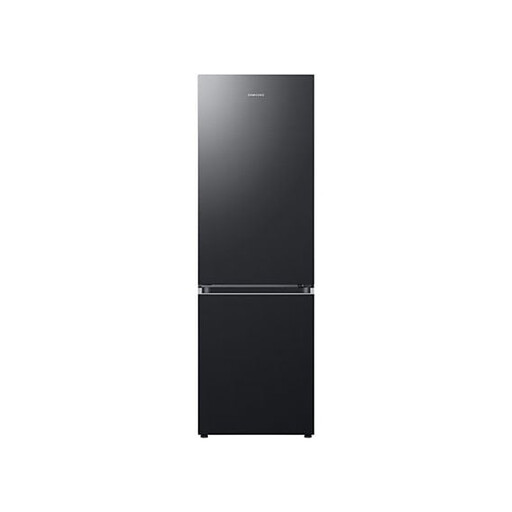
Black Samsung RB34C704DB1 fridge-freezer

Samsung RB34C704DB1, 344 L fridge-freezer

Worth considering if you’re looking for one appliance with fridge and freezer space for your shopping and prepared portions. The title lists a total capacity of 344 L, a D energy rating and a black finish.

Check how the capacity is split, the installation dimensions and the model’s kWh/year on its energy label before comparing its running costs.

View on Joybuy

Bosch KGN33NLEB fridge with bottom freezer

Bosch KGN33NLEB, 282 L fridge-freezer

Consider this if you want to keep fresh shopping and frozen food together in a model with a bottom freezer. The title lists a total capacity of 282 L and an E energy rating.

Check that the split between the two compartments suits your food stocks. Also confirm the installation clearances; don’t assume that a feature listed for the freezer also applies to the fridge.

View on Joybuy
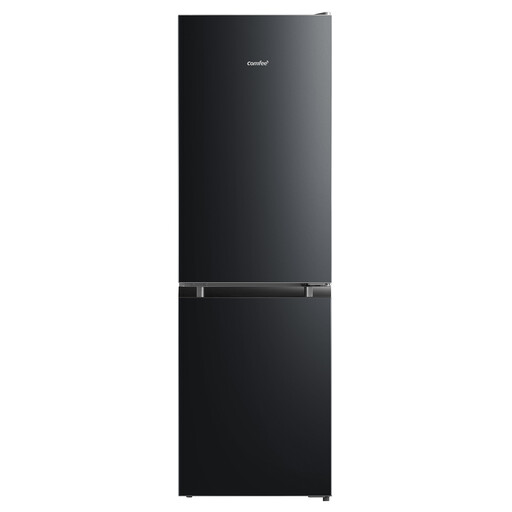
Black Comfee' by Midea RCB230BL2EU(E) fridge-freezer

Comfee' by Midea RCB230BL2EU(E), 174 L fridge-freezer

Consider this if space is limited and your freezer needs are modest. The title lists a total capacity of 174 L, Low Frost, an adjustable thermostat, LED lighting and a reversible door.

Think about how much space your frozen portions need: Low Frost doesn’t mean No Frost. Also check the instructions for maintenance advice and the energy label for kWh/year.

View on Joybuy

Frequently asked questions

How much space should you allow for fresh food?

Start with the fridge’s usable capacity, then adjust it to how often you shop and how much room your leftovers take up. UFC-Que Choisir suggests 100 to 150 L for one person, plus 50 L for each additional person. Work out the freezer capacity you need separately.

Is No Frost essential for storing shopping and leftovers?

No. This feature may be useful if you want to reduce the need for defrosting, but it’s no substitute for suitable capacity and storage. Gifam links fan-assisted cooling with even cold-air distribution and no need to defrost. Check which compartment the feature applies to on the model you choose.

What should you look for on the energy label?

Compare annual energy use in kWh, storage capacities, energy rating and noise levels across appliances that meet similar needs. The European Commission says the label’s QR code gives you access to additional information about the model in EPREL.

How can you tell whether your current storage is enough for leftovers?

Check whether your containers are visible and easy to reach without overfilling the fridge. Anses recommends leaving room for cold air to circulate and gives a storage temperature of between 0 and +4 °C at the coldest point. Check your appliance’s settings rather than relying on available space alone.

What should you do with an old fridge or freezer in France?

Take it to an appropriate collection point rather than putting it out with household waste. The ministry responsible for ecology mentions collection points and recycling centres, among other options. If you’re buying a new appliance of the same type, ask the seller how the ‘one-for-one’ take-back scheme works.