If prepared meals take up most of your fridge and you store very little frozen food, prioritise the fresh-food capacity of a fridge-only model. A fridge-freezer combines both spaces in one appliance. If you’re building up a larger frozen-food supply, consider a separate freezer alongside your fridge instead. An upright freezer makes it easy to organise food in drawers, while a chest freezer needs more floor space and is accessed from above.
Who are these configurations suitable for?
Households that prepare several meals in advance
If meal containers and fresh ingredients take up most of your space, start by looking at the fridge’s usable capacity and layout. Work out separately how much room you need for frozen portions: the total capacity of a fridge-freezer doesn’t tell you how that space is divided between the two sections.
Regular frozen-food shoppers with limited floor space
If you already have a fridge, an upright freezer with drawers could give you a separate, vertically organised supply of frozen food. Compare its capacity and potential location with those of a fridge-freezer before deciding to add a second appliance.
Households with a suitable pantry or cellar
If you need to store larger food shops, it’s worth comparing a chest freezer with an upright model, provided you have enough floor space and room to open the lid. The room’s temperature must also fall within the range specified in the instructions for the model you choose.
How do the different formats compare?
Start by dividing your needs between fresh and frozen food, then compare each configuration with the space available and the specifications of the exact model.
| Priority | What to check | Depending on your needs |
|---|
| How capacity is divided |
Compare the usable capacity of the fridge and freezer separately. Check that the shelves, drawers and compartments have enough room for your containers. |
I mainly store meal containers and fresh ingredients: a fridge-only model could suit me if I have little frozen food or already store it elsewhere. |
| Frozen-food storage |
Work out how much freezer space you need in a fridge-freezer or a separate appliance. With an upright model, check the drawers; with a chest freezer, consider access from above. |
My frozen food shops and frozen portions regularly fill the freezer section: I’ll compare a separate freezer with the capacity of a fridge-freezer. |
| Installation |
Measure the appliance, access routes and installation space. Check that doors or the lid can open fully, and allow for the ventilation clearances specified in the instructions. |
In a narrow kitchen, access to the drawers matters as much as the appliance’s width. A chest freezer also needs enough floor space and room to open the lid. |
| Energy use and maintenance |
Compare the kWh/year of models with the capacity you need, then check their energy labels. Check the cooling system and defrosting requirements listed for each model. |
I want to compare a model’s stated energy consumption as well as its energy label. According to ADEME, fridges and freezers run continuously. |
| Noise and keeping food cold |
Check the stated noise level in dB(A). For an appliance with a freezer, also compare the stated storage time in the event of a power cut and the conditions it applies to. |
If the appliance is near a living area, noise will influence my choice. If I’m storing a large amount of frozen food, I’ll also check the stated storage time. |
| Room temperature |
Check the climate class and ambient temperature range in the instructions for the exact model, especially if it’s going in a cellar, garage or unheated pantry. |
I’m planning to put the appliance in a room where the temperature varies: I won’t assume that a freezer designed for a kitchen will also suit this location. |
What should you avoid before buying?
-
Looking at total capacity without separating fridge and freezer space
A roomy fridge-freezer may have a freezer that’s too small for your usual shopping. Conversely, a separate freezer won’t provide the fridge space you need for meals that must be kept chilled.
Estimate how much space your containers, ingredients and frozen food take up over one or two weeks, then compare the usable capacity of the two sections separately.
-
Choosing a chest freezer without considering access
A chest freezer takes up floor space, opens from the top and requires you to reach food stored at the bottom. UFC-Que Choisir says some chest freezers have a capacity of up to 600 L, but that doesn’t replace checking whether one will work for everyday use.
Measure the space, access routes and clearance above the lid. If you often take out small portions, also compare how easy it is to access the drawers in an upright freezer.
-
Comparing energy labels alone
Appliances with different capacities won’t necessarily meet the same storage needs. The energy label alone doesn’t tell you their stated annual energy consumption.
For formats and capacities that suit you, check the kWh/year on the exact model’s product sheet, along with its cooling system and associated maintenance requirements.
-
Forgetting about ventilation and room temperature
The required clearances and ambient temperature range vary by model. So a cellar or garage won’t necessarily be suitable for every freezer.
Before choosing a location, check the instructions for ventilation requirements, climate class, door clearance and permitted ambient temperature.
Which brands should you consider?
Bosch
Bosch offers fridge-only models, fridge-freezers and freezers. The features highlighted vary by model.
- Bosch says spare parts are available for up to 15 years for certain models, and offers models with No Frost.
- For the model you’re considering, check the stated spare-parts availability period, kWh/year, capacity, noise level and installation requirements.
Beko
Beko offers upright freezers with compartments and chest freezers that open from the top.
- Some models come with features called No Frost, MinFrost or Freezer Guard.
- These features aren’t available across the whole range: check the cooling system and the exact model’s ambient temperature range.
Appliances for different storage needs
This selection from Joybuy includes fridge-freezers that combine fresh and frozen food in one appliance, as well as an upright freezer to consider alongside a fridge.
 Image unavailable
Haier HTW5618ENMG, 3-door 360 L Total No Frost fridge-freezer
If you want chilled meals and frozen food in one appliance, compare the space in each compartment with the containers you usually use. The model name specifies 360 L total capacity, Total No Frost, an E energy rating and Wi-Fi connectivity. Also check its dimensions and the clearances required in the instructions.
View on Joybuy
 Image unavailable
CHiQ JR263LGE, 262 L Low Frost fridge-freezer, 54 cm
This fridge-freezer is worth considering if space is limited and you need both compartments. Its name specifies a 70/30 split, a width of 54 cm, a height of 176 cm and Low Frost. Check that the freezer section suits your frozen-food needs, and check the defrosting requirements and permitted ambient temperature in the instructions.
View on Joybuy
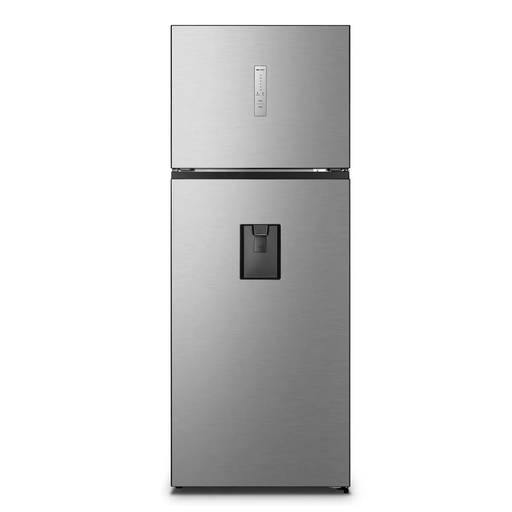 Image unavailable
Hisense FTN461WCE1, 467 L Total No Frost fridge-freezer
If you need plenty of space for fresh food, consider this fridge-freezer while checking the capacity available for frozen food separately. Its name specifies 467 L total capacity, Total No Frost and an E energy rating. Measure the installation space and access route before choosing this format.
View on Joybuy
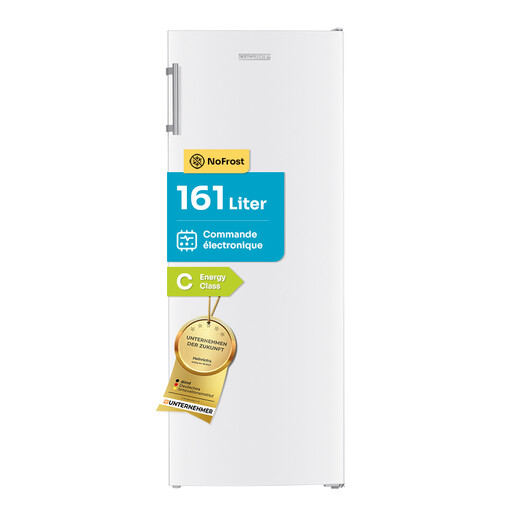 Image unavailable
Heinrich´s, 161 L No Frost upright freezer
This upright freezer could complement a fridge if you need a separate space for frozen food; it doesn’t provide room for meals that need to be kept chilled. Its name specifies 161 L, No Frost, drawers and a C energy rating. Check its dimensions, kWh/year and ambient temperature range before choosing where to put it.
View on Joybuy
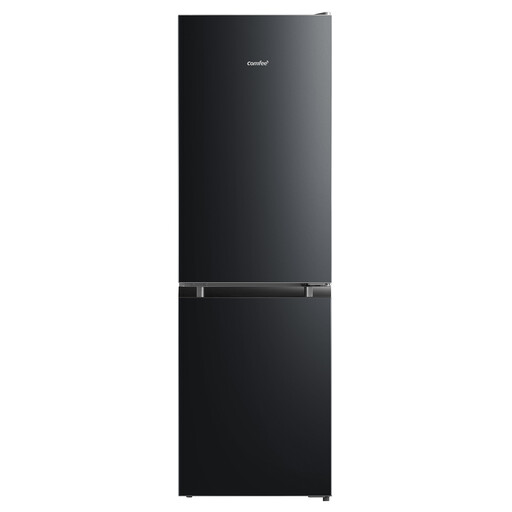 Image unavailable
Comfee' by Midea RCB230BL2EU(E), 174 L Low Frost fridge-freezer
If you have moderate storage needs in both sections, compare this fridge-freezer’s compartments with your meal containers and frozen-food shopping. Its name specifies 174 L total capacity, Low Frost, an adjustable thermostat and a reversible door. Check the model’s kWh/year, noise level and installation requirements.
View on Joybuy
Frequently asked questions
Which format should I choose if I prepare meals but buy very little frozen food?
Prioritise fridge capacity if prepared meals and fresh ingredients take up most of your space; choose a fridge-freezer if you also need a proper freezer section. To estimate the fridge capacity you need, UFC-Que Choisir suggests allowing 100 to 150 L for one person, then an extra 50 L for each additional person. Next, compare the layout with the size of your containers.
Can I install any freezer in a garage or cellar?
No. Before choosing a room, check the ambient temperature range and climate class for the specific model in its instructions. Beko says some Freezer Guard models are suitable for cold rooms, but this doesn’t apply to all its freezers or those from other brands.
What should I measure before delivery or fitting?
Measure the access route to the room, the installation space and the clearance needed to open the doors, pull out drawers or lift the lid. Also check the ventilation clearances specified in the instructions: these depend on the model and installation type.


