Buying priorities
Compare the capacity of each compartment before looking at the total capacity, then check annual energy consumption, noise levels and the installation requirements for the exact model.
| Priority |
What to check |
Your needs |
| Meal organisation |
Compare the fridge and freezer capacities separately. For portions you need to find often, look at the number of drawers and front access. |
I want to keep fresh products separate from frozen portions and quickly find what is already available. |
| Usable capacity |
Relate the capacity to your shopping habits, restocking frequency and reserves. According to UFC-Que Choisir, chest freezers can reach 600 L, while upright models are generally around 200 L. |
My bulk purchases or frozen portions should fit without choosing a capacity that is disproportionate to my needs. |
| Energy consumption and noise |
The European energy label shows the energy class, kWh/year, capacities and noise emissions. Compare these details between appliances of the same type and with similar capacities. |
I want to assess annual consumption against the capacity actually provided, while also taking noise into account if the appliance is close to the living area. |
| Installation and maintenance |
Measure the space, clearance and floor footprint. For a garage, cellar or utility room, check the temperature range covered by the climate class. |
My appliance must suit the temperature of the room and remain easy to open, load and maintain every day. |
Joybuy products
Joybuy options for organising meals and food stocks: fridge freezers that bring chilled and frozen storage together, plus an upright freezer for expanding an existing frozen reserve.
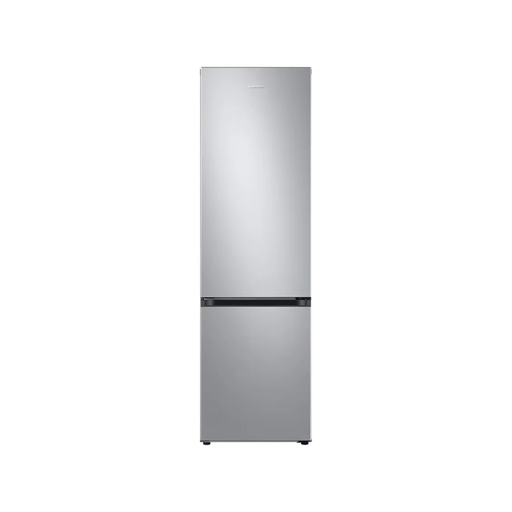 Image unavailable
Samsung RB38C604DSA 390 L fridge freezer, class D
For planned meals with a daily frozen reserve, its 276 L fridge capacity and 114 L freezer capacity keep the two types of stock separate.
211 kWh/year, 35 dB, three freezer drawers, frost-free cooling and a width of 59.5 cm. Check the height of 203 cm, depth of 65.8 cm and the required clearance.
Joybuy
 Image unavailable
Samsung RB33B612EBN 344 L black fridge freezer, class E
Its 230 L fridge capacity and 114 L freezer capacity are suitable for keeping track of fresh food and frozen portions every day.
254 kWh/year, 35 dB, three freezer drawers, reversible door and a width of 59.5 cm. Check the depth of 65.8 cm and height of 185.3 cm before installation.
Joybuy
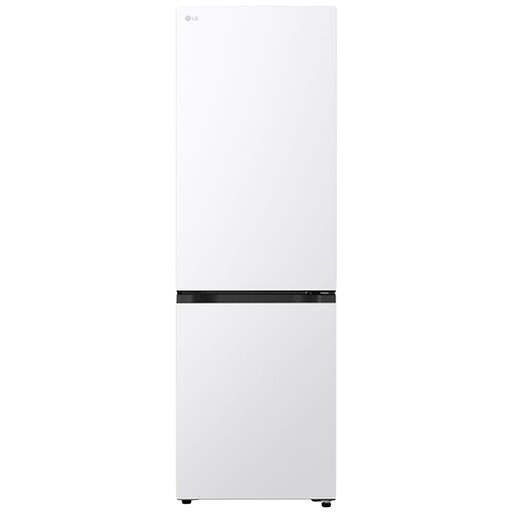 Image unavailable
LG GBBSJ1CCSW 333 L white fridge freezer, class C
This fridge freezer offers 183 L of fridge space, a 37 L cooling compartment and 113 L of freezer space, keeping fresh and frozen stocks separate.
169 kWh/year, 34 dB, Total No Frost and two salad drawers. Allow 5 cm of clearance according to the product information and check the ambient temperature range if the appliance is installed outside a temperature-controlled kitchen.
Joybuy
 Image unavailable
CHiQ JR263LGE 262 L black fridge freezer
With 187 L of fridge space and 75 L of freezer space across three drawers, this fridge freezer provides a moderate reserve for frozen portions.
215 kWh/year, 39 dB, 54 cm width, adjustable shelves and a reversible door. The Low Frost compartment requires manual defrosting; the N-ST class is suitable for an ambient temperature of 16 to 38 °C.
Joybuy
 Image unavailable
Heinrich’s 161 L upright freezer, class C
This upright freezer complements an existing fridge, offering 161 L of capacity across three drawers and two storage compartments.
No Frost, Fast Freeze, LED display, alarm and reversible door are listed. It has no fridge compartment; check its dimensions, kWh/year, noise level and climate class before installation.
Joybuy
Frequently asked questions
Which information should you compare on the energy label?
The European label uses a scale from A to G and shows, among other details, annual consumption in kWh, the capacities of the fridge and freezer compartments, as well as noise levels and their class. Compare these values between appliances of the same type, then check that the capacity in litres of each compartment matches your actual storage needs.
Can a chest freezer be installed in a garage or an unheated utility room?
This depends on the model and its climate class, which defines the ambient temperature range in which it is designed to operate. UFC-Que Choisir gives the following SN guideline of 10 to 32 °C, N of 16 to 32 °C, ST of 16 to 38 °C and T of 16 to 43 °C; compare these with the temperatures actually recorded in the room.
Is No Frost essential for organising food stocks?
No. This feature is mainly useful for avoiding manual freezer defrosting and simplifying maintenance. It does not replace sufficient freezer capacity, suitable access to your food or annual consumption that is in line with your usage.
What legal protection applies to a new appliance bought from a professional seller in France?
The statutory guarantee of conformity is compulsory for goods sold by a professional to a private individual in France, according to economie.gouv.fr. It covers, among other things, defects in the goods, packaging and instructions and, depending on the contract, installation; keep your proof of purchase and the product documents.


