Households replacing an appliance
If you’re keeping an eye on your ongoing electricity use, start with the capacity you need, then compare the kWh/year of models that offer similar storage. This figure alone won’t predict how your bill will change.


Start by working out how much space you really need for fresh and frozen food. A fridge is enough if you rarely freeze food; a fridge-freezer combines both uses, while a separate freezer is useful if you regularly store larger amounts of frozen food. ADEME points out that these appliances run continuously, and that choosing an oversized model or one with unnecessary features can increase your bills. To compare models suited to the same needs, look at their energy consumption in kWh/year, the capacity of each compartment and the noise level – not just the energy rating.
If you’re keeping an eye on your ongoing electricity use, start with the capacity you need, then compare the kWh/year of models that offer similar storage. This figure alone won’t predict how your bill will change.
If you store both fresh and frozen food, measure how much space you use for each. A separate freezer is most worthwhile when your frozen food regularly exceeds the capacity you’d be comfortable with in a fridge-freezer.
Before choosing a larger appliance, take stock of what you store and what goes unused. ADEME recommends looking at household habits to help reduce food waste; doing so can also help you work out how much capacity you need.
Consider this if: you mainly store fresh food and rarely need to freeze anything.
Bear in mind: check the capacity of any freezer compartment if you want to keep frozen food in reserve for longer.
Consider this if: you regularly use both the fresh-food and freezer compartments and want them in one appliance.
Bear in mind: each compartment’s capacity should suit the amount you store, so don’t choose based on total capacity alone.
Consider this if: you already have a suitable fridge and regularly store larger amounts of frozen food.
Bear in mind: this appliance also runs continuously, as ADEME points out.
Once you’ve chosen a configuration, compare appliances that meet the same storage needs and will fit in your home.
| Priority | What to check | What you need |
|---|---|---|
| Energy consumption | Compare the kWh/year of appliances with a suitable configuration and capacity. Read the A–G rating alongside this figure; the European Commission says both are shown on the energy label. | I want to know the stated annual energy consumption rather than rely on the letter rating alone. According to France’s National Energy Ombudsman, 85% of the 2,000 households surveyed in mainland France in September 2025 felt that energy bills accounted for a significant share of their budget. This figure doesn’t measure their intentions to buy a fridge or freezer. |
| Capacity | Check the capacity in litres of the fresh-food and freezer compartments separately. Compare these with what you usually store: ADEME says that a larger appliance or unnecessary features can increase your bills. | Do I store enough frozen food to justify a separate freezer, or would a fridge-freezer meet both my needs? |
| Installation and noise | Check the dimensions, installation type and required clearances for the exact model. Also compare the airborne noise emissions shown on the label, as set out in the information provided by the European Commission. | The appliance needs to fit in the space available, with a noise level I’m happy with in that location. |
| Features and maintenance | Check the features included with the exact model, particularly No Frost if you want to avoid defrosting. Then compare its kWh/year and capacity with those of other suitable models. | I want to reduce the effort involved in dealing with frost, without assuming that a feature’s name tells me how much electricity the appliance uses. |
| Organisation and lifespan | Look for storage features that suit your habits and check what repair information is available for the model you’re considering. Review what you store before opting for a larger capacity. | Being able to find food easily matters more to me than having compartments I’d rarely use. |
The letter rating alone doesn’t tell you the annual energy consumption or how much space there is for your food.
For appliances that meet the same needs, compare their kWh/year, fresh-food and freezer capacities, noise levels and dimensions. The European Commission says this information is shown on the energy label and in the model’s product information sheet.
ADEME says that fridges and freezers run continuously, and that a larger size or unnecessary features can increase your bills.
For several weeks, keep an eye on the food you store, separating fresh from frozen, before deciding how much capacity you need.
Manufacturers including Bosch and Electrolux describe No Frost as a feature that deals with frost. This doesn’t mean an appliance with the feature uses less energy than another model.
If defrosting is a concern for you, check for this feature, then compare the kWh/year and capacities of the models that suit your needs.
France’s Ministry for Ecological Transition says that electrical appliances can contain components that need to be collected and treated appropriately.
Arrange to return it to a retailer or take it to a collection point or recycling centre.
Bosch offers fridges and fridge-freezers, among other appliances. Compare the specifications of the exact model rather than making assumptions about the brand as a whole.
Beko offers built-in fridge-freezers, with features such as air circulation or separate compartments depending on the model.
Haier France’s range includes one- and two-door fridges, fridge-freezers and side-by-side models.
These five appliances combine refrigeration and freezing. Check their stated capacity and layout against what you usually store. If you’re still deciding between a fridge, a fridge-freezer and a separate freezer, first choose the type of appliance that suits your needs.
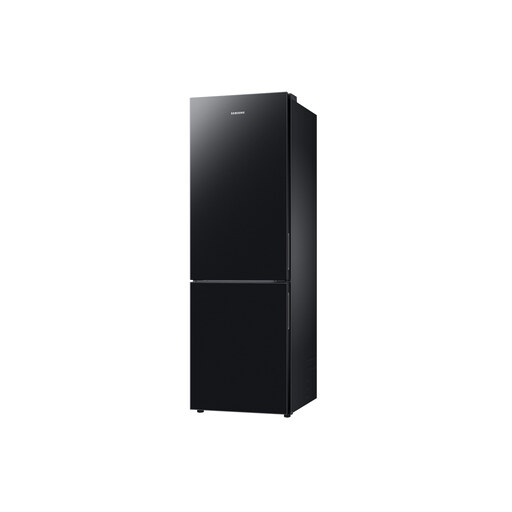 Image unavailable
Worth considering if you want fresh and frozen storage in one fridge-freezer. The title lists a capacity of 344 L and an E energy rating; check the split between compartments and the dimensions to make sure it fits your space.
 Image unavailable
Compare it with your storage needs if you’re looking for a four-door appliance. The title lists a capacity of 467 L, an E rating and Total No Frost. Check that its capacity, layout and dimensions suit the way you use it.
 Image unavailable
Worth considering if you regularly need plenty of fresh and frozen storage. The title lists a capacity of 495 L and an E rating; check the door layout, the capacity of each compartment and the overall dimensions.
 Image unavailable
Worth considering if you want fresh and frozen storage in one appliance. The title lists a capacity of 333 L and a C rating; check the capacity of each compartment, the kWh/year and the required clearances before comparing it with other fridge-freezers.
 Image unavailable
Worth considering if your kitchen needs a built-in fridge-freezer. The title lists a capacity of 249 L, an E rating and TwinTech No Frost; check the niche dimensions, the capacity of each compartment and the kWh/year on the exact model’s energy label.
First compare the kWh/year of models that meet the same needs, then look at the fresh-food and freezer capacities and the noise level. The European Commission says the label also shows the energy efficiency rating, but this doesn’t replace checking the annual consumption and capacities.
Yes. The European Commission says it links to information about the model in EPREL. Make sure the model number you look up matches the appliance you’re considering exactly.
No. Manufacturers describe No Frost as a feature for managing frost, but its name doesn’t tell you how the energy consumption of two models compares. Check their kWh/year and respective capacities.
Not automatically: a separate freezer adds another appliance that runs continuously, as ADEME points out. Consider one if you regularly need the extra capacity for frozen food, then check the chosen model’s kWh/year.
Arrange for it to be collected appropriately. France’s Ministry for Ecological Transition says an electrical appliance can be returned to a retailer or taken to a collection point or recycling centre; its components may need special treatment.