Start by deciding how much space you need for fresh and frozen food. A fridge, a fridge-freezer and a separate freezer each meet different needs. To compare appliances of a similar size and capacity, check their annual energy consumption in kWh, then make sure they’ll fit through the delivery route and in the installation space. The French Environment and Energy Management Agency (ADEME) points out that these appliances run continuously. Check the model’s product information and the European Commission’s EPREL database to verify the declared specifications.
Who are these options for?
Households replacing an energy-hungry appliance
If your fridge or freezer runs day and night, you can look for a capacity that suits your needs without adding equipment you don’t need. ADEME highlights how size and features affect the energy consumption of appliances that are in constant use.
Households with limited space
Your choice depends as much on the final position as on the doors, corridors and stairs the appliance will need to pass through. The European Commission’s EPREL database lists the overall dimensions and compartment capacities for each model.
Households that regularly store frozen food
Assess the space you need for frozen food separately from the space for fresh food. Compare each compartment’s capacity before deciding whether a fridge-freezer will do or a separate freezer would better suit the way you organise your food.
What should you prioritise before buying?
First decide whether you mainly need chilled storage for fresh food, two compartments in one appliance or a separate space for freezing. Then compare models that suit the way you plan to use them, rather than relying on their marketing labels alone.
Fridge
Consider this if: fresh food makes up most of what you store.
Check: depending on the model, the freezer compartment may be small or not included.
Fridge-freezer
Consider this if: you regularly use both fresh and frozen compartments and want them in one appliance.
Check: these labels don’t tell you how much space each compartment offers.
Separate freezer
Consider this if: you store enough frozen food to need dedicated capacity, in an upright or chest freezer depending on your space and access needs.
Bear in mind: you’ll still need a suitable fridge for fresh food, as well as space for a second appliance.
| Priority |
What to check |
Who this matters to |
| Energy consumption |
Compare annual kWh and fresh and frozen capacities across appliances intended for similar use; don’t rely on the energy rating alone. |
When an appliance runs all the time, I want to avoid paying to power capacity or features my household doesn’t need. Around 33% of consumers rank energy efficiency as their top priority. |
| Space and layout |
Check the overall dimensions, measure the delivery route and make sure the doors can open, with the clearances specified in the manual. |
In a small kitchen or narrow hallway, I need to be able to install the appliance and reach its contents easily. Around 42% of consumers prioritise finding an appliance that suits their space and food-storage habits. |
| Frozen food storage |
Compare the freezer capacity in litres and check whether there’s room for a second appliance if needed. |
If I often store frozen food, I want to know whether a fridge-freezer’s compartment will meet my needs. Freezer capacity is the top priority for around 25% of consumers. |
What mistakes should you avoid?
-
Choosing a larger capacity ‘just in case’
Extra space is only useful if it matches your food-storage habits. ADEME notes that a larger appliance or unnecessary features can increase the energy consumption of an appliance that runs continuously.
Work out separately how much space you need for fresh and frozen food, then compare the capacities and annual kWh of models designed for similar use.
-
Comparing energy ratings alone
The rating alone won’t help you choose between appliances with different capacities or different proportions of fresh and frozen storage.
For each model you’re considering, check its annual energy consumption and compartment capacities. If noise matters in your home, compare the declared noise levels in EPREL or on the product information sheet too.
-
Ordering before checking access
An appliance that fits in your kitchen must also make it along the delivery route and have the clearances specified in its manual.
Measure the space and access route, then check with the retailer what delivery, installation and old-appliance collection services are included with your order.
Getting the appliance upstairs or arranging installation separately can make delivery more complicated.
-
Assuming more storage means food will keep better
Having more space doesn’t remove the need to monitor storage conditions. The French Agency for Food, Environmental and Occupational Health & Safety (Anses) recommends keeping the coldest part of the fridge at 4 °C.
Once the appliance is set up, adjust and check it according to the manual, and follow food-storage guidance.
Which brands should you consider?
There are no brands to feature in this section.
Fridge-freezers for keeping fresh and frozen food
These appliances combine refrigeration and freezing. Compare the space they offer for each, then check their annual energy consumption and dimensions against your available space before choosing.
 Image unavailable
Candy CFQQ5T817EPS, 467 L four-door fridge-freezer
Worth considering if you want fresh and frozen food storage in one four-door appliance. The title lists a 467 L capacity, an E energy rating and Total No Frost. Check how the capacity is divided between compartments and make sure it will fit along your delivery route before choosing this style.
View on Joybuy
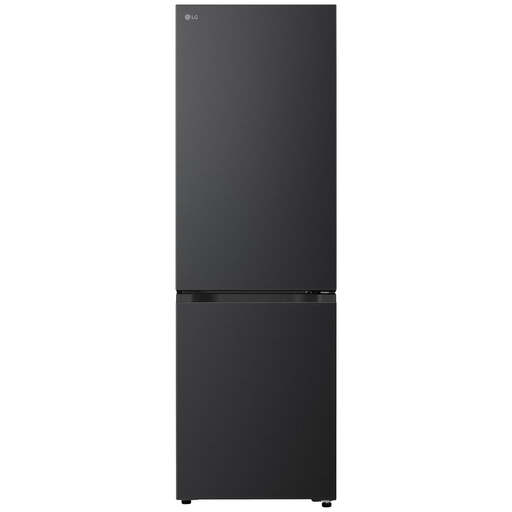 Image unavailable
LG GBBS312CEV, 333 L black fridge-freezer
Consider this if you regularly use both fresh and frozen storage in one appliance. The title lists a 333 L capacity and a C energy rating. Check the capacity of each compartment and the clearance needed for installation.
View on Joybuy
 Image unavailable
Bosch KGN33NLEB, 282 L fridge-freezer with bottom freezer
Worth considering if you’d prefer the freezer below the fridge compartment. The title lists a 282 L capacity and an E energy rating. Check the capacity of each section, the ventilation clearances and the noise level if the appliance will be near a living space.
View on Joybuy
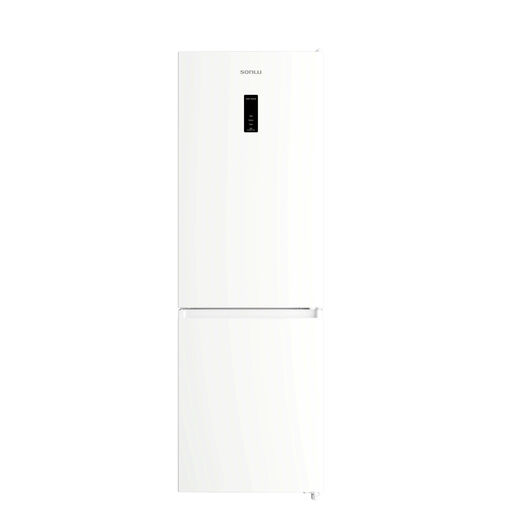 Image unavailable
Sonlu CD‑350RW, 310 L fridge-freezer
Worth comparing if the stated width of 60 cm suits your space. The title divides the 310 L capacity into 211 L for the fridge and 99 L for the freezer, and mentions a reversible door. Check the height, depth and annual kWh for the model too.
View on Joybuy
 Image unavailable
CHiQ JR227LSE, 227 L silver fridge-freezer
Worth considering if the stated width of 54 cm suits your space. The title lists 153 L for the fridge and 74 L for the freezer, a reversible door and Low Frost. Check the height, annual kWh and defrosting guidance too.
View on Joybuy
Frequently asked questions
What temperature should your fridge be?
Anses recommends keeping the coldest part of the fridge at 4 °C. Follow the manual to set the appliance, then check this area once it’s up and running.
How do you compare appliances with different energy ratings?
Compare their annual energy consumption in kWh and the capacity of their compartments, rather than looking at the rating letter alone. The European Commission’s EPREL database lists these specifications for each model. Compare appliances designed for similar storage needs.
What should you check before a fridge or freezer is delivered?
Measure the final position and the entire route the appliance will need to take. Then check the model’s dimensions, installation type, door opening and the clearances specified in the manual. Finally, confirm with the retailer what delivery and installation services are included.
How do you arrange collection of your old appliance?
Before placing your order, tell the retailer you have a fridge or freezer to be collected and confirm where and how it will be picked up. Don’t assume that collection from your home, carrying the appliance upstairs or disconnecting it are included in the same service.


