What factors help you choose between appliances?
Start by deciding whether your priority is refrigeration that runs continuously, frequent washing cycles or finding an appliance that fits your kitchen. Then compare each category using its own units: refrigeration product information gives annual energy consumption, while a dishwasher’s label shows, among other things, energy use per 100 Eco cycles, according to the European Commission.
| Consideration |
What to check |
Who it matters to |
| Continuous refrigeration |
For an appliance of the same type and a similar size, check the kWh/year and compartment volumes. |
When an appliance is on day and night, I want to know whether its capacity still suits my storage needs. Continuous refrigeration could be the main concern for around 40% of consumers. |
| Frequent dishwasher use |
Compare kWh/100 Eco cycles, litres per Eco cycle and capacity; take into account the programmes you actually use. |
If I run the dishwasher often, the frequency of cycles and whether I can use the Eco programme matter more to my decision. Frequent washing could be the priority for around 30% of consumers. |
| Capacity and installation |
Measure the space and check the installation type, as well as the usable volume or place settings. |
In a kitchen with limited space, I need to be able to install the appliance without losing capacity I need. This could be the priority for around 20% of consumers. |
| Comparing existing appliances |
Note the model number and how you use the old appliance; measure its energy consumption if you need a personal estimate. |
When several appliances are still working, I prefer to have comparable figures before choosing which one to replace. Around 10% of consumers could put this step first. |
Fridge freezers on Joybuy
These fridge freezers are options to consider when replacing a refrigeration appliance. First choose a capacity and installation type that suit your kitchen, then check the energy label for the exact model. This selection alone can’t tell you whether to replace your fridge or dishwasher first.
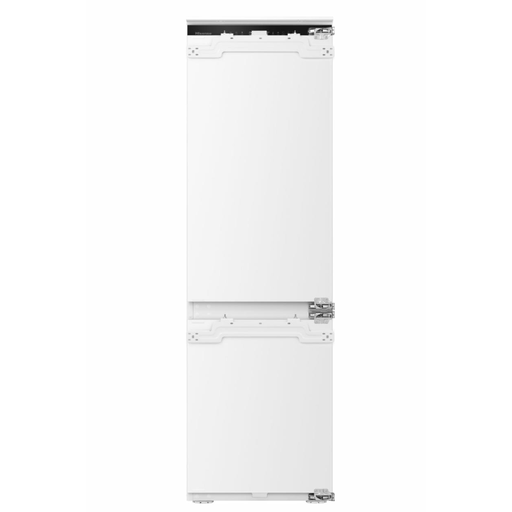 Image unavailable
Hisense RB3B250SAWC, 252 L built-in fridge freezer
Worth considering as a replacement for a built-in fridge freezer if its capacity meets your storage needs.
The product name specifies No Frost, an Inverter compressor and energy rating C. Check the cabinet dimensions and confirm the rating on the label for this model.
View on Joybuy
 Image unavailable
Candy CFQQ5T817EPS, 467 L four-door fridge freezer
Consider this if you need a large-capacity fridge freezer and have enough space for it.
The product name specifies Total No Frost, a Smart Inverter compressor and energy rating E. Check the dimensions, required clearances and label for the exact model.
View on Joybuy
 Image unavailable
Haier HTW5618ENMG, 360 L three-door fridge freezer
Worth considering if a 360 L fridge freezer suits your storage needs and the space you have available.
The product name specifies Total No Frost, Wi-Fi, My Zone and energy rating E. Check the installation dimensions and the rating on the label for the exact model.
View on Joybuy
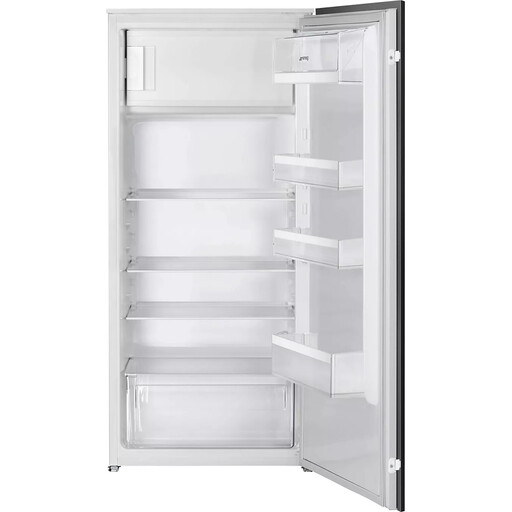 Image unavailable
SMEG S4C122E, 188 L built-in fridge freezer
Consider this as a replacement for a small built-in fridge freezer, provided a top freezer compartment suits the way you use it.
The product name specifies a single door and energy rating E. Check the cabinet dimensions, door fixing system and label for this model.
View on Joybuy
 Image unavailable
Sonlu CC-520WE, 444 L refrigeration appliance
Worth considering if you need a large amount of storage space. Check how the capacity is split between refrigeration and freezing before comparing it with your current appliance.
The product name specifies frost-free operation, 40 dB and energy rating E. Check the dimensions and energy label too before making a decision.
View on Joybuy
Frequently asked questions
Should you always replace your fridge before your dishwasher?
No. A fridge runs continuously, but a heavily used dishwasher is also worth considering. ADEME’s guidance can help you decide, but it doesn’t mean the same appliance should be the priority for every household. Check the condition and use of your appliances before making a decision.
Can you compare the energy consumption shown for each appliance directly?
Not without taking the units into account: refrigeration figures are generally shown in kWh/year, while dishwasher figures are shown in kWh per 100 Eco cycles. According to the European Commission, these figures are primarily for comparing models within the same category. Then consider how each result relates to the way you use the appliance.
What should you look for on a dishwasher’s energy label?
Check the energy use per 100 Eco cycles, water use per cycle, capacity, Eco programme duration and noise level. The European Commission says the QR code on the label takes you to EPREL, where you can find more information about the specific model.
Is the energy label for a new appliance enough to work out whether replacing it is worthwhile?
No. It shows energy consumption under standardised conditions, not how much your current appliance uses in your home. For a personal estimate, you also need to consider your old appliance’s energy consumption or usage, your household’s habits and the electricity tariff that applies to you.


