For your first studio flat, start by choosing an appliance that fits the space, allowing for the door to open and for ventilation clearance. A short model can work if you buy modest amounts; a fridge with an ice box suits occasional frozen food, while a compact fridge-freezer offers separate storage but needs more height. Then compare the capacity of each compartment, the stated noise level and the energy consumption shown on the label.
Who are the different formats for?
You’re fitting out an under-counter kitchen
Start by measuring the available height, width and depth, then check the clearances specified in the manual and make sure the door can open fully. Que Choisir describes a table-top fridge as an option for studio flats, provided the model’s dimensions genuinely suit the space.
You shop less often and store frozen food
Check the capacity for fresh food and frozen food separately. A small built-in ice box and a separate freezer won’t meet the same needs if you’re storing several meals or bringing home a week’s worth of shopping.
You sleep or work near the kitchen
In a studio flat, compare the stated noise levels for the exact models you’re considering, but don’t take them as a promise of silence. Que Choisir also assesses noise during operating cycles in its tests, so these results can help you evaluate a product listing when they’re available for the model you have in mind.
What should you prioritise in a studio flat?
First, measure the finished space, then decide how to balance room for groceries, space for frozen food and comfort in your living area. A table-top fridge, a fridge with an ice box and a compact fridge-freezer can each meet some of these needs, but their compartments and heights aren’t interchangeable.
| Criteria |
What to check |
Who it matters to |
| Available space |
Measure the space and check the manual for ventilation clearances and door swing. |
If my kitchen only has space under the worktop, I need to be able to install and open the appliance without blocking the way; space constraints are said to be the main priority for around 36% of consumers. |
| Fresh and frozen food |
Compare the capacity in litres of each compartment and, if you freeze food, check the specifications of the compartment designed for it. |
When I shop for several days at a time, I need room for fresh food without sacrificing space for frozen food. Separate storage is said to be the main concern for around 29% of consumers. |
| Noise |
Compare the stated dB(A) levels for the exact models and look for an operating test if one is available. |
When my bed or desk is close to the kitchen, the appliance’s operating cycles matter to me; around 21% of consumers are said to put quietness first. |
| Electricity and maintenance |
Check the kWh/year figure on the label and see whether the freezer compartment needs manual defrosting. |
If I want to keep running costs and maintenance time down, these points could help me choose between two formats that fit my kitchen; they’re said to be a priority for around 14% of consumers. |
Pitfalls to avoid before you buy
-
Relying on the word ‘compact’ alone
This doesn’t tell you whether the appliance will fit under your worktop. Candy and Beko’s product listings give heights of 840 mm for the COT1S45EW and 1 465 mm for the RDSA240K40WN respectively, so these models need different types of space.
Compare the dimensions of the exact model you’ve chosen with the finished space, then check its manual for clearances and which way the door opens.
-
Confusing total capacity with space for frozen food
The overall capacity doesn’t tell you how much you can store in each compartment. Beko’s listing for the RDSA240K40WN specifies 177 l for fresh food and 46 l for its four-star compartment.
Compare the capacity of each compartment and check the freezing specifications if you plan to store frozen food regularly.
-
Assuming the stated decibel level tells you how quiet it will feel in your room
A dB(A) figure lets you compare product listings, but it doesn’t tell the whole story about intermittent noises or vibrations you might notice near your bed. Que Choisir takes sounds produced during operating cycles into account in its tests.
Look for a test of the exact model if one is available, and follow the manual’s instructions for levelling and installation.
-
Forgetting about energy use and defrosting
Two appliances that fit the same space may need different levels of maintenance. Candy’s COT1S45EW and Beko’s RDSA240K40WN product listings both specify manual defrosting for their freezer compartments.
Compare the kWh/year figures for each model and check how it defrosts before making your choice.
If the freezer compartment needs manual defrosting, set aside time for the job and follow the manufacturer’s instructions.
Brands and models to consider
These models showcase different formats; their specifications don’t represent every appliance made by each brand.
Beko
The RDSA240K40WN is an example of a compact fridge-freezer for anyone with enough vertical space who wants separate fresh and frozen food compartments.
- According to Beko’s product listing, this model measures 540 × 574 × 1 465 mm and offers 177 l for fresh food and 46 l in its four-star compartment.
- The same listing specifies a manually defrosted freezer and a stated noise level of 37 dB(A); this figure doesn’t guarantee that you won’t notice the appliance in a studio flat.
Bosch
The KTL15NWEB is a fridge with a built-in ice box to consider if the appliance needs to fit under a worktop.
- Bosch’s product listing gives dimensions of 850 × 560 × 580 mm, a fridge capacity of 106 l and a noise level of 39 dB(A).
- Before planning to store frozen food, check this model’s documentation for the capacity and intended use of its freezer compartment.
Candy
The COT1S45EW is a table-top fridge to consider when a low height and a width of 50 cm matter more than having plenty of room for frozen food.
- Candy gives dimensions of 500 × 570 × 840 mm for this model, with a total capacity of 106 l and a stated noise level of 39 dB(A).
- Its small freezer compartment and manual defrosting are worth bearing in mind if you often store frozen meals.
Fridges available on Joybuy
These models suit two different needs: fridge-freezers that keep fresh food separate from frozen food, and a mini fridge for a very restricted space and modest shopping needs. Check the installation dimensions before choosing one for your studio flat.
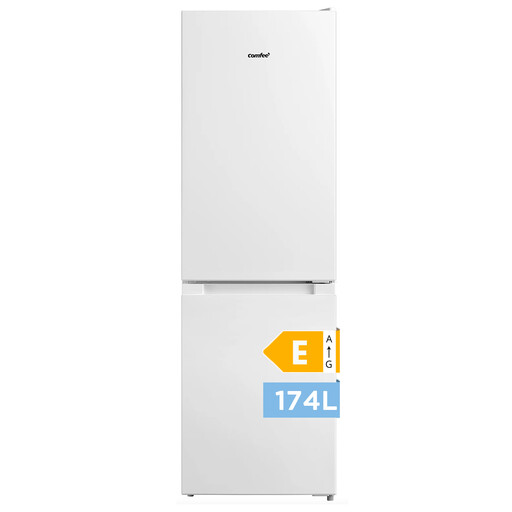 Image unavailable
Comfee' RCB169WH2(E), 174 l fridge-freezer, 70/30
This fridge-freezer could suit you if you want to store fresh and frozen food in a tall appliance and your kitchen has enough height.
Stated capacity of 174 l, height of 150 cm, four-star freezer, Low Frost technology, stated noise level of 39 dB and energy rating E. Low Frost doesn’t mean you’ll never need to defrost it.
Check the manual for clearances, door opening and the annual energy consumption listed for this model.
View on Joybuy
 Image unavailable
CHiQ JR227LSE, 227 l fridge-freezer, silver
If you need separate space for fresh and frozen food, compare this fridge-freezer with the room you have available.
Stated capacities of 153 l for the fridge and 74 l for the freezer, width of 54 cm, four-star freezer, Low Frost and energy rating E.
Width alone isn’t enough to confirm it will fit: also check the height, depth, clearances and door opening. Low Frost doesn’t necessarily mean you won’t need to defrost it.
View on Joybuy
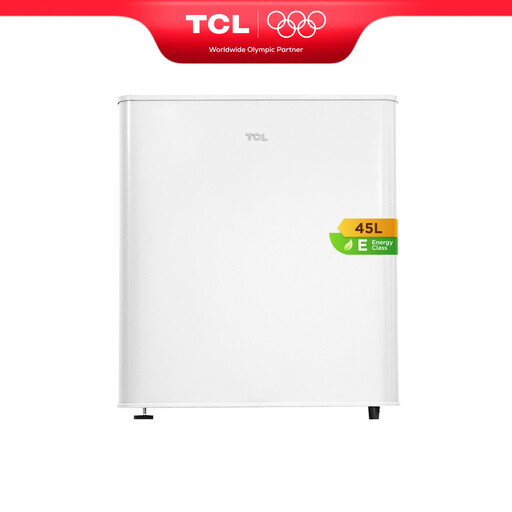 Image unavailable
TCL RF60DWE0FR, 45 l mini fridge
This small format is worth considering if space is very limited and you only store a few groceries at a time.
It has a stated capacity of 45 l and an energy rating of E. As a guide, Que Choisir gives an average of 100 to 150 l of usable capacity for one person, so check whether 45 l will be enough for your everyday meals.
If you need to store frozen food, check this model’s documentation before relying on it for that purpose.
View on Joybuy
Frequently asked questions
What capacity should one person allow for in a studio flat?
Que Choisir gives 100 to 150 l of usable capacity as a starting point for one person. Then adjust the space for frozen food to suit how often you shop, rather than relying on the stated total capacity alone.
Will a fridge rated below 40 dB(A) be inaudible?
No: the stated level doesn’t guarantee a comfortable sound level in a single room. Que Choisir also assesses noise during operating cycles; if a test is available for the exact model, read it alongside the product listing and follow the manual’s installation instructions.
What should I compare on the energy label?
Compare the energy rating, annual consumption in kWh and the noise information for models that will fit in your kitchen. Make sure you’re looking at the exact model: a specification from another appliance in the same range isn’t enough to help you choose between them.
How can I keep maintenance to a minimum after installation?
Choose a defrosting method that suits the time you’re willing to spend on maintenance, then care for the appliance according to its manual. Que Choisir recommends cleaning the interior, dusting the condenser and defrosting models that require it.


