If you live alone, shop frequently and rarely store frozen food, start by comparing an under-counter fridge with a single-door model. If you share your home or regularly freeze meals, look instead at the separate capacities of a fridge-freezer. Measure the space before choosing: a built-in appliance must also fit the kitchen unit, door panel and fixing system. Usable capacity, noise and annual energy consumption matter just as much as the external dimensions.
Which formats suit different households?
One person in a studio flat
If space is limited and you shop frequently, it’s worth comparing an under-counter fridge with a single-door model. UFC-Que Choisir suggests 100 to 150 L of fridge capacity for one person; also check how much space you’ll actually have for frozen food.
A couple or house-share
Sharing food shopping and preparing meals means looking at fridge and freezer capacity separately. Beko’s guide suggests 150 to 200 L of fridge capacity and around 60 L of freezer capacity for two people. Adjust this to suit your habits.
A home with a fitted kitchen
Before choosing a built-in appliance, measure the housing and identify how the cupboard door is fixed. Bosch distinguishes between sliding and fixed hinge systems, among others, so similar dimensions alone aren’t enough to confirm compatibility.
What should you check before choosing?
Start with the available space and your food storage habits, then compare appliances with enough capacity for your needs.
| Priority |
What to check |
Consider your needs |
| Usable capacity |
Compare fridge and freezer capacity separately. UFC-Que Choisir suggests 100 to 150 L of fridge capacity for one person; also consider the layout of the shelves. |
I shop little and often, or I need space for shared food shopping and prepared meals. |
| Format and installation |
Measure the width, height and depth, and allow enough clearance to open the door. For a built-in model, also check the housing, door panel, hinges and specified ventilation requirements. |
The kitchen is small or already fitted out: the appliance must fit its space and its door must be able to open. |
| Freezer capacity |
Check whether there’s a freezer compartment and how much it holds. A small integrated compartment and the separate freezer section of a fridge-freezer won’t offer the same storage capacity. |
I rarely store frozen food, or I regularly freeze portions of meals. |
| Energy use and noise |
When comparing appliances of a similar size and capacity, check the A to G energy rating, annual consumption in kWh and stated noise level in dB(A). ADEME points out that a fridge runs continuously; the European energy label provides details you can compare. |
In a studio flat or open-plan kitchen, I want to take everyday noise into account and not judge energy use by the rating alone. |
| Food storage |
Check the temperature settings and interior layout. Anses recommends a temperature of 0 to +4 °C at the coldest point in the fridge. |
I store fresh food and leftovers, so I need enough room to put everything away without overloading the appliance. |
What mistakes should you avoid?
-
Relying only on the external dimensions of a built-in model
An appliance might fit the housing, but the existing door panel or door opening may not be compatible. Bosch recommends checking the dimensions and hinge type when replacing an appliance.
Measure the housing, identify the hinges and check the ventilation requirements in the manual for the model you’re considering before ordering.
-
Choosing based on total capacity alone
Two appliances with a similar total capacity can offer very different amounts of space for fresh and frozen food. This affects how useful they’ll be in a studio flat or a house-share.
Think about how often you shop and what you freeze, then compare the usable capacity of each compartment.
-
Comparing energy ratings alone
A fridge runs continuously, ADEME reminds us. Its energy rating alone doesn’t tell you its annual consumption or how much food it can store.
Compare appliances with similar formats and capacities, looking at the kWh/year, usable capacity in litres and stated noise level in dB(A) together.
-
Leaving arrangements for your old appliance until delivery day
If you’re replacing a fridge, arranging for the old one to be taken away is separate from installing the new appliance.
Ask the retailer about collection before arranging delivery. The French Ministry for the Ecological Transition explains that its ‘one-for-one’ take-back scheme applies when you buy an appliance of the same type.
A guide to some of the brands
Beko
Beko’s guides cover a range of formats and offer capacity suggestions based on the number of people in a household.
- Beko’s guide suggests 100 to 150 L of fridge capacity for one person and 150 to 200 L for two.
- These suggestions don’t determine which model you should buy: adapt them to your shopping habits and check the dimensions and compartment layout.
Bosch
Bosch’s information on built-in fridges is useful if your kitchen already has an appliance housing and door panel.
- Bosch explains what to check about the dimensions and hinges, including sliding and fixed hinge systems.
- Compatibility depends on the specific model: an appliance’s stated height alone doesn’t confirm that it will fit.
Liebherr
Liebherr’s freestanding range includes under-counter fridges and fridge-freezers.
- The KTe551 under-counter fridge is an example of a 111 L model measuring 85 × 55 × 60,7 cm, according to Liebherr’s product details.
- These dimensions and capacity apply to the KTe551; check them for any other model, as well as your freezer requirements.
Whirlpool
Whirlpool France’s built-in range includes both single-door and fridge-freezer configurations.
- These two configurations let you compare how much room is set aside for fresh and frozen food in a fitted kitchen.
- For each model, check the housing dimensions, usable capacity and door panel fixing system.
Fridges for different kitchen layouts
This Joybuy selection includes freestanding fridge-freezers for smaller or shared homes, as well as built-in appliances to consider if your kitchen has a compatible housing.
 Image unavailable
CHiQ JR263LGE, 262 L black fridge-freezer
This freestanding fridge-freezer is worth considering if you want to set aside some capacity for frozen food in a shared home. The product title lists a 70/30 split, a width of 54 cm, a height of 176 cm and Low Frost technology. Check the depth, required clearance and defrosting instructions before deciding where to place it.
View on Joybuy
 Image unavailable
CHiQ JR227LSE, 227 L silver fridge-freezer
If you’re sharing a home and have limited width to work with, this fridge-freezer offers 153 L of fridge capacity and 74 L of freezer capacity. The product title specifies a width of 54 cm, a reversible door, a 4-star freezer, Low Frost and an E energy rating. Also check the height, depth and annual consumption in the product details.
View on Joybuy
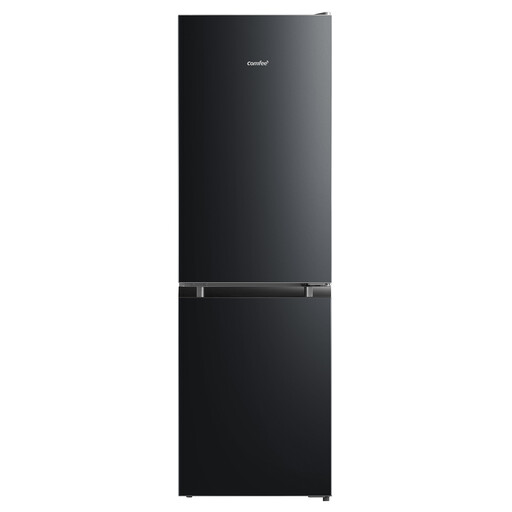 Image unavailable
Comfee’ by Midea RCB230BL2EU(E), 174 L fridge-freezer
This 174 L freestanding model lets you consider a fridge-freezer for your first home without starting with a large capacity. The product title mentions Low Frost, an adjustable thermostat and a reversible door. Check the dimensions, the capacity of each compartment and the noise level for the space where you plan to put it.
View on Joybuy
 Image unavailable
AEG NSC6M18FES, 249 L built-in fridge-freezer
This built-in fridge-freezer is designed for a kitchen with space for an integrated appliance. The product title lists a capacity of 249 L, TwinTech No Frost and an E energy rating. Before buying, check the housing dimensions, door panel fixing system and ventilation requirements against your kitchen.
View on Joybuy
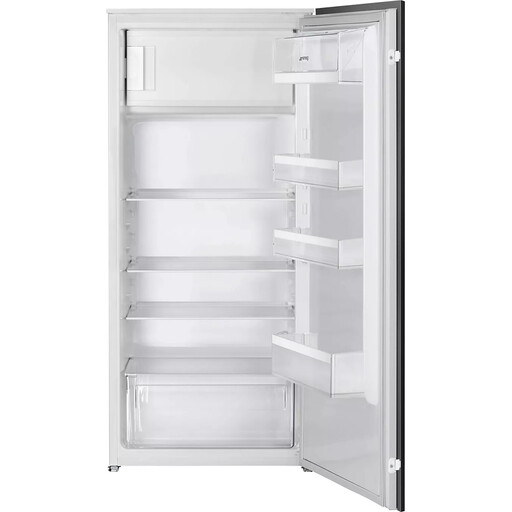 Image unavailable
SMEG S4C122E, 188 L single-door built-in fridge
This single-door built-in model has a top freezer compartment. It’s worth considering if your kitchen has a suitable housing and you mainly want to store fresh food. The product title lists a total capacity of 188 L and an E energy rating. Check the freezer compartment’s capacity, as well as the required housing and fixing system.
View on Joybuy
Frequently asked questions
How much fridge capacity does one person need?
UFC-Que Choisir suggests 100 to 150 L for one person. Adjust this if you shop less often or prepare several meals in advance; check the freezer compartment separately if you store frozen food.
Can you replace a built-in fridge with any other built-in model?
No: the housing dimensions and door fixing system must be compatible. Bosch recommends checking whether the existing system uses sliding or fixed hinges. Also check the new model’s manual for its ventilation requirements.
How do you compare the energy use of two fridges?
First compare appliances with similar formats and capacities, then check their A to G energy ratings and stated annual consumption in kWh. The European energy label provides these details, but the stated consumption won’t, on its own, reflect your actual usage.
What temperature should you set your fridge to?
Anses recommends a temperature between 0 and +4 °C at the coldest point to keep food fresh. After installation, check this point and set the appliance according to its manual.
Should you wait before plugging in a newly delivered fridge?
Follow your model’s manual and the delivery instructions. In its installation instructions, Electrolux recommends waiting at least four hours before plugging the appliance in and leaving room for air to circulate around it.


