How do you choose between them?
First, choose a format that fits the space. Then check that it has enough room for your shopping and, if needed, your frozen food.
Freestanding table-top fridge
Consider it: if the available height or width is very limited and you shop frequently, buying small quantities.
Bear in mind: fresh-food capacity may be limited. Beko describes the TS190340N as a table-top fridge with 85 l of total capacity, below UFC-Que Choisir’s average recommendation for one person.
Compact freestanding fridge-freezer
Consider it: if you regularly buy frozen food and want a separate freezer compartment.
Bear in mind: check the height, depth and door clearance. A fridge-freezer won’t necessarily fit where a small under-counter appliance would.
Built-in fridge
Consider it: only if your kitchenette already has an alcove that suits the model you’ve chosen.
Bear in mind: the alcove, door fixing and ventilation must meet the requirements in the instructions. Don’t assume a freestanding model will work inside an enclosed unit.
| What to consider |
What to check |
Who should consider it? |
| Room for your shopping |
Compare the usable fridge capacity and shelf layout with the food you usually store. |
If I cook for several days at a time, I want enough room for fresh food without constantly cutting back on what I buy. Around 29% of consumers prioritise capacity. |
| Size and installation |
Measure the space and check the model’s diagram for the door, ventilation and, where applicable, the alcove. |
In a very small kitchenette, I need to be able to install the appliance and open the door without blocking the way. For around 36% of consumers, this compatibility comes first. |
| Storing frozen food |
Check the compartment’s star rating and capacity, as well as the manufacturer’s guidance on freezing. |
I often buy frozen food, so I need to know what the compartment can actually hold. This is a priority for around 21% of consumers. |
| Noise and energy use |
Check the model’s noise level in dB(A) and annual energy consumption in kWh. Compare models with a similar capacity. |
If my fridge is in my living space, noise matters just as much as the room it takes up, and I also keep an eye on energy use. Around 14% of consumers put these two factors first. |
Brands to consider for these formats
These models illustrate different space requirements. Always check the product information and instructions for the model you’re interested in.
Beko
Beko describes the TS190340N as a freestanding table-top fridge, 82 cm high and 47.5 cm wide, with a top freezer compartment.
- Its narrow width is worth considering if space is tight. Check the door opening direction and clearances for your installation.
- Its total capacity of 85 l is below UFC-Que Choisir’s average recommendation of 100–150 l for one person.
Liebherr
According to Liebherr, the KTe551 table-top fridge measures 85 × 55 × 60,7 cm and has a total capacity of 111 l, including a 15 l freezer compartment.
- The manufacturer lists a 4-star compartment and a noise level of 37 dB(A). Both are worth considering if you want a small amount of freezer space in your living area.
- The wall spacer adds 3.5 cm to the stated depth, so take this into account before choosing the model for a specific space.
Bosch
Bosch describes the KIL22NSE0 as a built-in, single-door fridge measuring 874 × 541 × 548 mm, with 104 l of fridge space and an integrated freezer compartment.
- Bosch lists a noise level of 35 dB(A) and a 4-star compartment for this model.
- Before choosing it, check the alcove dimensions, hinges, door panel and ventilation against the installation instructions.
Fridges to consider on Joybuy
These models suit a range of studio flat layouts: freestanding fridge-freezers with a separate freezer compartment, built-in appliances for compatible alcoves, and a single-door fridge for spaces where width is a particular concern. Compare their capacity with your usual shopping before choosing a format.
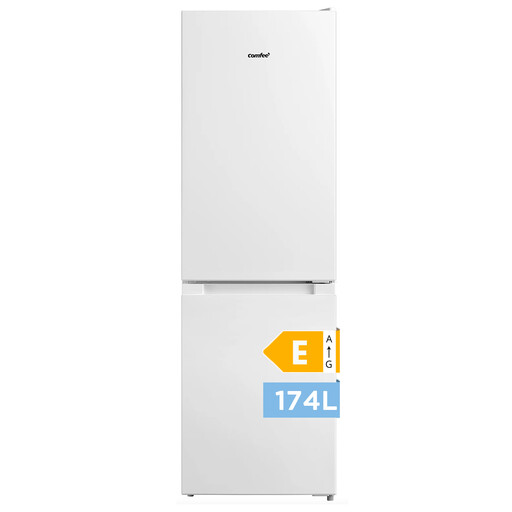 Image unavailable
Comfee' RCB169WH2(E), 174 l fridge-freezer
Worth considering if you want a freestanding appliance that combines fridge and freezer space. The title lists a height of 150 cm, a 4-star freezer, 39 dB, a reversible door and an E energy rating. Check the space required for installation and the model’s annual energy consumption on its label.
View on Joybuy
 Image unavailable
CHiQ JR227LSE, 227 l fridge-freezer
A good option if you need more fresh-food storage and a separate freezer compartment. The title lists 153 l for the fridge and 74 l for the 4-star freezer, a width of 54 cm and an E energy rating. Check the height, depth and clearances too before deciding whether it will fit in your kitchen.
View on Joybuy
 Image unavailable
Hisense RB3B250SAWC, 252 l built-in fridge-freezer
Only consider this model if your kitchenette has a compatible alcove. The title lists a total capacity of 252 l, No Frost technology and a C energy rating. Before choosing it, check the alcove, door fixing and ventilation against the installation instructions.
View on Joybuy
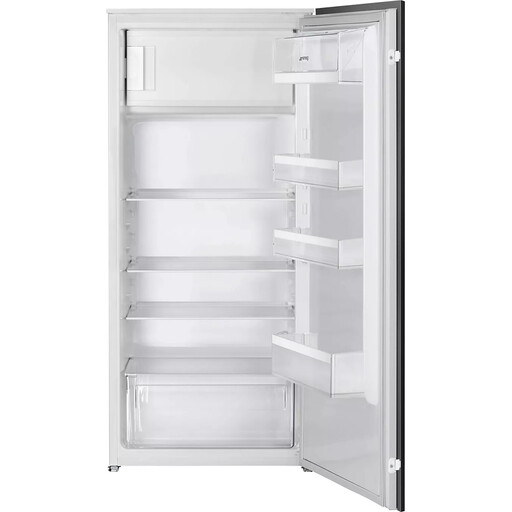 Image unavailable
SMEG S4C122E, 188 l built-in fridge-freezer
This single-door model is designed for a kitchenette with a suitable unit. The title lists a top freezer compartment and an E energy rating. If you plan to store frozen food in it, check the compartment’s star rating and capacity, as well as whether the alcove is compatible.
View on Joybuy
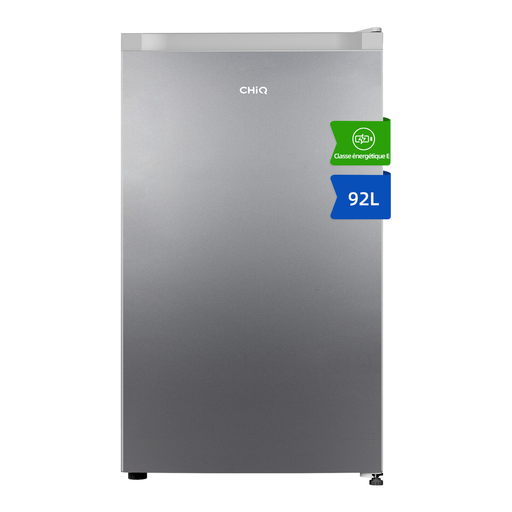 Image unavailable
CHiQ JR92DSE, 92 l single-door fridge
Consider this model if you prefer a smaller capacity and shop frequently. The title lists 92 l of total capacity, a small freezer section and an E energy rating. Check that the capacity suits your needs. If you store frozen food, check the section’s capacity and star rating.
View on Joybuy
Frequently asked questions
What capacity do you need for one person in a studio flat?
UFC-Que Choisir recommends an average usable capacity of 100–150 l for one person. A smaller fridge may work if you often buy small quantities. If you prepare meals for several days at a time, pay particular attention to the room available in the fridge compartment.
Is a small compartment enough for storing frozen food?
It depends on the compartment’s star rating and capacity, not simply whether it’s there. If you use it regularly, check the model’s freezing guidance. For example, Liebherr lists a 15 l, 4-star compartment in the KTe551, which still offers only a small amount of freezer space.
How much space should you leave around a fridge?
Follow the clearance guidance in the instructions for your chosen model rather than relying on one measurement for every appliance. For example, the wall spacer on the Liebherr KTe551 adds 3.5 cm to its stated depth. For a built-in model, check the alcove and ventilation diagram too.
What temperature should you aim for when storing fresh food?
Anses recommends an ideal temperature of between 0 and +4 °C at the coldest point in the fridge. Check your appliance’s temperature, particularly when storing food that needs careful handling.


