Anyone sensitive to noise while sleeping or working
If your fridge is near your bed or desk, compare its stated noise level and airborne acoustical noise emission class. Its position and installation also affect how noisy it seems to you.


In a studio flat where you sleep or work, first compare the stated noise level and airborne acoustical noise emission class. Then check that the fridge can be fitted and opened without getting in the way. A table-top fridge suits modest storage needs; choose a freezer compartment or a fridge-freezer depending on how much room you really need for frozen food, while also considering the dimensions and annual energy consumption.
If your fridge is near your bed or desk, compare its stated noise level and airborne acoustical noise emission class. Its position and installation also affect how noisy it seems to you.
In a kitchenette or near a walkway, the appliance dimensions alone aren’t enough. Allow room for the door to open and for the clearances specified in the manual.
If freezer space matters as much as the room available, look at the fridge and freezer capacities separately. A small freezer compartment and a fridge-freezer won’t necessarily suit the same needs.
Start by working out how much fridge and freezer space you need, then compare models that fit your space for their stated noise levels and annual energy consumption.
Consider it: for modest provisions and a low-level space.
Bear in mind: capacity is limited; check whether the model you choose has a freezer compartment suited to your needs.
Consider it: if you keep a few frozen items but don’t need the capacity of a fridge-freezer.
Bear in mind: the compartment takes up some of the appliance’s limited space. Check its specifications and the model’s defrosting instructions.
Consider it: if you regularly use a separate freezer compartment.
Bear in mind: check carefully that it will fit in your studio, including with the door open and enough room for ventilation.
| Criteria | What to check | Who it matters to |
|---|---|---|
| Noise in your living space | Compare the stated dB(A) and airborne acoustical noise emission class for the specific model. Also check the installation instructions. | When my bed or desk is close to the appliance, I want to limit sounds that disturb my sleep or concentration; around 33% of consumers put keeping things quiet at the top of their list. |
| Size and installation | Check the overall dimensions, door clearance and the gaps specified in the manual. | In a narrow kitchenette, I need to be able to open the door without blocking the walkway; for around 27% of consumers, available space is the top priority. |
| Capacity and freezing | Compare fridge and freezer capacities separately, along with the compartment’s specifications. | If I regularly store frozen food, the total capacity alone doesn’t tell me how much space is set aside for it; around 20% of consumers prioritise freezer space. |
| Annual energy consumption | Check the kWh/year and energy rating, taking into account the capacity you need. | For an appliance that runs continuously, I’d rather avoid capacity I won’t use; energy consumption is the main concern for around 20% of consumers. |
dB(A) figures and noise emission classes let you compare stated values, but they can’t guarantee how noisy a fridge will seem in every studio flat. ADEME also points out that refrigeration appliances run continuously and that their size can affect energy consumption.
These labels don’t replace the stated noise level for the exact model. The cooling technology alone won’t tell you how noisy it will seem near your bed.
Compare the dB(A) and airborne acoustical noise emission class, then follow the chosen model’s instructions for levelling and ventilation.
A fridge may fit in its space but still block the walkway or leave too little room for proper installation.
Check the height, width, depth, door opening and clearances in the manual for the exact model. Don’t automatically apply Bosch’s general installation guidance to another brand.
According to ADEME, the size and extra capacity of refrigeration appliances can increase the energy consumption of an appliance that runs continuously.
Start with your storage habits, then compare the usable capacity and kWh/year of models that genuinely meet your needs.
Two table-top models in the range offer a useful comparison of dimensions, capacity and stated noise levels for a low-level space.
The brand offers table-top models that let you compare a small fridge without a freezer against one with a compartment.
A fridge-freezer from the brand illustrates the option of having a separate freezer section; its installation advice can help you prepare the space.
These models cover different storage needs, from a mini fridge to a fridge-freezer. If it’s going in a room where you sleep, compare its capacity and footprint with its stated noise level before choosing.
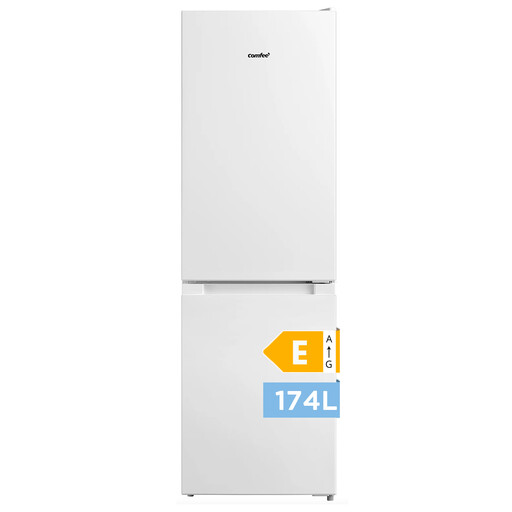 Image unavailable
Worth considering if you want fridge and freezer space in one appliance that stands 150 cm tall.
The listing gives a capacity of 174 L, a 4-star freezer, 39 dB and an E energy rating. This stated noise level doesn’t guarantee a quiet experience near your bed; also check the ventilation clearances in the manual.
 Image unavailable
Consider this if you need a separate freezer section and have a space 54 cm wide.
The title lists 153 L of fridge space, 74 L of freezer space, a 4-star compartment and an E energy rating. Check the height, depth, stated noise level and required clearances before choosing this fridge-freezer for a studio flat.
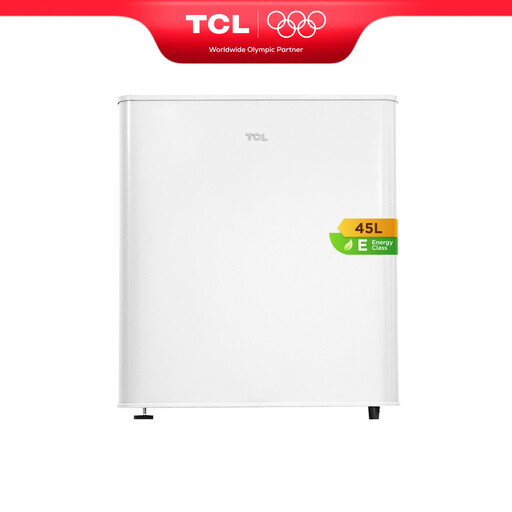 Image unavailable
Its 45 L capacity is suited to modest storage rather than a large stock of groceries or frozen food.
The title mentions adjustable feet and an E energy rating. If freezer space matters to you, check the compartment’s specifications. Also compare the stated noise level and kWh/year before placing it near your bed.
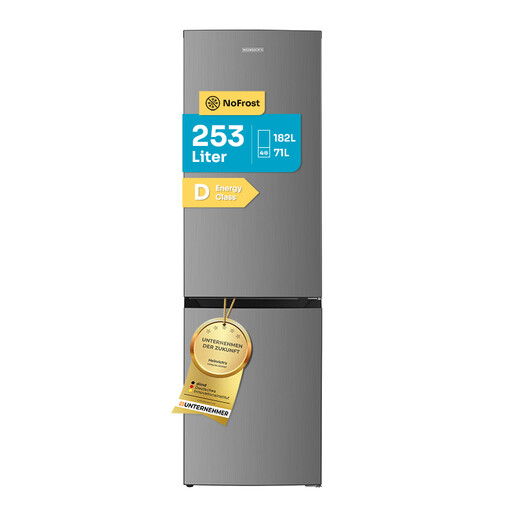 Image unavailable
Worth considering if freezer capacity matters enough to justify a fridge-freezer in your living space.
The title gives 182 L of fridge space and 71 L of freezer space, and lists No Frost and 39 dB. Check the width, depth and space needed to open the door, and don’t assume this stated noise level guarantees silence.
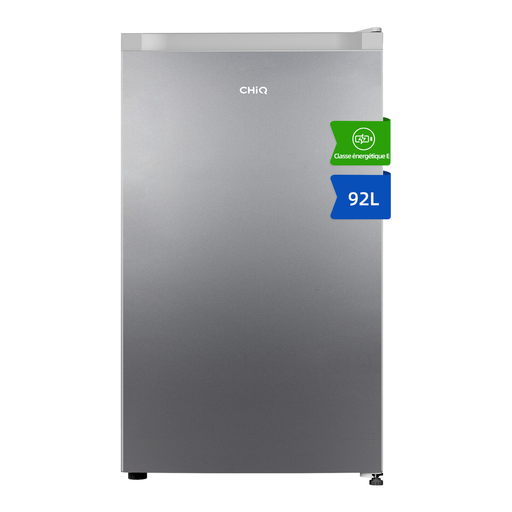 Image unavailable
Consider this if you want a single-door appliance with a compartment for frozen food.
The title gives a footprint of 0,22 m² and an E energy rating. Check the compartment’s capacity and specifications, the full dimensions and the noise level in dB: the phrase ‘low noise’ isn’t enough to compare models.
Yes. It lets you compare their stated noise levels in dB(A) and their airborne acoustical noise emission classes, in line with the information required under European regulations for these appliances. It can’t predict by itself how noisy a fridge will seem in your studio, so also check its position and installation.
The No Frost label alone doesn’t establish that a fridge will be quieter. For two models that meet your storage needs, compare their stated noise levels and airborne acoustical noise emission classes rather than judging by the cooling technology alone.
Follow the clearance requirements in the manual for the model you choose, and allow room for the door to open. Bosch recommends at least 200 cm² of clear space behind and beneath the appliance in its installation advice, but you shouldn’t apply this figure to another model without checking.
No. If you buy from a professional seller in France, the statutory legal guarantee of conformity covers goods that don’t conform to the contract and can be used for two years from delivery, as explained by the Ministry of the Economy. Any commercial guarantee is in addition to this, so check what it covers before taking it out.