In a studio flat, first choose a fridge that fits the available space, leaving enough room for ventilation and for the door to open. If you mainly store fresh food, prioritise fridge capacity; if you buy frozen food, compare the freezer compartment’s capacity and features separately. A compact fridge-freezer is worth considering if you have more height available and regularly need to freeze food.
Who are these formats for?
People who mainly store fresh food
If you shop little and often and rarely need frozen food, look at the capacity actually available for refrigeration. The UFC-Que Choisir guide links your choice of format to the size of your kitchen and shopping habits; the Bosch KTR15NWEA is an example of a table-top fridge without an integrated freezer.
People who keep a few frozen items
A freezer compartment can meet this need in an under-counter space, provided you check its capacity and star rating. The Beko TSE1284N product information, for example, lists 101 l of fridge space and a 13 l 4-star compartment.
People who are sensitive to noise in a single-room space
If your fridge is close to your bed or desk, compare its stated noise level and noise class. UFC-Que Choisir points out that the dB(A) figure alone does not fully describe how noticeable the noise will be.
What should you check before buying?
Decide how much space you need for fresh and frozen food, then check that your chosen format fits your kitchenette. The three formats below suit different shopping habits, but each still needs to fit the space you actually have.
Table-top fridge without a freezer
Worth considering : if you mainly buy fresh food and don’t need to store frozen food in this appliance.
The trade-off : all the capacity can be used for fresh food, but there’s no integrated space for frozen food.
Table-top fridge with a freezer compartment
Worth considering : if you’re short on height and only keep small amounts of frozen food.
The trade-off : the compartment takes up some of the total capacity; check its star rating and capacity for the model you choose.
Compact two-door fridge-freezer
Worth considering : if frozen food is a regular part of your shopping and you have enough height available.
The trade-off : check the space it takes up once installed and make sure the doors can open fully before choosing this format.
| Consideration |
What to check |
Who is this relevant to? |
| Space needed once installed |
Measure the height, width and depth, then check the manual for ventilation clearances and the space needed to open the door. |
When every centimetre matters in my kitchenette, I want to be able to open the door and use the drawers without blocking the way. Around 36% of consumers would put installation at the top of their list. |
| Fresh food and freezing |
Compare the capacity of each compartment rather than looking at the total capacity alone; for frozen food, check the compartment’s star rating too. |
If I keep frozen portions between shops, they shouldn’t take up too much of the space for fresh food. Freezing would be a priority for around 29% of consumers. |
| Noise |
Check the dB(A) figure and noise class; on their own, these don’t describe how noticeable the noise will be. |
With my bed close to the kitchenette, how the fridge runs at night matters a lot. Around 21% of consumers would make noise their main concern. |
| Energy use and maintenance |
Compare the kWh/year figures for formats that suit your needs, and find out about parts and repairs for the exact model. |
For an appliance that runs continuously, I want to know its stated energy use and be able to find out how to maintain it. This would be a priority for around 14% of consumers. |
Mistakes to avoid
-
Focusing only on total capacity
Total capacity doesn’t tell you how much space is available for fresh and frozen food. According to its product information, the Beko TSE1284N divides its 114 l between 101 l of fridge space and a 13 l 4-star compartment; the Bosch KTR15NWEA offers 134 l of fridge space and no integrated freezer.
Work out how much space you need for each use before comparing the stated capacities.
-
Measuring only the space the appliance takes up with the door shut
A space that looks big enough on paper may not leave enough room for ventilation or for taking out the drawers when the door is open.
Check which way the door opens and how far it swings, as well as the clearances specified in the model’s manual. Beko’s general ventilation advice recommends at least 5 cm at the sides and back; the manual for the model you choose takes precedence.
-
Assuming a decibel figure tells you how quiet it will feel
In a single room, the type of sound and any vibrations can matter too. UFC-Que Choisir notes that how noisy an appliance seems is subjective.
Use the dB(A) figure and noise class to compare product details, then look for a noise assessment if this is a deciding factor for where you sleep.
Brands to compare
These models show different ways of balancing fresh food storage, freezing and the space an appliance takes up; their features don’t represent every product range from these brands.
Beko
The TSE1284N is an example of a freestanding table-top fridge with a small 4-star compartment.
- According to Beko’s product information, it measures 840 × 540 × 590 mm and offers 101 l of fridge space and 13 l of freezer space.
- Its compartment leaves less room for fresh food than the total capacity of 114 l might suggest; check the installation clearances in the manual.
Candy
The COT1S45EW is an example of a freestanding table-top fridge with a width of 500 mm.
- Candy lists dimensions of 500 × 570 × 840 mm, a total capacity of 106 l and a reversible door for this model.
- Its width doesn’t remove the need to check space for the door and ventilation, or the capacity available in each compartment.
Bosch
The KTR15NWEA is an example of a table-top fridge designed to prioritise fresh food storage.
- Bosch lists 134 l of fridge space in an appliance measuring 850 × 560 × 580 mm.
- This model has no integrated freezer, so it won’t meet your needs if you want to store frozen food in the same appliance.
Fridges to consider on Joybuy
These models offer a few different ways to store your shopping in a small space: single-door fridges in different capacities and a compact fridge-freezer with separate fridge and freezer compartments. Check how each format fits your space before choosing.
 Image unavailable
CHiQ JR227LSE, 227 l fridge-freezer
Worth considering if you shop for fresh and frozen food and have enough height for a fridge-freezer.
The title lists 153 l of fridge space, 74 l of 4-star freezer space, a width of 54 cm and a reversible door. Check the height, depth, ventilation clearances and door swing to make sure it fits your space.
View on Joybuy
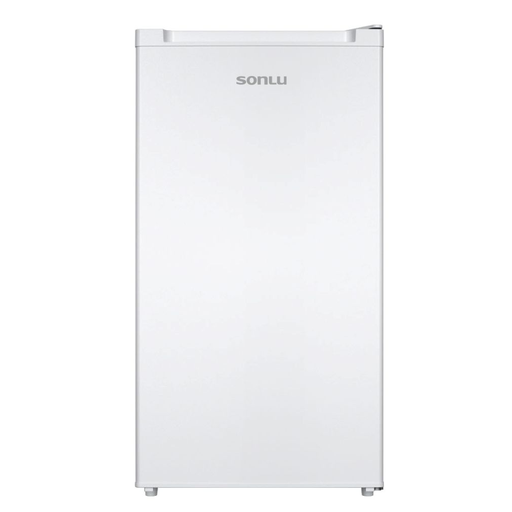 Image unavailable
Sonlu CS-100L, 82 l single-door fridge
Worth looking at if you mainly buy small amounts of fresh food.
The title lists an 82 l capacity and an E energy rating. Before placing it in a kitchenette, check its full dimensions, ventilation requirements and door opening; if you store frozen food, check separately whether it has suitable storage.
View on Joybuy
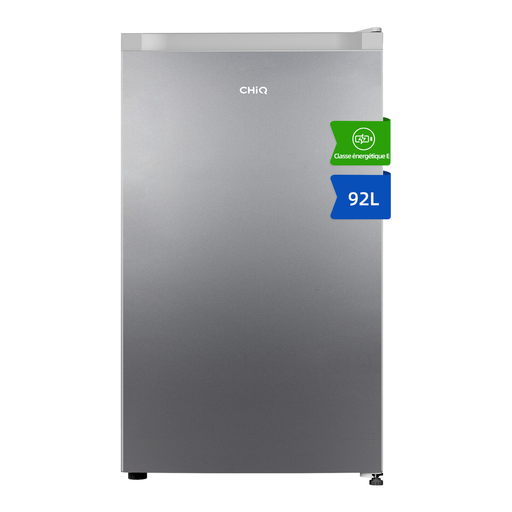 Image unavailable
CHiQ JR92DSE, 92 l single-door fridge
Worth looking at if space is limited and you want a single-door model with a freezer section.
The title lists a capacity of 92 l and an E energy rating. Check the capacity and features of the freezer section before relying on it for frozen food, along with the full dimensions and installation clearances required.
View on Joybuy
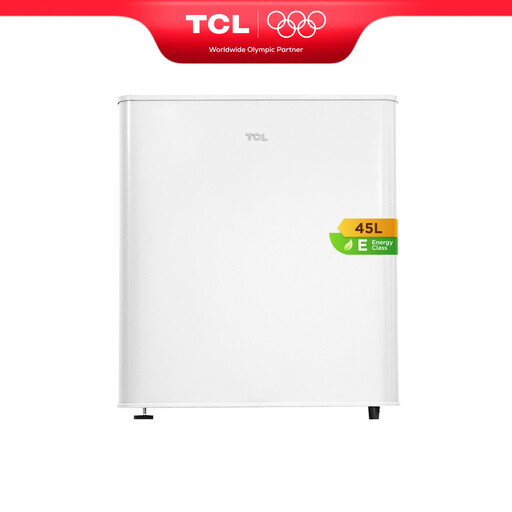 Image unavailable
TCL RF60DWE0FR, 45 l mini fridge
Worth considering for smaller shops when you have very little space for chilled food.
The title lists a 45 l capacity, a toughened glass shelf and an E energy rating. Make sure this capacity suits how often you shop; also check the features of any compartment intended for frozen food before storing frozen items in it.
View on Joybuy
Frequently asked questions
How much space should you leave around a fridge in a studio flat?
Allow for the clearances listed in the manual for the model you choose, as well as enough room to open the door. Beko’s general ventilation advice recommends at least 5 cm at the sides and back, but this doesn’t replace the instructions for the model you’re installing.
Will a fridge rated at 36 dB(A) definitely be less noticeable than a 39 dB(A) model?
No. The stated level is a guide, not a guarantee of how noticeable the noise will be in your studio flat. UFC-Que Choisir also advises taking the type of noise and any vibrations into account; compare the noise class and look for a more detailed assessment if the fridge will be near your bed.
How can you compare the energy use of two small fridges?
Check their kWh/year figures on the energy label or product page, then compare them in context, taking capacity and the balance between fridge and freezer space into account. Beko and Candy list 137 kWh/year for the TSE1284N and 141 kWh/year for the COT1S45EW respectively; these figures alone can’t tell you which of two models with different capacities is the better choice.
How can you assess whether a fridge can be repaired?
Ask about spare parts and repair services for the exact model rather than assuming a general rating tells you everything. EU ecodesign regulations set availability requirements for certain parts of covered appliances; check what the manufacturer says about handles, hinges, trays and drawers in particular.


