Which format is right for you?

Frequent shopping, mostly fresh food

If you shop for small amounts often and keep few frozen foods, an under-counter fridge without a freezer can give you more room for fresh food. Check that its usable capacity is right for what you need to store between shops.

A regular supply of frozen food

If you prepare meals in advance or shop less often, compare the freezer compartment’s capacity separately from the fridge’s. A compact fridge-freezer is worth considering, provided you have enough height for it.

An existing fitted kitchen

If you have a cabinet designed to house an appliance, start by checking its internal dimensions, ventilation and door-fixing system. The advertised capacity of a built-in fridge alone won’t tell you whether it will fit the cabinet.

What should you check before buying?

Under-counter fridge without a freezer

Consider this: if you shop frequently and have hardly any frozen food to store.

Bear in mind: this format won’t meet your needs if you require freezer space.

Single-door fridge with an ice box

Consider this: if you only freeze food occasionally and don’t have room for a taller appliance.

Bear in mind: the built-in compartment takes up room within the same overall size and offers limited freezer capacity.

Compact fridge-freezer

Consider this: if frozen food or pre-prepared portions are a regular part of your meals.

Bear in mind: a separate freezer compartment means the appliance is taller than an under-counter fridge.

Compact built-in fridge

Consider this: if your studio has a recess and door fitting that are compatible with your chosen model.

Bear in mind: the appliance must meet the cabinet’s ventilation requirements and can’t simply be replaced with a freestanding model.

Consideration What to check What matters to shoppers
Installation Measure the space and delivery route, then check the door swing and the clearances required in the model’s instructions. When every centimetre counts, I want to be able to open the door without obstructing the kitchen or blocking ventilation; around 31% of shoppers prioritise installation.
Freezer space Compare freezer capacity in litres separately from fresh-food capacity, and distinguish between an ice box and a separate freezer compartment. If I keep pre-prepared portions and shop less often, I need enough room for that food; around 25% of shoppers put freezer space at the top of their list.
Fridge capacity Check the fridge’s usable capacity and the shelf layout. Que Choisir gives 100 to 150 l as a general guide for one person, depending on shopping habits. If I buy fresh food often, I’d rather have enough room for it without choosing an appliance that’s too large for my studio; fridge capacity is a priority for around 25% of shoppers.
Noise and energy use On the energy label described by the European Commission, compare airborne noise emissions in dB(A), annual consumption in kWh and compartment capacities. When I sleep near the kitchen, the stated noise level matters, as does the energy use of appliances with a similar capacity; around 19% of shoppers prioritise these factors.

Mistakes to avoid

  • Looking only at total capacity

    Two appliances of a similar size can divide their capacity very differently between fresh and frozen food. A sufficient total capacity doesn’t guarantee enough room for your frozen food.

    Make a note of what you need to store in each compartment, then compare their usable capacities separately in the product specifications.

  • Measuring the space without allowing for the open door

    A fridge may fit in its space but block the way when the door is open, or lack the clearance it needs for ventilation.

    Check the door swing, delivery route and clearances specified in the instructions. Beko France and LG France give different clearance recommendations, so always follow the instructions for the model you choose.

  • Putting a freestanding fridge in a built-in cabinet

    A built-in appliance and its cabinet are designed for a specific airflow, while a freestanding model has its own clearance requirements.

    Choose a built-in model that’s compatible with the recess, ventilation and door fitting, or install a freestanding appliance in line with its instructions.

  • Choosing based on noise or energy rating alone

    A noise figure or energy rating won’t tell you whether the compartments will meet your needs or whether you’ll be able to install the appliance properly.

    Compare appliances of a similar format and capacity using their energy labels, then check their compartment capacities and installation requirements.

Brands to consider by format

Bosch

Bosch under-counter models show the choice between a fridge for fresh food only and a compact model with an integrated ice box.

  • Bosch France lists the KTR15NWEB at 85 × 56 × 58 cm, with no freezer compartment; the KTL15NWEB specifications list an integrated compartment and 106 l of fridge capacity.
  • Compare the capacities of the specific models: similar external dimensions don’t mean the space is divided equally between fresh and frozen food.

Beko

Beko’s freestanding TSE1504FN under-counter fridge is suited to storing fresh food without a freezer compartment.

  • Its French product page describes an under-counter fridge without a freezer and a reversible door.
  • The 5 cm clearance mentioned in Beko France’s installation advice shouldn’t be applied to another model without checking its instructions.

Candy

Candy’s City Combi range is an example of a fridge-freezer to consider when you need freezer space in a narrow kitchen.

  • Candy France lists the CCG3L517ES at 54 cm wide, 55 cm deep and 176 cm high.
  • Check that its height suits your space. The reduced frost build-up associated with Low Frost is a Candy claim, not an independent comparison between brands.

Liebherr

A Liebherr built-in fridge can be a useful point of comparison if your kitchen has a suitable cabinet.

  • Liebherr France lists the IRci 3950 as requiring a recess 87.4 to 89 cm high, 56 to 57 cm wide and 55 cm deep.
  • These dimensions apply to this specific model. Before choosing a built-in fridge, also check the cabinet’s ventilation and door fitting.

Fridges for different needs

These Joybuy models include compact fridge-freezers for storing frozen food, a small fridge with an ice box and built-in appliances for fitted kitchens. First choose a format that fits your space, then compare how much room each model offers for fresh and frozen food.

Silver CHiQ JR227LSE fridge-freezer

CHiQ JR227LSE, 227 l fridge-freezer, silver

Worth considering if you regularly store fresh and frozen food and have room for a fridge-freezer.

The product title lists 153 l of fridge capacity, 74 l of freezer capacity, a width of 54 cm, a reversible door and an E energy rating.

The total capacity may be more than you need if you shop for small amounts often. Check the height, door swing and clearances in the instructions before choosing this format.

View on Joybuy
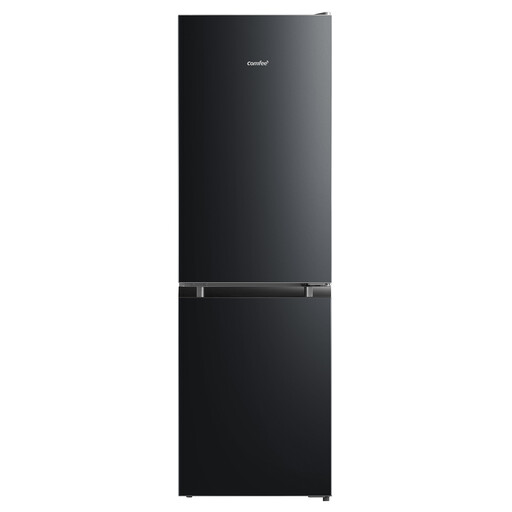
Black Comfee’ by Midea RCB230BL2EU(E) fridge-freezer

Comfee’ by Midea RCB230BL2EU(E), 174 l fridge-freezer, black

A freestanding fridge-freezer to consider if you want to store fresh and frozen food in a studio flat.

The product title lists a total capacity of 174 l, a reversible door, an adjustable thermostat and Low Frost technology.

Before buying, compare the capacities of the individual compartments and check the model’s specifications for its noise level, energy consumption and installation instructions.

View on Joybuy
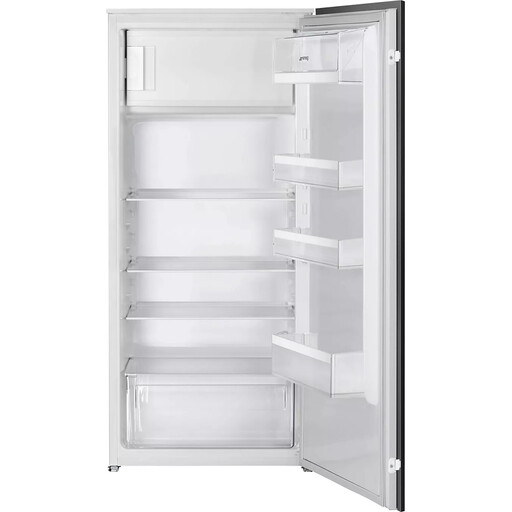
Built-in SMEG S4C122E fridge-freezer

SMEG S4C122E, 188 l built-in fridge-freezer

Worth considering if your studio has a cabinet designed for a built-in fridge and you need freezer space.

The product title lists a total capacity of 188 l, a top-mounted ice box and an E energy rating.

Check the capacity of each compartment, the recess dimensions, door fitting and ventilation requirements in the instructions. The ice box may be too small if you regularly store frozen food.

View on Joybuy
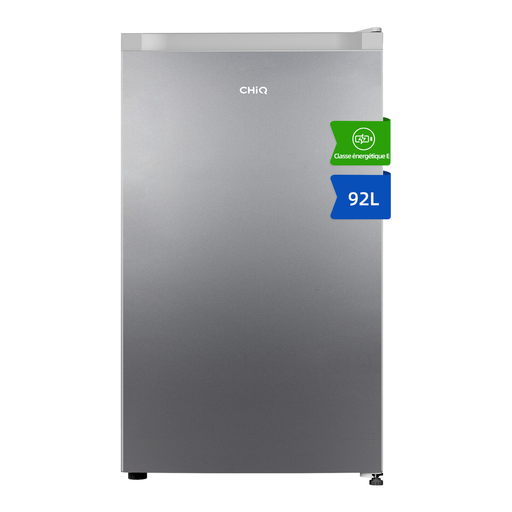
CHiQ JR92DSE single-door fridge with ice box, matt silver

CHiQ JR92DSE, 92 l fridge with ice box, matt silver

Worth considering if space is very limited and you only store a small amount of food between shops.

The product title lists a total capacity of 92 l, a compact ice box and an E energy rating.

Check the ice box’s capacity, as well as the dimensions, noise level and required clearances. Its total capacity is below Que Choisir’s general guide of 100 to 150 l for one person.

View on Joybuy
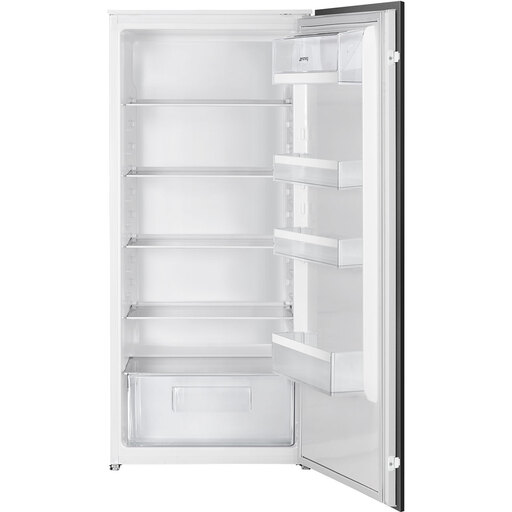
SMEG S4L120E single-door built-in fridge

SMEG S4L120E, 188 l single-door built-in fridge

An option to consider if you mainly store fresh food and have a compatible cabinet in your fitted kitchen.

The product title lists a capacity of 188 l and an E energy rating.

If you need to store frozen food, check the exact compartment layout. Also check the recess dimensions, door fitting and ventilation requirements in the instructions.

View on Joybuy

Frequently asked questions

What fridge capacity should one person allow for in a studio flat?

Que Choisir gives 100 to 150 l of usable capacity as a general guide for one person, depending on your shopping habits and available space. Compare fridge and freezer capacity separately: the total capacity doesn’t show how the space is divided.

Is an integrated ice box enough instead of a fridge-freezer?

An integrated ice box is better suited to occasional freezing. If you regularly store frozen food or pre-prepared portions, consider a fridge-freezer with a separate compartment instead. In either case, check the freezer capacity listed for the specific model.

How much space should you leave around a fridge?

Follow the clearance requirements in the instructions for your chosen model. Manufacturers’ advice varies: Beko France recommends at least 5 cm at the sides and back, while LG France recommends at least 10 cm around the appliance. A built-in model also needs a compatible recess and ventilation openings.

What temperature should the fridge compartment be?

Anses recommends a temperature between 0 and +4 °C at the coldest point. Check the temperature and avoid overfilling the appliance so air can circulate.

How does the energy label help you compare two models?

For fridges covered by European regulations, the label includes information such as the energy efficiency class, consumption, storage capacities and noise emissions, as explained by the European Commission. Compare these details across appliances with a format and capacity that suit your needs; the QR code links to the model’s EPREL product information sheet.