Which features should you compare for a small kitchen?
First, make sure the appliance will fit and that you can open it where you plan to put it. Then compare the usable capacities and features your household needs.
| What matters |
What to check |
Who it matters to |
| Fitting the appliance in |
Compare the exact model’s height, width and depth with the available space. Also check the specified clearances and which way the door opens. |
If I have a low or narrow space, I want to confirm the measurements and make sure I can open the door before choosing. Around 20% of consumers put the appliance’s size and space requirements first. |
| Storing fresh food |
Check the fridge capacity separately from the freezer capacity. Make sure the interior layout suits your usual shopping. |
If I mainly buy fresh food, I look at the space set aside for refrigeration rather than just the total capacity. Around 20% of consumers prioritise fresh food storage. |
| Storing frozen food |
Check whether the appliance has a freezer and look at the stated capacity of its frozen food compartments. |
If I regularly store frozen food, I want an appliance with a compartment that meets this need, rather than assuming that every small model has one. Around 20% of consumers prioritise freezer space. |
| Keeping noise to a comfortable level |
Compare the stated noise level for each model. A figure published by the manufacturer won’t guarantee the same level of comfort in every home. |
When my fridge is in the same room as my living space, I check the stated noise levels without treating them as a promise that it will be quiet in my home. Around 20% of consumers prioritise low noise levels. |
| Comparing energy consumption |
Check the annual consumption in kWh and the energy rating of the exact model. Compare these alongside the capacity and features. |
If I want to keep track of the appliance’s energy use, I compare the kWh/year figures rather than assuming a smaller model will necessarily use less energy. Around 20% of consumers put energy consumption first. |
Compact fridges available on Joybuy
This selection includes compact table-top and single-door fridges, as well as fridge-freezers with a freezer compartment, so you can compare different configurations to suit your space and storage needs.
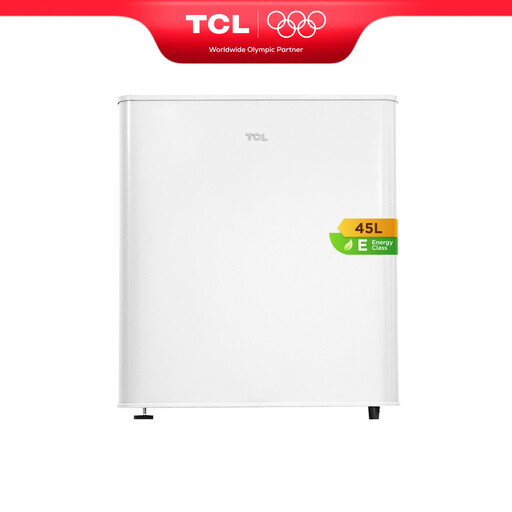 Image unavailable
TCL RF60DWE0FR, 45 L
Its table-top design could suit you if you’re looking for a small amount of fresh food storage and a freezer compartment with limited capacity.
45 L in total: 42 L for the fridge and 3 L for the freezer. E energy rating, adjustable glass shelf and adjustable feet.
Joybuy
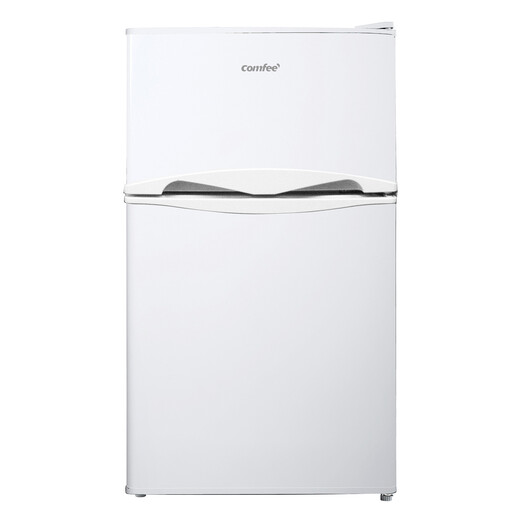 Image unavailable
COMFEE’ RCT87WH2EU(E)
This worktop model is worth considering if you want a compact appliance with flexible interior storage options.
Removable shelves, adjustable thermostat, reversible door and interior lighting. E energy rating.
Joybuy
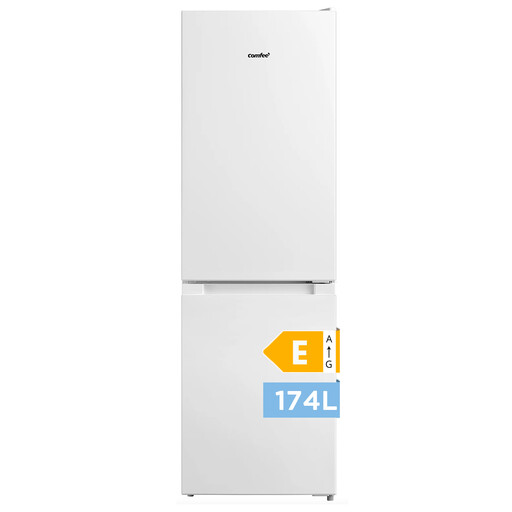 Image unavailable
COMFEE’ RCB169WH2(E), 174 L
This configuration could suit you if you want to store fresh and frozen food in separate compartments.
115 L for the fridge and 59 L for the freezer; stated height of 150 cm. Low Frost, 4-star freezer, reversible door and E energy rating. Low Frost reduces frost build-up but doesn’t eliminate it.
Joybuy
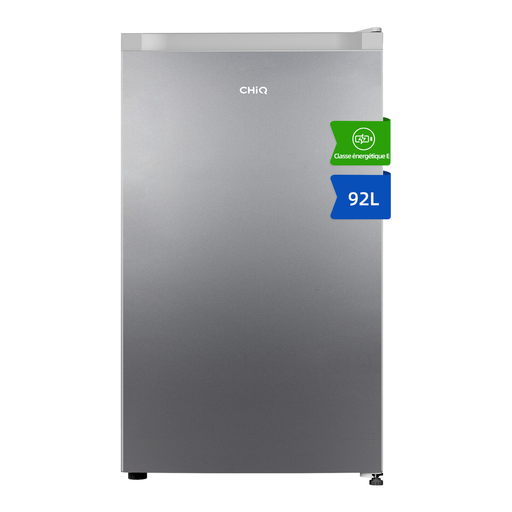 Image unavailable
CHiQ JR92DSE, 92 L
Worth considering if you’re looking for a compact single-door fridge with an integrated freezer section.
Stated capacity of 92 L and stated width of 47 cm. Freezer section, fresh food drawer, adjustable shelves, reversible door and E energy rating. The fresh food drawer is described as suitable for short-term storage of meat or fish.
Joybuy
 Image unavailable
CHiQ JR227LSE, 227 L
Consider this fridge-freezer if your kitchen can accommodate a larger appliance and you need separate compartments for fresh and frozen food.
153 L for the fridge and 74 L for the freezer; stated width of 54 cm. Low Frost, 4-star freezer, reversible door, adjustable feet and E energy rating. Low Frost limits frost build-up; check the care instructions for this model.
Joybuy
Frequently asked questions about choosing a compact fridge
Which climate class should you choose for a cool or warm room?
Check the ambient temperature range specified for the model, not just its energy rating. Liebherr’s French FAQ lists, among others, SN: +10 °C to +32 °C, N: +16 °C to +32 °C and ST: +16 °C to +38 °C. You’ll find the class on the rating plate. Choose a model to suit the possible temperatures where you plan to put it, and follow the guidance for that exact model.
Does total capacity tell you how much space there is for fresh food?
No, not by itself: check the capacity of each compartment. The European Commission’s EPREL database lists non-frozen and frozen storage volumes separately. For example, the Bosch KTR15NWEB has a stated fridge capacity of 134 l and no integrated freezer.
How can you estimate a fridge’s annual electricity cost?
Multiply the stated annual energy consumption in kWh/year by the variable price per kWh on your tariff in €/kWh. This gives you an estimate of the appliance’s annual energy cost, excluding any standing charge; your actual consumption may vary.
Where can you check the energy information for a model sold in France?
Check the product information for the exact model and, where available, its EPREL registration. The European Commission describes EPREL as a database of energy information for relevant appliances sold in the European Union. The EU’s energy labelling rules don’t apply to second-hand products.
Do you need an extended warranty to benefit from the legal guarantee?
No, the legal guarantee of conformity is separate from a commercial warranty. For a purchase made in France by a consumer from a professional seller, Service Public states that the fault must appear within two years of the goods being delivered. This doesn’t mean that every fault, whatever its cause, is covered.


