Studio flat dweller who shops often
If space is limited and you buy fresh food regularly, compare under-counter fridges and the usable capacity they offer for fresh food. Que Choisir Ensemble describes this format as suitable for studio flats.


First, choose an appliance that fits the space available. Then compare the capacity for fresh food with the space reserved for frozen food. An under-counter fridge could suit you if you shop for fresh food often and freeze very little. If you shop less frequently or regularly buy frozen food, a single-door fridge with a freezer compartment or a compact fridge freezer may be a better choice, provided you have enough room and ventilation.
If space is limited and you buy fresh food regularly, compare under-counter fridges and the usable capacity they offer for fresh food. Que Choisir Ensemble describes this format as suitable for studio flats.
To keep several days’ worth of shopping in a small kitchen, compare the usable capacity of each compartment and the full dimensions—not just the width. Que Choisir Ensemble recommends taking your household size and shopping habits into account.
If you regularly stock up on frozen food, check whether an integrated freezer compartment will be enough or whether separate drawers would better suit your needs, bearing in mind the space they take up. The formats described by Que Choisir Ensemble range from under-counter fridges to fridge freezers.
Your choice of format mainly depends on the space available, how often you shop and how much frozen food you need to store. The table highlights what to check for each priority.
Worth considering if: you often buy fresh food, freeze very little and have limited vertical space.
Bear in mind: storage capacity is limited, and a freezer compartment can reduce the space available for fresh food.
Worth considering if: you prioritise fresh food but also want to keep a limited amount of frozen food.
Bear in mind: an integrated freezer compartment may not offer the same storage capacity as the drawers in a fridge freezer.
Worth considering if: you shop less frequently or regularly use frozen food, and have enough vertical space.
Bear in mind: a narrower appliance isn’t necessarily shorter or shallower. Measure the space and check that the door can open fully.
| What matters | What to check | Who it matters most to |
|---|---|---|
| Will it fit the space? | Measure the height, width and depth, the delivery route and the door clearance. Check the ventilation requirements and the model’s instructions. | If your small kitchen has a specific alcove or designated space, you’ll want to make sure the appliance can be installed there and work correctly. Around 33% of consumers prioritise fit. |
| Space for frozen food | Check the freezer compartment’s capacity and stated freezing capacity; don’t assume these from the appliance’s total capacity. | If you regularly keep frozen food, you’ll want a freezer section that suits your shopping habits without taking up more room than necessary in the fridge. Around 27% of consumers put this need first. |
| Fresh food capacity between shops | Compare the usable fridge capacity and interior layout with the amount you actually buy. | If you shop less frequently, you’ll want to keep several days’ worth of fresh food without choosing solely by the appliance’s external dimensions. Around 27% of consumers prioritise this storage capacity. |
| Energy use and related costs | Compare the kWh/year and compartment capacities on the energy label. Check the seller’s fees and services separately. | If you want to manage energy use and purchase-related costs, compare these factors across appliances that meet your storage needs. Around 13% of consumers make this their main priority. |
The EU energy label shows details including annual consumption in kWh and compartment capacities. ADEME points out that size and extra features can affect energy use, so start by comparing models that meet your needs.
An appliance that fits across may still be too tall or deep, obstruct the door or lack the ventilation it needs. A freestanding appliance isn’t suitable for built-in installation just because it fits in an alcove.
Measure the space and delivery route, then check these measurements and the door configuration against the model’s installation instructions.
Allowing for depth, door clearance and the necessary gaps can help you avoid a difficult delivery or installation.
The way capacity is divided between compartments affects how you use an appliance, even when two models have the same external dimensions.
Compare the stated usable capacities for fresh and frozen food separately for each model.
An integrated freezer compartment and separate drawers offer different amounts of storage and take up different amounts of space.
Think about how much frozen food you usually buy, then check the capacity of the freezer compartment you’re considering.
The energy rating alone doesn’t tell you how much a specific model will use. ADEME also notes that size and extra features can affect your bill.
Compare the kWh/year shown on the energy labels of models with a suitable capacity, then estimate the cost using your own electricity tariff.
Worth comparing for compact under-counter fridges, including the KTe550 and KTe551.
Worth considering for narrow freestanding under-counter fridges, such as the TS190340N.
Worth comparing for a built-in single-door fridge with a freezer compartment, such as the KIL32NSE0.
Worth comparing for a narrower fridge freezer with a separate freezer, such as the HTR3518ENMW.
Worth considering if your fitted kitchen needs a built-in fridge freezer, such as the ENS5LE18S.
These options cover different needs in a small kitchen: under-counter fridges for prioritising fresh food, single-door models with or without a freezer compartment, and compact freestanding or built-in fridge freezers. Check the dimensions and installation requirements for each model.
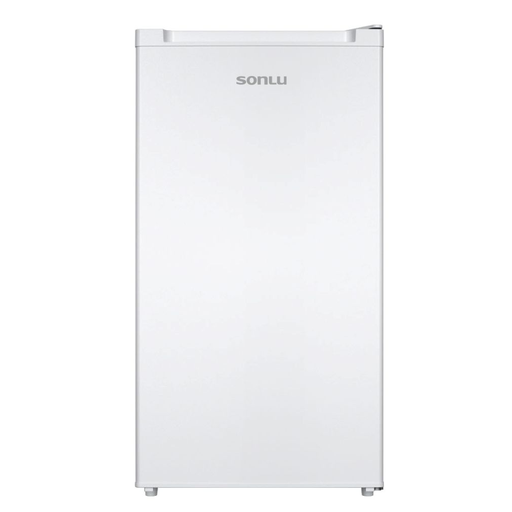 Image unavailable
Worth considering if you often buy fresh food and freeze very little or not at all.
82 L of refrigerated storage; no freezer compartment.
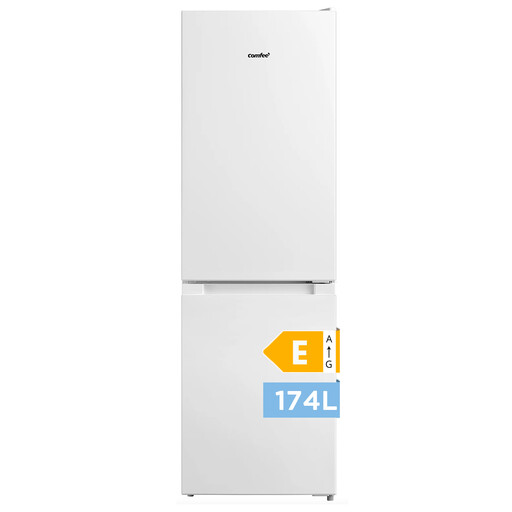 Image unavailable
Worth considering if you want to store both fresh and frozen food in a freestanding model.
115 L for the fridge and 59 L for the freezer; Low Frost system, three freezer drawers and a reversible door. Energy rating E.
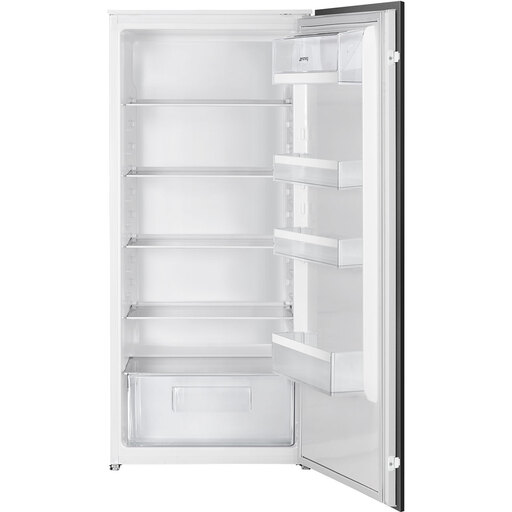 Image unavailable
Worth considering if you have a compatible niche and prioritise fresh food storage.
Stated refrigerated storage capacity of 188 L; no freezer compartment. Energy rating E. Installation requires a niche that suits the appliance’s dimensions and the manufacturer’s instructions.
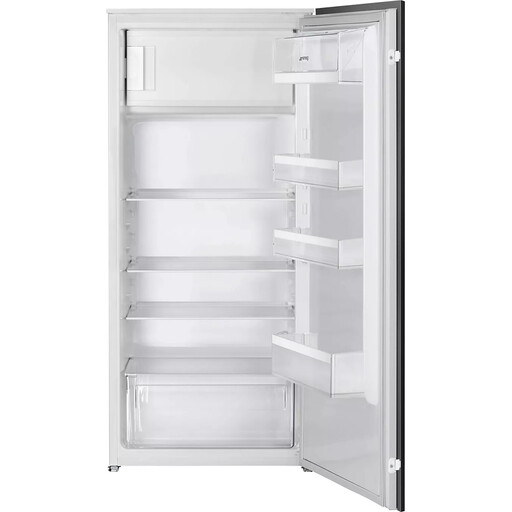 Image unavailable
Worth considering if you prioritise fresh food but want to keep a limited supply of frozen food in a fitted kitchen.
174 L for the fridge and 14 L for the freezer; reversible door and sliding installation system. Energy rating E. The niche must be compatible with the sliding-door system; the furniture door is not included.
 Image unavailable
Worth considering if your shopping includes fresh and frozen food and you’re looking for a compact fridge freezer.
153 L for the fridge and 74 L for the freezer; stated width of 54 cm, Low Frost system and 4-star freezer rating. Energy rating E. Allow for sufficient ventilation in line with the product information.
Measure the height, width and depth of the space, as well as the delivery route, door clearance and ventilation space. For a fitted kitchen, also check the niche and door-fitting requirements in the model’s instructions. The external dimensions alone aren’t enough to confirm that it can be built in.
Don’t assume a freestanding model is suitable for built-in installation just because it fits in the niche. Beko specifies ventilation clearances for the setup described in its advice, while Electrolux notes that requirements vary depending on the type of appliance. Check the instructions for the specific model before installation.
Compare the annual consumption in kWh shown on the EU energy label, as well as the fresh and frozen food capacities, across models that meet your needs. The energy rating alone doesn’t tell you the cost under your electricity tariff or how much energy the appliance will use in your home.
You can claim under the statutory guarantee of conformity from the professional seller for two years from the date a new product is delivered. The Ministry of the Economy confirms this period in information published on 9 September 2026. This guarantee is separate from any commercial warranty.
The DGCCRF describes free “one-for-one” take-back of an equivalent used product when you buy a new one. Check the practical arrangements for collection and delivery with the seller before ordering.