What should you look for before choosing?
First, work out how much space you can actually use, then how much room you need for fresh and frozen food. Whether you choose a freestanding or built-in model is a separate installation decision from choosing a compact fridge, a single-door model or a fridge freezer.
| What to consider |
What to check |
Who is this important for? |
| Available space |
Measure the width, height and depth, and check how far the door opens. For a built-in model, also compare the housing unit, fixings and ventilation requirements with the model’s instructions. |
In a small kitchen, I need to be able to fit the appliance and open its drawers without blocking the way. Around 42% of consumers might make this a priority. |
| Capacity and freezing |
Compare the usable capacity of the fridge and freezer separately, taking the number of people in your household and how often you shop into account. |
If we share the shopping and often buy frozen food, we need separate space for each. This shared capacity could be a priority for around 33% of consumers. |
| Noise and energy use |
In a living space, check the stated noise level in dB(A). Also compare the energy consumption information on the energy label. |
When the fridge is close to where I live or sleep, its noise and energy use matter in my day-to-day choice. Around 25% of consumers might make this their priority. |
Fridges to compare on Joybuy
These models include freestanding fridge freezers, which keep fresh and frozen food separate, as well as a small single-door fridge for kitchens with very limited space. Compare their capacity with your needs, then check the dimensions and installation requirements for each model.
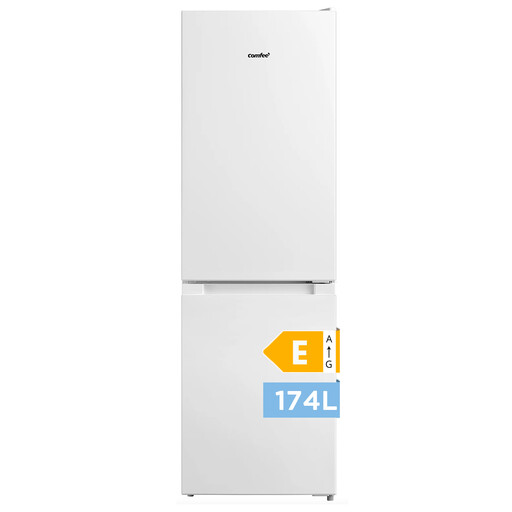 Image unavailable
Comfee' RCB169WH2(E), 174 L freestanding fridge freezer
Worth considering for a small household looking for a fridge freezer with a separate freezer compartment.
The product details state a height of 150 cm, a reversible door, 39 dB and an energy rating of E. Check the other dimensions, ventilation clearances and the space needed to open the door.
View on Joybuy
 Image unavailable
Samsung RB33B612EBN, 344 L fridge freezer
Worth comparing if several people share the space for fresh and frozen food and have enough room for an appliance of this capacity.
The model name states a capacity of 344 L and an energy rating of E. Before choosing, check how the capacity is divided, along with all the dimensions, ventilation requirements and door clearance.
View on Joybuy
 Image unavailable
CHiQ JR227LSE, 227 L fridge freezer
Worth considering for a small household that wants to store frozen food in a separate compartment.
The product name states 153 L for the fridge, 74 L for the freezer, a width of 54 cm and a reversible door. Also measure the height and depth, check ventilation and allow enough room to open the door.
View on Joybuy
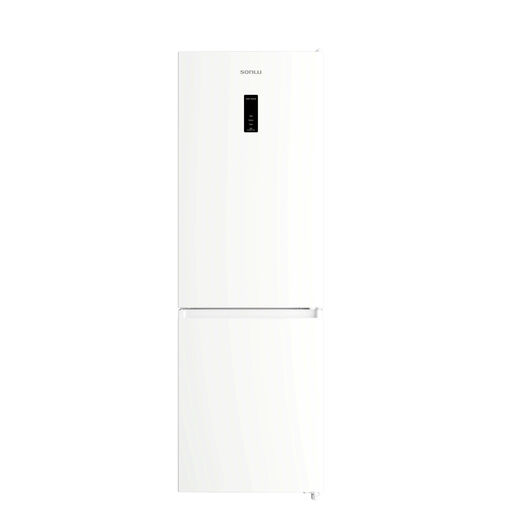 Image unavailable
Sonlu CD‑350RW, 310 L fridge freezer
Worth comparing for a shared kitchen where people want separate space for fresh and frozen food.
The product name states 211 L for the fridge, 99 L for the freezer, a width of 60 cm and a reversible door. Check the height, depth and clearances before deciding whether this capacity is right for you.
View on Joybuy
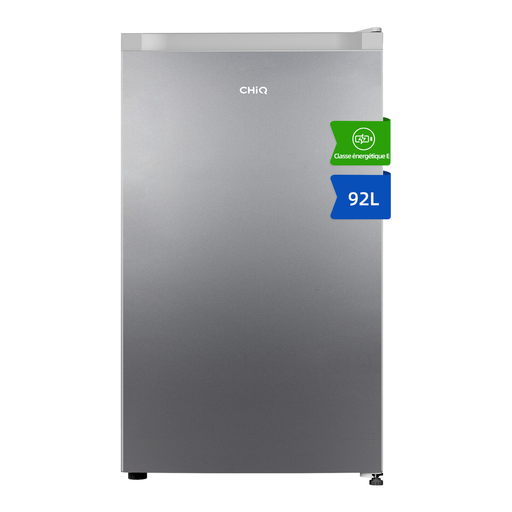 Image unavailable
CHiQ JR92DSE, 92 L single-door fridge
Best suited to a very small kitchen, frequent shopping and limited freezing needs. Its 92 L capacity is below Que Choisir’s recommended 100 to 150 litres for one person.
The product name mentions a freezer compartment and a footprint of 0.22 m². Check the capacity of this compartment, the full dimensions and the clearances required.
View on Joybuy
Frequently asked questions
What capacity do one person or a small household need?
Que Choisir recommends 100 to 150 litres of usable capacity for one person, then around 50 litres for each additional person. Adjust this guide to suit how often you shop, and compare the space for frozen food separately.
Is the width enough to choose a freestanding fridge?
No. Check the height and depth too, as well as the ventilation and the space needed to open the door and drawers. Clearances vary by model, so refer to its instructions rather than using measurements for a different appliance.
What should you measure when replacing a built-in fridge?
Measure the housing unit and compare it with the requirements of the new model, particularly for ventilation, fixings and the cabinet door. For example, Whirlpool specifies a 56 cm housing unit and sliding rails for the WHC20D011B1FR. These features don’t automatically apply to other appliances.
How can you use the energy label to compare two models?
Compare the energy ratings and consumption information for appliances that meet your capacity and installation needs. Your Europe explains the EU energy scale from A to G. A rating alone doesn’t replace checking the capacity, noise level or dimensions.
What should you do with your old fridge when replacing it?
Arrange an appropriate collection rather than abandoning it or putting it in a general waste skip. According to ADEME, you can hand it over to the retailer or delivery driver when your new appliance is delivered, or take it to a recycling centre that accepts electrical and electronic equipment.


