One person in a studio or one-bedroom flat
You need enough room for your fresh food shop without giving too much space to the appliance. If the kitchen opens onto your living area, its stated noise level is worth considering too.


If you live alone and mainly keep fresh food, a table-top or single-door fridge could suit you, provided its capacity matches your usual shop. Que Choisir recommends 100 to 150 L of usable capacity for one person. If frozen food is a regular part of your shop, consider a fridge-freezer instead, as long as its dimensions, door clearance and ventilation work in your kitchen. In a living area, compare the stated noise levels too, but don’t let this take priority over being able to install the appliance properly.
You need enough room for your fresh food shop without giving too much space to the appliance. If the kitchen opens onto your living area, its stated noise level is worth considering too.
You want to keep fresh and frozen food in one appliance. Check the capacity of each compartment separately rather than relying on the total capacity alone.
You’ll need to work out whether the units require a built-in model or whether you can install a freestanding appliance. The housing, ventilation, door clearance and delivery route all factor into your decision.
First, decide whether your kitchen can accommodate a built-in or freestanding appliance. Then choose between the compact size of a table-top fridge, extra space for fresh food or the freezer compartment of a fridge-freezer. A table-top model can also be a single-door fridge, so check whether it has a freezer compartment rather than assuming based on the format name.
| Factor | What to check | Who it matters to |
|---|---|---|
| Space and installation | Measure the space and the delivery route. Check the door swing, ventilation and, if needed, the housing against the model’s instructions. | If my kitchen is narrow or already fitted, I need to be able to get the appliance in, open it and ventilate it properly. Around 36% of consumers would prioritise this compatibility. |
| Capacity for fresh food | Compare the fridge’s usable capacity with the number of people in your household and your shopping habits. Que Choisir recommends 100 to 150 L for one person, then around 50 L for each additional person. | If I prepare several meals in advance, I need enough storage without choosing an appliance that’s too large for my kitchen. Fresh-food capacity would be the top priority for around 29% of consumers. |
| Integrated freezer compartment | Check whether it has a compartment, its capacity and its features. A small icebox and the freezer compartment in a fridge-freezer may not suit the same needs. | I regularly buy frozen food and want to keep it in the same appliance. Around 21% of consumers would put freezer capacity first. |
| Noise and energy use | Compare the stated dB(A) levels and annual energy consumption on the energy label for appliances of a similar type and capacity. | With an open-plan kitchen, I pay attention to noise as well as the appliance’s energy use. Around 14% of consumers would put this day-to-day comfort ahead of other factors. |
A fridge might fit in the space but still be unable to get through your front door, open its drawers or have the recommended ventilation clearance.
Measure the width, height and depth along the entire delivery route, then check the model’s external dimensions and installation diagram.
Compact and single-door models may have a small freezer compartment, or none at all. The space available for frozen food can therefore vary from one model to another.
Check whether the compartment is included and review its features. If you regularly store frozen food, compare fridge-freezers too.
In a studio flat or open-plan kitchen, you may be able to hear the fridge running from your living area.
Compare the stated noise levels in dB(A) for models that suit your space. Que Choisir suggests less than 40 dB(A) as a guide to a quieter appliance, not as a measure of the noise level in your home.
A built-in fridge needs compatible housing and ventilation. Delivery and installation don’t necessarily mean that your kitchen units will be altered.
Before ordering, check what the service includes and compare the housing with the installation instructions.
Fitting a cabinet door or adapting the housing may require a separate service.
The range includes table-top fridges with or without a freezer compartment, as well as freestanding and built-in models.
The range includes table-top formats and freestanding two-door fridges.
The range includes freestanding and built-in fridges, including table-top formats.
The range includes freestanding and built-in fridge-freezers.
These fridge-freezers bring both storage areas together in one appliance. For your first small home, compare their capacities with what you actually buy, then measure your kitchen and delivery route before choosing.
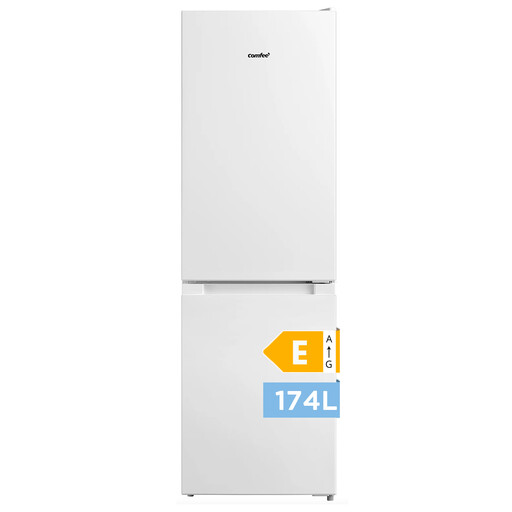 Image unavailable
If you want to keep fresh and frozen food in one freestanding appliance, this model has a stated total capacity of 174 L and a height of 150 cm.
Its title lists a 4-star freezer, a reversible door, Low Frost technology, 39 dB and an energy rating of E. Low Frost may not remove the need to defrost, so check the clearance needed around the appliance too.
 Image unavailable
If you need more space for fresh and frozen food, this model lists 153 L for the fridge and 74 L for the freezer.
Its title mentions a width of 54 cm, a reversible door, a 4-star freezer, Low Frost and an energy rating of E. Before deciding that this width will suit your kitchen, check the height, depth and delivery route.
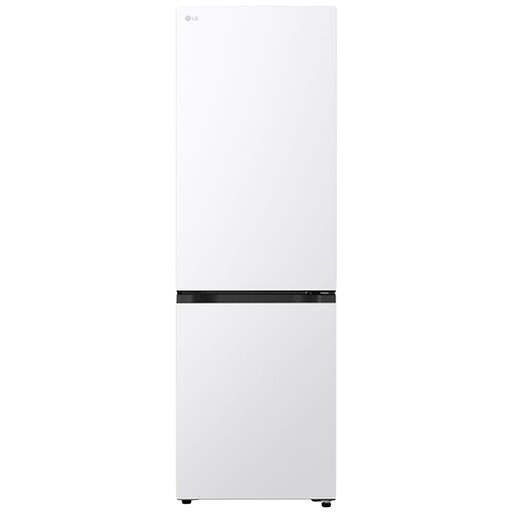 Image unavailable
Consider this 333 L fridge-freezer if you need the storage capacity and your kitchen has room for the appliance.
The title lists an energy rating of C. Before choosing this format for a small home, check its dimensions, door clearance and ventilation gaps against the available space and delivery route.
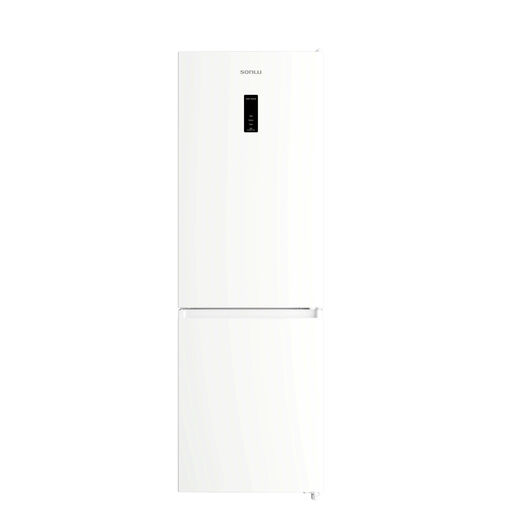 Image unavailable
For a household that regularly stores fresh and frozen food, this fridge-freezer lists 211 L for the fridge and 99 L for the freezer.
Its title lists a width of 60 cm, a reversible door and an energy rating of E. Check that the capacity suits your shopping habits, then measure the height and depth and allow for the necessary clearances.
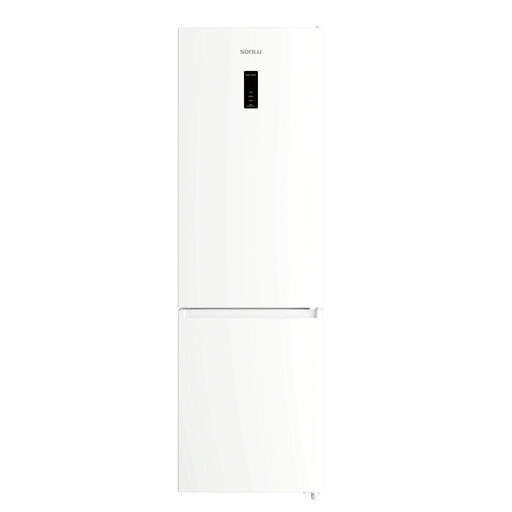 Image unavailable
If several people need space for fresh and frozen food, this model lists capacities of 252 L and 103 L for its two compartments respectively.
Its title specifies a width of 60 cm, reversible doors and an energy rating of E. For a first small kitchen, check the full dimensions and delivery route before choosing this capacity.
Que Choisir recommends starting with 100 to 150 L of usable capacity for one person, then allowing around 50 L for each additional person. Adjust this guide to how often you shop and how much space you need for meals prepared in advance.
Yes, the appliance needs the ventilation specified for its installation. For a freestanding appliance, Que Choisir suggests leaving 5 cm at the sides and rear and 10 cm above. However, always check the clearances required in the model’s instructions. For a built-in appliance, check the housing and its ventilation openings too.
Follow the waiting time given in the instructions for the appliance you’ve bought. Electrolux support advises waiting at least 4 hours before plugging in the models covered by its guidance. Don’t apply this waiting time to your model without checking its instructions.
Compare their energy ratings and annual energy consumption, ideally for fridges of a similar type and capacity. The label helps you assess stated energy use, but it doesn’t replace choosing a capacity and format that suit your kitchen.
In France, the ministry responsible for ecology says that retailers must offer to take back your old appliance when you buy a new one, whether in store or online. Before delivery, ask the retailer how to arrange the collection.