To choose between a table-top fridge, a one-door fridge, a fridge-freezer and a multi-door model, first measure the space and the delivery route, then compare the storage space for fresh and frozen food separately. A compact model may suit a studio flat or occasional stays, while a fridge-freezer offers storage in both compartments. A multi-door model needs more room and is only worth considering if its layout genuinely works for you. For appliances covered by the EU energy label, you can also compare the energy class, kWh/year, capacities and noise levels.
Who is each type suited to?
Studio flat or small kitchenette
If the space under your worktop or the available width limits your choice, consider a table-top fridge. Its compact footprint comes with limited capacity, so check that it suits your shopping habits and any frozen food you need to store.
Second-home owner or fan of fresh food
For occasional stays or storage mainly for fresh food, a one-door model is worth comparing. Check its usable capacity and whether it has a freezer compartment: the type name alone doesn’t tell you what’s inside.
Household storing fresh and frozen food
A fridge-freezer or multi-door model lets you assess the two storage areas separately. Before choosing a large appliance, also measure the delivery access, the available depth and the clearance needed to open the doors.
What should you check before choosing?
Table-top fridge
Worth considering: for a small space and a limited amount of food to keep between shops.
The trade-off: storage is limited; check the freezer compartment if you buy frozen food.
One-door fridge
Worth considering: if you mainly store fresh food or already have a separate freezer.
The trade-off: depending on the model, freezer space may be limited or unavailable.
Fridge-freezer
Worth considering: if your household regularly stores fresh and frozen food in separate compartments.
The trade-off: the total capacity is split between the two uses, so check the capacity of each compartment.
Multi-door fridge-freezer
Worth considering: for a household with lots of food to organise and a spacious kitchen.
The trade-off: its benefits depend on whether the storage layout is genuinely useful and whether you have enough room for the doors and delivery.
| Priority | What to check | Your needs |
|---|
| Capacity and storage |
Compare the usable litres for the fridge and freezer compartments separately. Check whether the shelves, bins and drawers suit the food you usually store. |
I shop less often: each compartment needs to hold everything I want to keep until my next shop. For occasional stays, I can prioritise a capacity that suits this use rather than choosing a large appliance. |
| Installation |
Measure the height, width and depth, then check the delivery route and how far the doors open. Follow the model’s instructions for ventilation and, for an integrated appliance, the dimensions of the housing unit. |
In a narrow kitchen, I need enough room not only to fit the appliance, but also to open the door and access the drawers. |
| Energy and noise |
For appliances covered by the EU energy label, look at the A to G rating, kWh/year, capacity of each compartment and noise information together. The European Commission confirms that these details appear on the label. |
If my kitchen is open-plan, I want to compare the stated noise levels. I also consider annual energy consumption alongside capacity, rather than judging two types by their rating alone. |
What mistakes should you avoid?
-
Looking only at total capacity or the number of doors
Two appliances with a similar total capacity can have very different amounts of space for fresh and frozen food. The number of doors also doesn’t tell you whether the compartments suit your shopping.
Start with the food you store between shops, then compare the capacity of each compartment and the internal layout.
-
Measuring the width alone
A fridge may fit in its intended space but still be too large to get up the stairs, leave too little room to open the door or fail to meet the clearances in its instructions.
Check the height, width and depth, delivery route, door clearance and the installation requirements for the specific model.
-
Focusing only on the energy rating
For appliances covered by the EU label, it also shows annual energy consumption, capacity and noise information, according to the European Commission. These details help you compare models with different capacities.
For each model you’re considering, note its rating, kWh/year, capacity of each compartment and noise information.
-
Assuming collection of your old appliance is already arranged
In France, the DGCCRF states that free take-back of a used appliance on a like-for-like basis is available when you buy a new appliance. This alone doesn’t explain how collection will work for your order.
Before confirming your purchase, ask about the take-back arrangements for your delivery and any instructions for preparing your old fridge.
Which brands should you compare by type?
These ranges offer a starting point for comparing different types; always check the specifications of the model you’re considering.
Beko
Beko France offers table-top fridges for smaller spaces, as well as fridge-freezers.
- Some of the brand’s table-top fridges are 54 cm wide.
- Width, reversible doors and features vary by model, so check the product details.
Liebherr
The Liebherr range includes freestanding and integrated appliances, as well as fridge-freezers with a separate freezer compartment.
- For a fitted kitchen, the housing dimensions listed for integrated models help you check whether they’ll fit.
- Check the instructions and label for the model you choose rather than assuming its features from the brand’s technology names.
Haier
Haier’s French catalogue includes several types, including fridge-freezers and large fridges.
- This range gives you different storage layouts to consider.
- Check the energy rating, capacity and dimensions for each model, including larger types.
Whirlpool
Whirlpool offers one-door and multi-door fridges to compare, depending on the layout you’re looking for.
- The multi-door WQ9 B1L shows why dimensions matter: Whirlpool lists it as 90,9 cm wide, 187,4 cm tall and 69,8 cm deep.
- These measurements apply to the WQ9 B1L, not all multi-door models; check the dimensions of your chosen model and the door clearance.
Models for different storage needs
These Joybuy options include fridge-freezers, including an integrated model with a small freezer compartment, and a multi-door model. Compare their layouts with the space you have and the amount of fresh and frozen food you store.
 Image unavailable
Candy CFQQ5T817EPS, 467 L multi-door fridge-freezer
Worth considering if your household wants to organise fresh and frozen food in a four-door appliance, and you have enough room to install it and open the doors. The model name lists a 467 L capacity, Total No Frost and an E rating; check the instructions for the required clearances.
View on Joybuy
 Image unavailable
CHiQ JR263LGE, 262 L fridge-freezer
This freestanding fridge-freezer combines fresh and frozen storage in a model listed as 54 cm wide and 176 cm tall. It features Low Frost, and the freezer needs to be defrosted manually. Check the depth, clearances and permitted ambient temperature if the room isn’t heated.
View on Joybuy
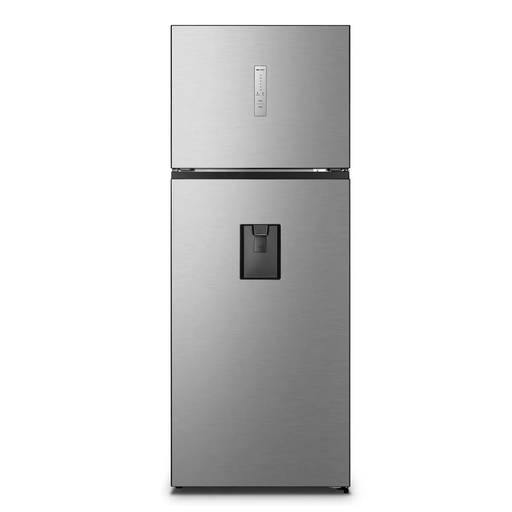 Image unavailable
Hisense FTN461WCE1, 467 L fridge-freezer
Consider this if you need plenty of space for fresh and frozen food and your home access and kitchen can accommodate this type of appliance. The model name lists a 467 L capacity, Total No Frost and an E rating. Check the instructions for the ventilation and door-opening clearances required.
View on Joybuy
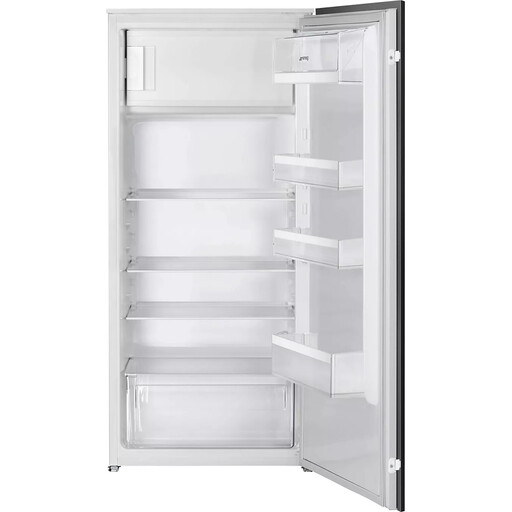 Image unavailable
SMEG S4C122E, integrated one-door fridge with top freezer
Worth considering for a fitted kitchen if you only need limited freezer space: the freezer compartment is listed as 14 L and needs to be defrosted manually. Before ordering, confirm the stated capacities, housing dimensions, door system and any parts needed for installation.
View on Joybuy
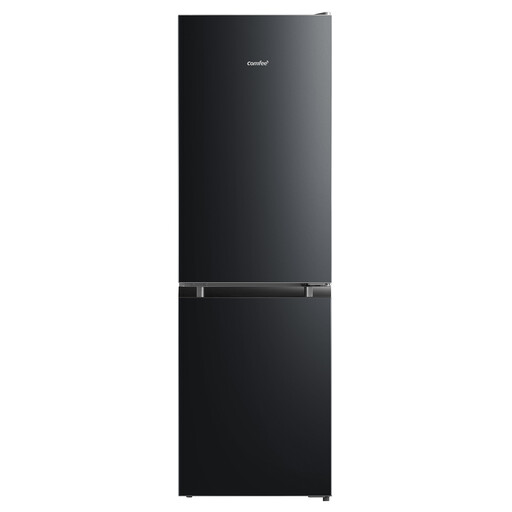 Image unavailable
Comfee' by Midea RCB230BL2EU(E), 174 L fridge-freezer
This freestanding fridge-freezer may suit a small household looking to keep fresh and frozen food separate. Its name lists a 174 L capacity, Low Frost and a reversible door; check the door clearance and the model’s energy label to compare energy use and noise.
View on Joybuy
Frequently asked questions
What should you compare on a fridge’s energy label?
For mains-powered refrigeration appliances with a capacity of more than 10 L and up to 1 500 L that are covered by the EU regulation, compare the A to G rating, kWh/year, compartment capacities and noise information. The European Commission confirms that these details appear on the label: look at them together, especially when the appliances have different capacities.
What should you measure before ordering a freestanding or integrated model?
Measure the height, width and depth of the space, the delivery route and the clearance needed to open the doors. For an integrated model, also check the housing unit, door system and ventilation against the model’s instructions; measurements for another appliance won’t be enough.
Is a multi-door model automatically suitable for a family?
No: choose one if its compartments suit your shopping habits and your kitchen and delivery access can accommodate it. As an example specific to one model, Whirlpool lists its WQ9 B1L as 90,9 cm wide and 69,8 cm deep; check the dimensions of any other multi-door model separately.
Is collection of my old fridge free in France?
The DGCCRF states that free take-back of a used appliance on a like-for-like basis is available when you buy a new appliance. Before ordering, check with the seller how this will be arranged for your delivery and what preparation is required.


