For kitchens where space is limited
Your first priority is finding an appliance that fits the space and has room for the door to open. A table-top fridge could work if its capacity is enough for your shopping.


Start by checking the installation space, ventilation and door clearance in the manual for the exact model. The appliance’s external dimensions alone won’t confirm that it will fit. Then choose fridge and freezer capacities to suit your shopping habits, and compare noise levels and annual energy consumption across suitable models. A compact fridge takes up less room, but also leaves you with less space for food.
Your first priority is finding an appliance that fits the space and has room for the door to open. A table-top fridge could work if its capacity is enough for your shopping.
You want to choose freezer capacity to suit your shopping habits, rather than relying on the total capacity alone.
You’re comparing usable fridge and freezer capacity to store your shopping without automatically opting for the largest size.
Consider this if: height is limited and a compact capacity meets your needs.
Check: the actual freezer compartment capacity and the clearances required in the manual.
Consider this if: you’d like separate spaces for fresh and frozen food.
Check: the available height, door clearance and usable capacity of each compartment.
Consider this if: you mainly store fresh food and freeze smaller quantities.
Check: the freezer compartment’s capacity and features, which are separate from the total capacity.
Consider this if: you need plenty of storage space and have room for a larger appliance.
Check: the width, depth and door clearance in your kitchen.
| Feature | What to check | Who it matters to |
|---|---|---|
| Size and installation | Measure the space and the delivery route. Check the manual for ventilation, door clearance and any required niche dimensions. | I want the appliance to fit the space and the door to open without blocking the way. Around 29% of consumers prioritise installation. |
| Freezer capacity | Compare the freezer capacity, the compartment’s star rating and the stated freezing capacity for the exact model separately. | When I stock up on frozen food, I need a compartment that suits my shopping—not just a large total capacity. Around 24% of consumers prioritise frozen food storage. |
| Fresh food capacity | Check the fridge capacity and make sure the layout suits the containers you use. | When I do a big shop, I want to store fresh food without taking up more kitchen space than necessary. This is a priority for around 23% of consumers. |
| Noise | Compare the stated noise levels in dB(A) for appliances that meet the same needs. | In an open-plan kitchen, I pay attention to the stated noise level. Around 12% of consumers make this their top priority. |
| Energy consumption | Compare the kWh/year and energy rating on the label for models with capacities that suit your needs. | As a fridge runs constantly, I check its stated annual energy consumption before choosing between suitable models. Around 12% of consumers put this feature first. |
The EU energy label shows the energy rating, annual energy consumption, capacities and noise level, among other details. ADEME notes that fridges run constantly, so compare kWh/year across appliances that meet the same storage needs.
An appliance may look as though it fits, but still lack the clearance needed for ventilation or for the door to open.
Measure your kitchen and check the manual for the exact model before choosing.
If the space or door clearance isn’t suitable, you may need to change your kitchen layout or choose another model.
A small freezer compartment and a separate freezer section in a fridge-freezer may not suit the same shopping habits.
Compare fridge and freezer capacities separately, along with the freezer compartment’s features.
These terms refer to features that can vary by model and compartment. They don’t necessarily mean the same maintenance requirements.
Check the manual for your chosen model to find out how each compartment works and how to care for it.
The DGCCRF distinguishes free ‘one-for-one’ take-back from practical services offered at the time of delivery.
Ask the seller what’s included for collection, disconnection and installation.
Disconnection or installation may be offered as separate services from take-back.
The models featured for the French market include a table-top fridge with a freezer compartment and a single-door fridge with a four-star compartment.
The KGN39VLEB is an example of a fridge-freezer with separate fresh and frozen food capacities.
The HFR5719ENMG is an example of a four-door, multi-door fridge-freezer to consider if your kitchen can accommodate its size.
The ARZ0051 is an example of a built-in under-counter fridge, which is different from a freestanding table-top model.
This selection features fridge-freezers and multi-door models, so you can compare fresh and frozen food storage. External dimensions alone aren’t enough to confirm that an appliance will fit: check the clearances and door opening requirements in each model’s manual.
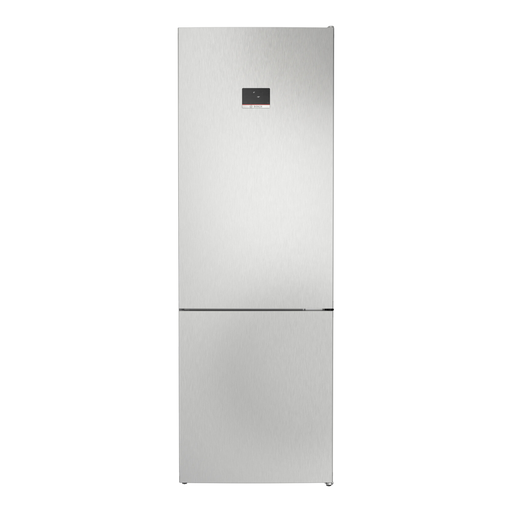 Image unavailable
Separate fridge and freezer compartments make it easy to compare their capacities with your shopping habits.
Stated capacities: 311 l for the fridge and 129 l for the freezer. Noise level: 35 dB. Energy consumption: 223 kWh/year. Dimensions: 70 × 203 × 66,7 cm. Stated clearances: at least 5 cm at the back, 2 cm on each side and 10 cm above.
 Image unavailable
Compare its separate capacities with the space you need for fresh and frozen food.
Stated capacities: 235 l for the fridge and 125 l for the freezer. Noise level: 35 dB(A). Dimensions: 59,5 × 66,7 × 185 cm. Stated climate class: SN/N/ST/T.
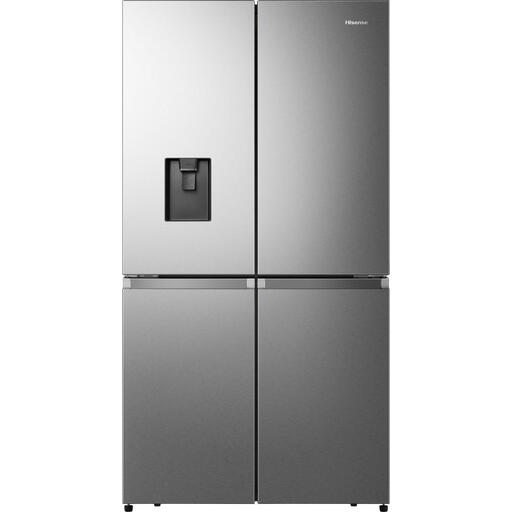 Image unavailable
Compare its total capacity and adjustable-temperature zone with your storage needs, taking the exact capacity of each compartment into account.
Stated capacities: 390 l for refrigeration, 95 l for the freezer and 108 l for a two-star compartment. The product page lists an adjustable My Fresh Choice zone of approximately −20 °C to +5 °C, No Frost and 39 dB(A). Check the manual for clearance around the appliance and door opening requirements.
 Image unavailable
Separate fridge and freezer capacities make it easier to compare the model with the quantities you want to store.
Stated capacities: 330 l for refrigeration and 165 l for the freezer. Dimensions: 177,6 × 81,7 × 71,5 cm. Stated annual energy consumption: 301 kWh. Ventilation clearance: 50 mm at the back and on the sides.
 Image unavailable
Its stated width and separate capacities can help you decide whether it’s right for a kitchen where space is at a premium.
Stated capacities: 153 l for the fridge and 74 l for the freezer. Width: 54 cm. The product page lists a reversible door, a four-star freezer, Low Frost and a noise level of 39 dB. Make sure there’s adequate ventilation around the appliance.
No. External dimensions alone aren’t enough to confirm that an appliance will fit. Check the manual for any required niche dimensions, door clearance and ventilation space. Also compare the climate class with the expected ambient temperature.
Anses recommends keeping the temperature between 0 and +4 °C at the coldest point in the fridge. It also advises against overfilling the appliance, so cold air can circulate.
Compare the kWh/year figures on the energy labels of models with the capacities you need. The stated energy consumption alone doesn’t tell you how much your bill will be.
The statutory guarantee of conformity applies, subject to its conditions, to goods bought by a consumer from a business. The DGCCRF states that claims must be brought within two years of delivery of the goods; an optional commercial guarantee doesn’t replace it.
The DGCCRF reminds consumers that sellers must offer free ‘one-for-one’ take-back of equivalent used equipment when selling a new appliance. Ask the seller how collection is arranged and whether disconnection or installation is a separate service.