Choose a size that suits the space you have and how much fresh and frozen food you store between shops. A tabletop fridge may suit a small kitchen, while a fridge freezer gives you both compartments without necessarily requiring a large appliance. Que Choisir suggests allowing 100 to 150 litres of usable capacity for one person, plus 50 litres for each additional person, adjusted to suit your habits. Compare the fresh and frozen storage capacities separately, then check the dimensions, delivery access, door clearance, ventilation, stated noise level and annual energy consumption.
Who are these sizes for?
One person in a small kitchen
You want to keep your everyday shopping fresh without sacrificing living space. Check whether a tabletop fridge has no freezer or a small freezer compartment, and look at the stated noise level if you sleep near the kitchen.
Households that store fresh and frozen food
You shop less often and need to split your supplies between refrigeration and freezing. Compare the capacity of each compartment rather than relying on the total capacity alone.
Households that stock up in bulk
You’re considering a large appliance for genuinely big shops. Check the delivery access, door clearance and energy consumption of the model you choose, too.
What should you compare?
Start with the space available, then compare the balance of fresh and frozen storage and the capacity you’ll actually need for your shopping.
| Consideration |
What to check |
Who it matters to |
| Size and installation |
Measure the space and delivery route; check the manual for ventilation requirements and whether the door can open fully next to a wall. |
If I live in a studio flat, I want an appliance that fits in the kitchen and has doors that open without blocking the way. Around 25% of consumers put size and installation first. |
| Freezer space |
Check the freezer capacity and type of compartment; don’t assume its capacity from the total volume or appliance size alone. |
When I regularly buy frozen food, I want to know how much space I’ll actually have to store it. Around 25% of consumers prioritise freezer space. |
| Fresh food capacity |
Compare the fridge capacity with how much food you store between shops, rather than looking at the total capacity alone. |
If I shop less often, I want enough room for fresh food without paying for space I won’t use. Around 20% of consumers prioritise fresh food storage. |
| Organising a big shop |
Check the width, depth, route to the kitchen, door clearance and capacity of each compartment. |
When I’m stocking up, I want practical compartments, but only if the appliance will fit in my home. Around 15% of consumers prioritise organising storage for a big shop. |
| Noise and energy consumption |
Compare the kWh/year and dB(A) ratings of models that meet the same needs. Que Choisir cites less than 40 dB(A) as a guide for the quietest models, though this doesn’t guarantee they’ll seem silent. |
In an open-plan kitchen or studio flat, I want to know the stated noise level and energy consumption of an appliance that runs continuously, without choosing one that’s too small. Around 15% of consumers prioritise noise and energy consumption. |
Pitfalls to avoid
-
Choosing by total capacity without separating fresh and frozen storage
Two compact appliances with the same external dimensions can have very different internal layouts; some don’t have a freezer compartment at all.
Compare the stated capacity of each compartment and check whether there’s a freezer compartment, and what type it is, before you choose.
-
Only checking that the appliance fits in the space
Measuring the space alone won’t tell you whether there’s enough ventilation, whether the doors can open fully or whether you can access the drawers.
Measure the entire delivery route and check the model’s manual for installation requirements. Also make sure the doors can open fully next to any walls.
A poorly measured route can make delivery and installation difficult; a door that can’t open fully may prevent you from removing some drawers.
-
Choosing the biggest appliance or relying on a single energy rating letter
ADEME points out that fridges and freezers run continuously, and that choosing an appliance that’s too large or has more features than you need can increase your bills.
First work out the capacity you need for your shopping, then compare the annual energy consumption of models that meet that need.
Brands to know when comparing sizes
Bosch
Bosch’s French product pages feature tabletop fridges without a freezer, models with an integrated compartment and fridge freezers. That gives you different ways to compare how capacity is divided to suit the space available.
- Bosch states that the KTR15NWEB has 134 l of fridge capacity and no freezer compartment, the KTL15NWEB has 106 l of fridge capacity with an integrated compartment, and the KGN33NWEB has 193 l of fridge capacity plus 89 l of freezer capacity.
- These specifications apply to these specific models and come from the manufacturer’s product pages, not independent testing; the KGN33NWEB is stated to have a noise level of 42 dB(A).
Beko
Beko’s single-door range includes the B3RMLNE444HXB, which the brand describes as having no freezer compartment, for those who prioritise fresh food.
- For this model, Beko states a noise level of under 34 dB(A), a reversible door and zero-clearance opening.
- These are the manufacturer’s claims, not an independent measure of how quiet the appliance is. Check your installation requirements before relying on the door’s clearance.
Haier
The Cube 83 Series 3 HCR3818DNMM is a four-door model to consider if you’re looking for more storage options.
- Haier lists dimensions of 833 × 650 × 1815 mm and No Frost technology for this model.
- How practical the compartments are will depend on your shopping habits and whether the appliance can be brought into your home; the dimensions and features listed apply to this specific model.
Samsung
Samsung offers a multi-door range to consider if a large appliance suits your needs and the space in your kitchen.
- The range lets you explore multi-door models if you need plenty of storage.
- The range alone doesn’t mean a particular model will suit your home: check the specifications and dimensions of the model you’re considering.
Fridge freezers on Joybuy
The products featured here are fridge freezers or multi-door models, so you can compare ways to store fresh and frozen food in a single appliance.
 No image available
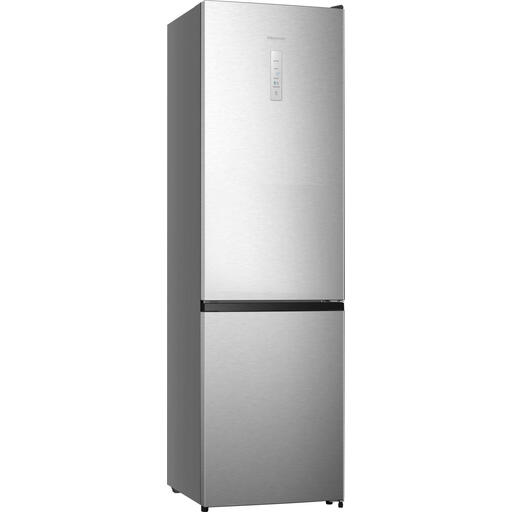
Hisense RB440N4CCB, 336 L fridge freezer
This fridge freezer could suit you if you want to store fresh and frozen food in one appliance.
The product name lists a 336 L capacity, Total No Frost, an Inverter compressor, Multi Air Flow, energy rating B and 35 dB.
View on Joybuy
 No image available
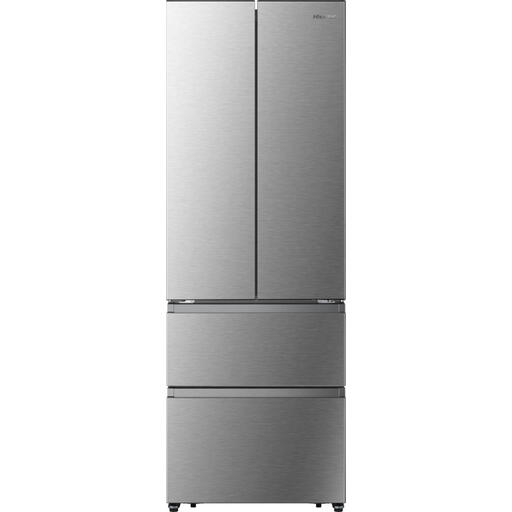
Hisense RF632N4BCE, 485 L multi-door fridge
Consider this size if you need plenty of fresh and frozen food storage and your home has space for a large appliance.
The product name lists a 485 L capacity, Total No Frost, an Inverter compressor, Multi Air Flow, a water dispenser, energy rating E and 38 dB.
View on Joybuy
 No image available
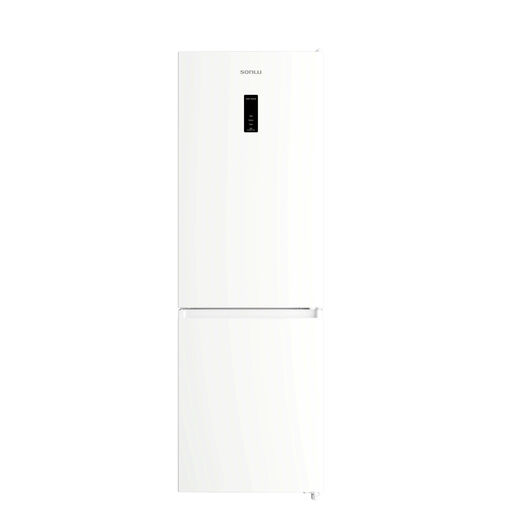
Sonlu CD-350RW, 310 L fridge freezer
This fridge freezer could suit you if you need separate spaces for fresh and frozen food.
The product name lists 211 L of fridge capacity and 99 L of freezer capacity, a width of 60 cm, an Inverter compressor, a reversible door and energy rating E.
View on Joybuy
 No image available
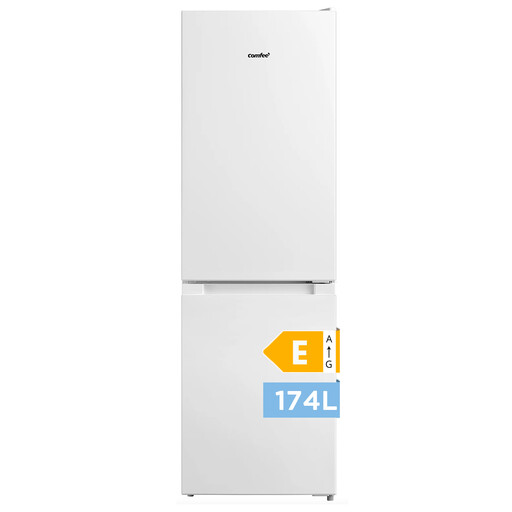
Comfee' RCB169WH2(E), 174 L fridge freezer
Consider this fridge freezer if you want to store fresh and frozen food in the same appliance.
The product name lists 115 L of fridge capacity and 59 L of freezer capacity, Low Frost, 39 dB and energy rating E.
View on Joybuy
 No image available
CHiQ JR227LSE, 227 L fridge freezer
This fridge freezer may appeal if you want a freezer compartment but have limited width in your kitchen.
The product name lists 153 L of fridge capacity and 74 L of freezer capacity, a width of 54 cm, Low Frost, a 4-star freezer rating, a reversible door and energy rating E.
View on Joybuy
Frequently asked questions
How much capacity should you allow for one person or a household?
As a starting point, Que Choisir recommends 100 to 150 litres of usable capacity for one person, plus 50 litres for each additional person. Adjust this guide to how often you shop, and compare fridge and freezer capacity separately: it isn’t a one-size-fits-all rule.
What should you measure before delivery and installation?
Measure the route to the appliance’s final position, then check the model’s manual for ventilation clearance and the space needed to open the doors and remove the drawers. If the appliance has been transported horizontally, follow the manual’s guidance on how long to wait before plugging it in.
How should you set and check the temperature after installation?
Anses recommends keeping the temperature between 0 °C and 4 °C in the coldest part of the fridge. Check the actual temperature and consult the manual to find the coldest area in your appliance.
What costs and consumer rights should you consider when replacing your appliance?
Compare the kWh/year consumption of models that meet your needs, as well as the delivery and installation services available. In France, the DGCCRF states that the legal guarantee of conformity applies for two years from the date the goods are delivered, subject to its legal conditions; an optional commercial warranty does not replace it.
What should you check on the energy label and when arranging collection of your old fridge in France?
The DGCCRF states that energy labelling for household refrigeration appliances is covered by Delegated Regulation (EU) 2019/2016. Check the model’s label rather than relying on an old A+ or A++ rating. When you buy a new appliance, the retailer is required to take back a similar used appliance free of charge on a “one for one” basis. Check the practical arrangements before delivery.


