Households whose fridge is often only partly full
If large areas of your fridge are left unused, work out how much capacity you need before replacing it. ADEME points out that the size of a fridge that runs continuously can affect your bills.


To keep your appliance’s energy use under control, start by working out how much fridge and freezer space you actually need. Then compare the kWh/year figures on the labels of appliances of the same type and with a similar capacity. ADEME points out that a larger or over-equipped appliance can push up your bills. If your current appliance has broken down but still meets your needs, get it assessed before replacing it.
If large areas of your fridge are left unused, work out how much capacity you need before replacing it. ADEME points out that the size of a fridge that runs continuously can affect your bills.
Work out how much space you need for fresh food and how much for frozen food. The EU energy label shows the capacity of each compartment and the annual energy consumption. This information helps you compare appliances suited to the same needs.
If your appliance still has the right capacity, an assessment can help you decide whether to repair or replace it. In France, ecosystem says that out-of-warranty fridges and freezers may qualify for the Repair Bonus if the work is eligible and carried out by a QualiRépar repairer.
First, work out how much space you need for fresh and frozen food. Then look at the energy label, maintenance requirements and the condition of your current appliance.
Consider this if: you mainly store fresh food and very little frozen food.
Keep in mind: check whether there’s a freezer compartment, and how much it holds, before relying on the appliance for frozen food.
Consider this if: you regularly use both compartments and their respective capacities suit your shopping habits.
Keep in mind: a large freezer compartment isn’t useful if you rarely fill it.
Consider this if: you regularly freeze large amounts of food, beyond what you can comfortably fit in a fridge-freezer.
Keep in mind: it’s an extra appliance that runs continuously, so avoid duplicating a compartment that’s already big enough.
| Criteria | What to check | What I need |
|---|---|---|
| Energy consumption | The European Commission says the label shows the A to G energy class and annual energy consumption. Compare kWh/year figures for appliances of the same type and with similar capacities, rather than relying on the letter alone. | I want to compare the stated energy consumption of appliances that can store similar amounts. |
| Usable capacity | Check the separate fridge and freezer capacities, in litres, on the label. Compare them with your usual shopping and normal fluctuations in how much food you store. | Do my fresh food products take up much more space than my frozen food? I’d rather choose each compartment to suit how I’ll use it than go by the total capacity alone. |
| Maintenance and features | Check the defrosting system, the features you’ll use and the annual energy consumption of the model with those features. No Frost doesn’t replace this comparison. | If I want to avoid manual defrosting, I should check how the model I choose works, without assuming that a particular feature reduces its energy use. |
| Repairs | If the appliance breaks down, ask for an assessment and a quote before making a decision. For an out-of-warranty appliance in France, check with a QualiRépar repairer whether the work qualifies for the Repair Bonus offered by ecosystem. | My appliance still has the right capacity, so I want to know if it can be repaired before choosing another one. |
| Installation | Measure the space and check the installation requirements and clearances specified by the manufacturer. For a built-in model, also check the cabinet space and fittings. | The new appliance must fit in my kitchen and be installed according to the manufacturer’s instructions. |
The European Commission says that the labels for fridges and freezers also show annual energy consumption and capacity. The letter alone doesn’t tell you whether two appliances meet the same storage needs.
Compare the kWh/year figures for models of the same type and with similar capacities, then check the capacity of each compartment.
ADEME points out that cooling appliances run continuously, and that their size or extra features can push up your bills.
See how much space you actually use over several weeks before adding a large freezer compartment, a second appliance or convenience features.
A breakdown doesn’t automatically mean you need to replace the appliance. For eligible out-of-warranty fridges and freezers, ecosystem offers a Repair Bonus through QualiRépar repairers.
Ask for an assessment and a quote, then confirm that the work is eligible before making your decision.
An appliance that needs manual defrosting requires extra maintenance. Choosing a No Frost model can change this, though it doesn’t necessarily mean lower annual energy consumption.
Check for ice build-up, the condition of the door seal and the manufacturer’s instructions on defrosting and ventilation before putting a problem down to the appliance’s age alone.
These details apply to the specific models named, not to each brand’s entire range.
Bosch offers freestanding fridge-freezers, including the KGN33NWEB, which is one example with stated capacity and noise levels.
The WHC18T323P is an example of a built-in fridge-freezer to consider when your available space calls for an integrated installation.
The BCHA306E4SN is an example of a built-in fridge-freezer where the installation format matters just as much as the capacity.
These models combine fridge and freezer compartments in one appliance. Compare their capacities with your needs before choosing a size, and check the model’s energy label for its kWh/year figure.
 Image unavailable
Worth considering if you’re looking for a fridge-freezer and want to measure the available space carefully. The product title lists a 70/30 split, a width of 54 cm and a height of 176 cm. Check the capacity of each compartment and the model’s kWh/year figure on the energy label.
 Image unavailable
Compare this capacity with the space your fresh and frozen food usually takes up. The product title lists a 344 L capacity and an E energy class. Check the model’s energy label for the split between compartments and its annual energy consumption.
 Image unavailable
If you’re considering this capacity, check that it suits your regular storage needs, rather than just an occasional one-off. The product title mentions Total No Frost and an E energy class. Compare the kWh/year figure and the capacity of each compartment on the energy label.
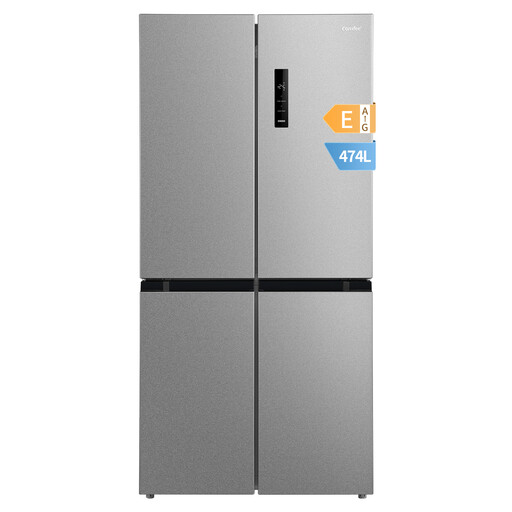 Image unavailable
With an appliance of this size, it’s worth checking carefully how much space you actually need for fresh and frozen food. The product title lists four doors and an E energy class. Check the capacity of each compartment, the kWh/year figure and the model’s installation requirements.
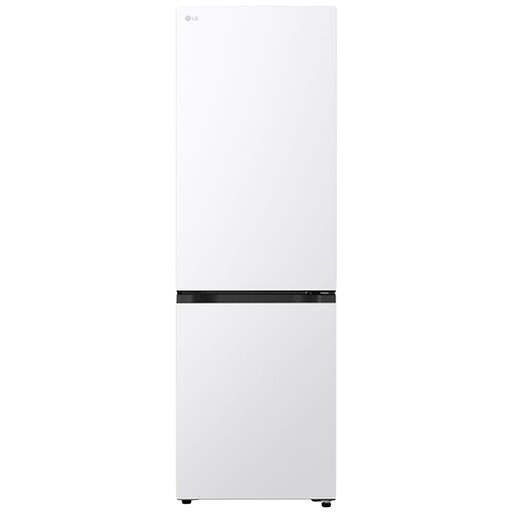 Image unavailable
Before comparing its energy consumption with that of other fridge-freezers, check how its stated 333 L capacity matches your fridge and freezer needs. The product title lists a C energy class. Check the model’s energy label for the kWh/year figure and detailed compartment capacities, then confirm the installation requirements.
Start by comparing appliances of the same type and with similar capacities. The European Commission says that, since 1 March 2021, the labels for fridges and freezers have used an A to G scale and also show annual energy consumption, capacity and noise levels. The QR code links to further information about the model.
Consider one if you regularly need more room for frozen food than a fridge-freezer suited to your household can provide. As ADEME points out, a separate freezer also runs continuously, so check its usable capacity and kWh/year figure rather than adding one for occasional extra storage.
Yes. Ask for an assessment and a quote if the appliance still meets your storage needs. In France, ecosystem says that out-of-warranty repairs to fridges and freezers may qualify for the Repair Bonus when carried out by a QualiRépar repairer, provided the work is eligible.
Check the collection arrangements with the seller before placing your order. In France, Article R541-161 of the Environmental Code provides for an old appliance to be taken back at the delivery point when a product is sold with delivery. It also provides for a nearby collection point, organised and funded by the retailer, for products that can be transported without equipment.