A household replacing its main fridge
If your appliance runs every day, start by working out how much storage you need before comparing annual energy use. A larger model is only useful if its compartments suit your habits.


First, choose a format and capacity that suit the fresh and frozen food you store, then compare the kWh/year figures for appliances of a similar capacity. The energy rating helps you compare them, but it can’t guarantee how much energy you’ll actually use: installation, room temperature and your usage habits all play a part.
The right capacity depends mainly on what your household needs to store and how much space you have in your kitchen.
If your appliance runs every day, start by working out how much storage you need before comparing annual energy use. A larger model is only useful if its compartments suit your habits.
Check the fridge and freezer capacities separately. A small freezer compartment in a single-door appliance won’t necessarily suit the same needs as a fridge-freezer.
For an integrated model, measure the housing unit and check the ventilation and fixing system specified in the instructions. A good energy rating won’t make an incompatible installation suitable.
First decide on the format and usable capacity, then use the energy label to compare similar appliances. ADEME recommends using the label as a guide, while UFC-Que Choisir points out that it shows annual energy consumption.
| Factor | What to check | To suit your needs |
|---|---|---|
| Energy use | Compare the kWh/year figures, energy ratings and capacities shown on the label. Stick to similar formats and capacities so you’re comparing appliances for the same needs. | I want to keep energy use in check for an appliance that runs continuously, without choosing based on the rating letter alone. |
| Capacity | Check the capacity of each compartment, not just the total. UFC-Que Choisir suggests 100 to 150 L as a starting point for one person, plus 50 L for each additional person, adjusted to suit your habits. | I shop frequently and store few frozen foods, so a large freezer might not suit my needs. If I regularly freeze food, I’ll check the freezer capacity separately. |
| Installation | Measure the height, width and depth of the space where the appliance will go. For an integrated model, also check the housing unit dimensions, ventilation clearances and fixing system in the model’s instructions. | In a fitted kitchen, I need to be able to install and ventilate the appliance correctly before comparing models by energy use. |
| Everyday use | Check the noise level if your kitchen opens onto a living space, and make sure the climate class suits the location. Compare features such as No Frost, but don’t use them as a substitute for checking the kWh/year figure. | Noise matters in my open-plan kitchen, and I want the features I choose to suit the way I use the appliance. |
Appliances with different capacities won’t necessarily meet the same needs. The rating letter alone doesn’t tell you how much energy they use in kWh/year or how their capacity is divided between compartments.
Work out how much space you need for fresh and frozen food, then compare the labels of appliances with similar formats and capacities.
The energy consumption figure helps you compare models, but room temperature, settings, how often you open the door and installation all affect actual energy use.
Check that the climate class suits the location and follow the installation instructions. Treat the kWh/year figure as a way to compare appliances, not as a forecast of your bill.
An appliance may fit the measured space, but that doesn’t mean the ventilation or door fixing will suit your kitchen.
Check the housing unit measurements, clearances and fixing type against the installation plan for the exact model.
Old fridges should be taken to an appropriate collection scheme rather than left with ordinary household waste.
If you’re buying a new appliance in France, ask the retailer about taking back an old appliance of the same type. The French Ministry for Ecological Transition’s FAQ explains the “one-for-one” take-back scheme; you can also use an appropriate collection point.
These examples highlight features to check on a specific model; they don’t rank brands or their entire product ranges.
Bosch offers freestanding and integrated fridge-freezers, among other models.
The range includes freestanding and integrated fridge-freezers, with features that vary by model.
Beko offers fridge-freezers with a range of capacities and features.
This selection includes freestanding fridge-freezers, an integrated fridge-freezer and a single-door appliance. First choose a format that suits your kitchen and freezer needs, then compare the energy label information for the models that meet your requirements.
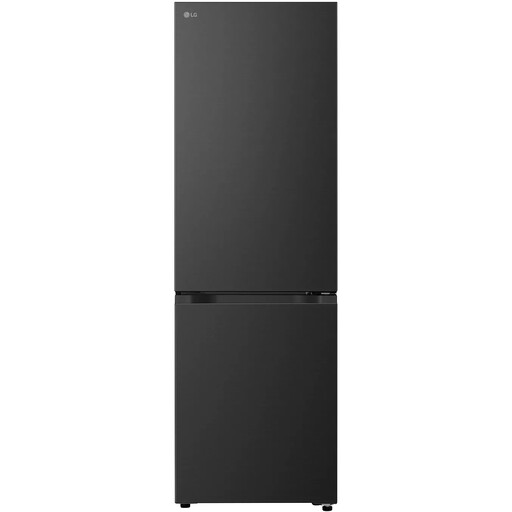 Image unavailable
Worth considering if you’re looking for a fridge-freezer to store fresh and frozen food every day. The model name indicates a capacity of 333 L, No Frost and an A rating. Check the energy label for annual energy consumption and how the capacity is divided between compartments, then make sure the space you have is suitable.
 Image unavailable
This fridge-freezer is suited to a household that needs space for fresh and frozen food. The model name indicates a capacity of 344 L and an E rating. Check the capacity of each compartment and the kWh/year figure on the model’s label, then check the clearances required in the installation instructions.
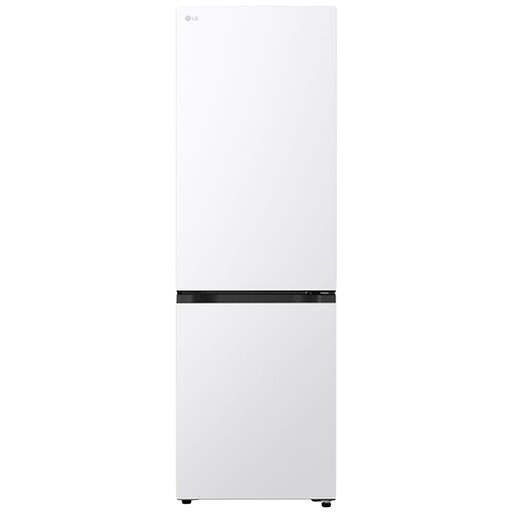 Image unavailable
This model is designed for a combination of refrigeration and freezing, with a stated capacity of 333 L and a C rating. Check the capacity of each compartment and the annual energy consumption on the label for the exact model before comparing it with other fridge-freezers.
 Image unavailable
This integrated fridge-freezer is suited to a kitchen project with a dedicated housing unit. The model name indicates a capacity of 252 L, No Frost and a C rating. Check the housing unit dimensions, ventilation and fixing system in the instructions, as well as the kWh/year figure on the energy label.
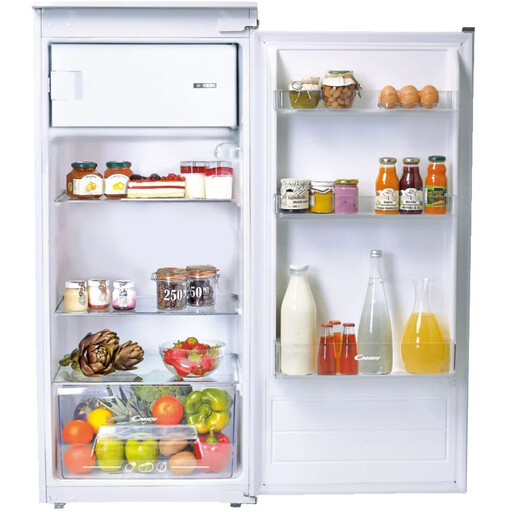 Image unavailable
This single-door format may suit you if you mainly store fresh food and need a small freezer compartment. The model name indicates a total capacity of 179 L. Check the freezer compartment capacity separately, along with its maintenance requirements and annual energy consumption, before making your choice.
Compare the energy rating, annual energy consumption in kWh, compartment capacities and noise level. To assess energy use, start with models of a similar format and capacity. ADEME recommends using the energy label to help guide your choice.
No. The kWh/year figures let you compare appliances, but room temperature, installation, settings and how often you open the door all affect actual energy use. UFC-Que Choisir’s testing of fridge-freezers also takes into account how well they maintain temperatures without using excessive energy.
UFC-Que Choisir suggests 100 to 150 L as a starting point for one person, plus 50 L for each additional person. Adjust this guide to how often you shop, and check the freezer capacity separately if you store frozen food.
When buying a new appliance of the same type in France, ask the retailer how to use the “one-for-one” take-back scheme. The French Ministry for Ecological Transition’s FAQ explains how this applies to household electrical appliances. Check the practical arrangements before delivery.