Households mindful of energy use
You’re replacing an energy-hungry appliance and want its annual consumption to better match the capacity you actually need. ADEME highlights the importance of size for an appliance that runs continuously.


Choose a fridge if you mainly store fresh food, a fridge-freezer if you need both compartments in one space, or a separate freezer if freezing is your priority and you already have a solution for fresh food. Then compare the usable capacity, dimensions and kWh/year of appliances that meet the same needs. ADEME points out that these appliances run continuously, and that choosing one that is too large can affect energy consumption.
You’re replacing an energy-hungry appliance and want its annual consumption to better match the capacity you actually need. ADEME highlights the importance of size for an appliance that runs continuously.
Before choosing between a fridge-freezer and a separate freezer, you need to work out how much capacity you need for fresh food and how much for frozen food.
Check the dimensions and door clearance. For a built-in appliance, also check the niche dimensions and fixing requirements for the specific model.
The right format depends first on how much space you need for fresh and frozen food. The three options have different space requirements and different considerations when choosing an appliance that runs continuously.
Consider this if: you mainly store fresh food or already have a freezer.
Keep in mind: a small freezer compartment may not meet your needs if you regularly freeze food.
Consider this if: you want to store fresh and frozen food in one appliance.
Keep in mind: freezer capacity depends on how the compartments are divided, and a built-in model requires a compatible niche.
Consider this if: freezing is your priority and you already have a fridge that meets your fresh food needs.
Keep in mind: you’ll need space for another appliance, which will also use energy continuously.
| Factor | What to check | What matters to shoppers |
|---|---|---|
| Fresh and frozen food capacity | Compare the usable capacity of each compartment with your storage habits, rather than looking at total capacity alone. | If I regularly store frozen food, I want enough room for it without choosing an unnecessarily large fridge. Around 42% of consumers prioritise this split in storage capacity. |
| Annual energy consumption | Compare the A to G energy rating and kWh/year for appliances of a similar size and capacity. | When replacing an energy-hungry appliance, I want the new capacity to suit how I use it without overlooking its continuous energy consumption. Reducing kWh/year would be the priority for around 33% of consumers. |
| Installation and maintenance | Check the installation measurements and door clearance. Depending on your kitchen, also look at the stated noise level and defrosting requirements. | In a fitted kitchen or near a living area, I need to be able to install and use the appliance without it getting in the way of daily life. These considerations would come first for around 25% of consumers. |
A large capacity doesn’t guarantee the right balance between fresh and frozen food. ADEME points out that the size and excess capacity of an appliance that runs continuously can affect energy consumption.
Estimate what you usually store, then compare the usable capacity of each compartment.
The letter alone isn’t enough to compare the annual energy consumption of appliances with different formats and capacities.
Also check the kWh/year and usable capacity, comparing appliances that meet the same needs.
Niche dimensions and fixing systems vary by model. For example, Electrolux specifies a 1780 × 560 × 550 mm niche for its KNT6ME18S4 fridge-freezer. These measurements won’t necessarily suit another appliance.
Measure your niche and check it against the installation diagram for your chosen model, making sure you allow for the doors to open.
If the appliance isn’t compatible, you may need to adapt the unit or choose another model.
Taking away your old appliance may need extra planning if your fridge or freezer is difficult to access.
Tell the retailer about any access issues and ask how collection works when you place your order.
These ranges give you a useful guide to different formats and features. Always check the specifications of the model you’re considering.
Bosch Home Appliances offers single-door fridges, fridge-freezers and freezers, as well as other formats for the home.
Beko offers, among other options, built-in fridges and fridge-freezers.
Whirlpool France offers freestanding and built-in fridge-freezers, including No Frost models.
The range includes built-in fridge-freezers designed for fitted kitchens.
This selection includes fridge-freezers and a convertible appliance that can be used as a separate freezer. For each one, compare the format and stated specifications with your available space and storage needs. A convertible appliance can’t perform the functions of a fridge-freezer at the same time.
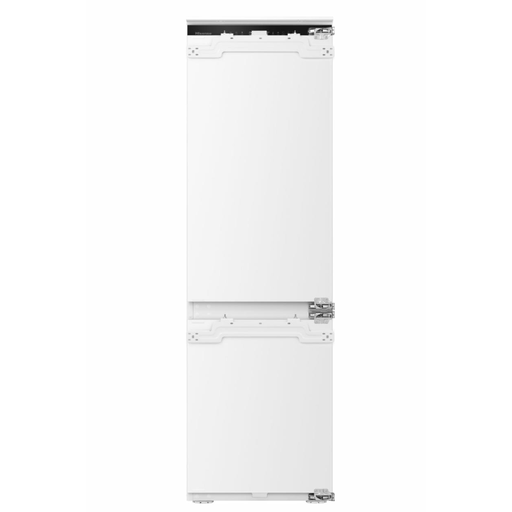 Image unavailable
Worth considering if you want refrigeration and freezing in one appliance for a fitted kitchen. The product title lists No Frost and a C energy rating. Check the required niche dimensions and fixing system before choosing this model.
 Image unavailable
Consider this if your habits mean you need plenty of space for fresh and frozen food. The product title lists Total No Frost and an E energy rating. Check the overall dimensions and door clearance in your kitchen.
 Image unavailable
Compare this if you want to keep fresh and frozen food in one appliance. The product title lists Total No Frost and an E energy rating. Check the available space and the clearance required for installation.
 Image unavailable
Consider using it as a freezer if you already have a fridge that meets your fresh food needs. The product title lists an E energy rating and a defrost drain. Check the manual for defrosting instructions and the clearance needed for installation.
 Image unavailable
Worth considering if your kitchen needs a built-in fridge-freezer. The product title lists TwinTech No Frost and an E energy rating. Confirm the total capacity, kWh/year and niche dimensions before comparing this model with others.
Compare the A to G energy rating, kWh/year, usable capacity and stated noise level for appliances of a similar format. The QR code on the European energy label also gives you access to information registered for the model. The letter alone doesn’t tell you its annual energy consumption.
A fridge-freezer combines both compartments in one appliance. A separate freezer is a good option if storing frozen food is a priority and you already have a solution for fresh food. In that case, make sure you have enough space and check the annual energy consumption of the additional appliance.
Measure the niche and check the built-in dimensions, door fixing and opening requirements for the exact model. An external height close to that of your old appliance isn’t enough to confirm that it will fit.
Ask about collection when ordering your new appliance and mention any access difficulties. In France, the decree of 8 October 2014 sets out the rules for taking back used electrical equipment when new equipment is delivered to its place of use. Ask the retailer which arrangements apply to your delivery.