Which criteria should you check first?
Start by choosing a format that gives you enough room for fresh and frozen food. The energy label and model information can then help you compare usable capacity with kWh/year, although they can’t predict exactly how much energy an appliance will use in every household.
Fridge
Consider this if: you mainly need fridge space and need little or no integrated freezer space.
Bear in mind: if you still need a separate freezer, its energy consumption will be added to the fridge’s.
Fridge-freezer
Consider this if: you need to store fresh and frozen food in a single appliance.
Check: how the capacity is split between the two compartments, rather than looking at the total capacity alone.
Separate freezer
Consider this if: you regularly store more frozen food than a suitable fridge-freezer can accommodate.
Bear in mind: you’ll need extra space, and should factor in the annual energy consumption of both appliances.
| Criteria |
What to check |
Who it matters to |
| Electricity costs |
The kWh/year for the exact model and the applicable price per kWh, including VAT, under your contract. |
I’m replacing an appliance that stays plugged in all year and want to estimate the cost without giving up the cooling space I need. Around 42% of consumers would put running costs at the top of their list. |
| Storage capacity |
The usable capacity in litres of the fridge and freezer separately; if you have two appliances, their combined kWh/year. |
I need enough room for my fresh and frozen food shopping without having to add an unnecessary appliance. Suitable capacity would be the top priority for around 33% of consumers. |
| Installation and comfort |
The required dimensions and clearance, stated noise level and recommended ambient temperature range. |
In my open-plan kitchen or a room that isn’t heated much, I need to be able to install and use the appliance as specified. These considerations would come first for around 25% of consumers. |
Fridges to compare on Joybuy
This selection includes appliances with fridge and freezer compartments in one unit, as well as a built-in fridge. First choose the format that suits your storage needs, then check the capacity, kWh/year and installation requirements on the exact model’s product page.
 Image unavailable
Samsung RB33B612EBN, black 344 L fridge-freezer
Worth considering if you’re looking for one appliance with both fridge and freezer space. The title lists a capacity of 344 L and an E energy rating; check the capacity of each compartment and the kWh/year on the label for this model.
Before measuring the space, also check the ventilation clearances specified in the manual.
View on Joybuy
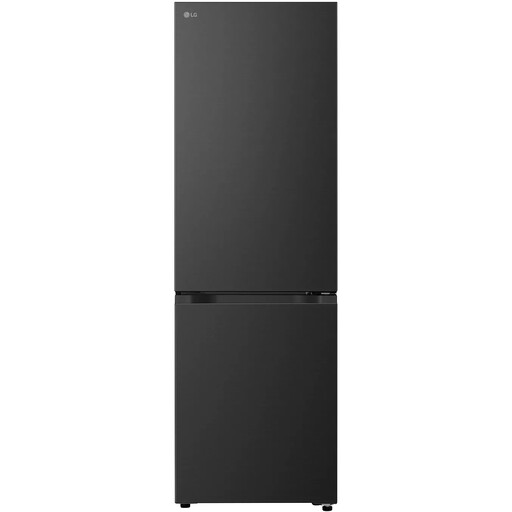 Image unavailable
LG GBBS312AEV, black 333 L No Frost fridge-freezer
Worth considering if you want to store fresh and frozen food in an appliance listed at 333 L. The title mentions No Frost and an A energy rating; compare the capacity of each compartment and the kWh/year for the exact model.
Check that the room temperature and door opening direction suit the conditions specified in the manual.
View on Joybuy
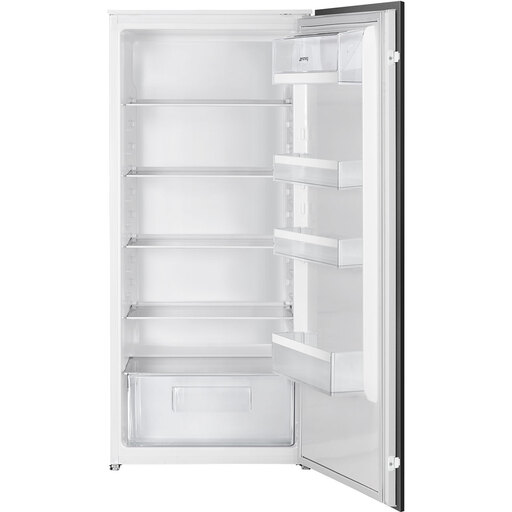 Image unavailable
SMEG S4L120E, 188 L built-in fridge
Worth considering if your space is designed for a built-in appliance and you don’t need an integrated freezer. The title lists a capacity of 188 L and an E energy rating, but the detailed information also gives a figure of 208 L. Confirm the usable capacity before comparing models.
Check the dimensions of the housing and the installation instructions for the S4L120E.
View on Joybuy
 Image unavailable
Bosch KGN33NLEB, 282 L stainless steel fridge-freezer
Worth considering if you want a freezer compartment beneath the fridge. The title lists a total capacity of 282 L and an E energy rating; check how the capacity is split and the kWh/year on the label.
If you have an open-plan kitchen, also check the model’s noise level. Its product details mention a flammable refrigerant, so follow the transport and installation instructions in the manual.
View on Joybuy
 Image unavailable
Sonlu CC-520WE, 444 L No Frost side-by-side fridge-freezer
Worth considering if you need the 444 L capacity of a side-by-side model. The title lists No Frost, an E energy rating and a noise level of 40 dB; check that this stated noise level is suitable for your room.
Before choosing this large format, confirm the usable capacity of each compartment, the full dimensions and the kWh/year for the exact model.
View on Joybuy
Frequently asked questions
How can I estimate a fridge’s annual running costs?
Multiply the kWh/year listed for the exact model by the price per kWh, including VAT, under your contract. This gives you an estimate, not a guaranteed bill. If your tariff has different time bands, factor in the relevant rates and how you use the appliance. The French Energy Regulation Commission notes that tariff options vary and can change over time.
Is the energy rating enough to choose between two formats?
No. Also check the kWh/year and usable capacity of each compartment so you can compare appliances that meet the same storage needs. Model information is available in the European EPREL database. Check the dimensions and stated noise level too if they matter for your installation.
What temperature should I check after installation?
Anses recommends keeping the coldest part of the fridge between 0 °C and +4 °C. Check the temperature after switching the appliance on, and avoid overfilling it so cold air can circulate.
What should I do with my old fridge in France?
Arrange for it to be taken to an electrical and electronic equipment collection scheme rather than putting it out with household rubbish. The French ministries responsible for ecological transition provide information about these schemes. Check the collection options available when you replace your appliance, or find a suitable collection point.


