Which households is it for?

Households replacing an energy-hungry old fridge

You want to reduce an appliance’s year-round energy consumption while keeping enough capacity for your shopping. ADEME points out that fridges and freezers run continuously, and that choosing an appliance that is too large or has unnecessary features can increase consumption.

Households choosing between fresh and frozen storage

You need to decide whether you genuinely need an integrated freezer for everyday use, or whether a single-door fridge or freezer compartment will be enough. The European label distinguishes between refrigerated and frozen capacities, helping you check what you need before buying.

Kitchens with limited space

You are replacing an appliance in a recess, beneath a worktop or in a kitchen where access and ventilation restrict your choice. Check the recess dimensions, door opening and ventilation clearances before choosing the type of appliance.

Buying priorities

Single-door fridge

Consider it if: you mainly store fresh food and already have a separate freezer, or rarely use frozen food.

Good to know: you give up the independence of a proper integrated freezer; check how the capacities shown on the label are divided.

Fridge with freezer compartment

Consider it if: a small integrated freezer space is sufficient and keeping the appliance compact is a priority.

Good to know: this format should not be confused with a fridge freezer: check the frozen capacity, kWh/year and noise level of the model.

Fridge freezer

Consider it if: you regularly use frozen food and want two separate compartments.

Good to know: compare annual consumption with the capacity you genuinely need, rather than automatically setting fridge freezers against single-door models.

Priority What to check My needs
Annual consumption Compare the kWh/year on the labels of appliances with similar capacities and compartment configurations. Treat the A to G rating as an additional guide, alongside capacity and noise level. I want to compare the running cost of appliances offering similar storage, rather than choosing based solely on the rating letter.
Usable capacity Check separately how many litres are allocated to fresh and frozen food. Choose the configuration after working out how much space you need for each type of shopping. Most of my shopping consists of fresh food, or I need enough freezer capacity for the frozen food I usually buy.
Installation Measure the space, access routes, door opening and, for a built-in appliance, the recess. Follow the ventilation clearances specified in the model’s instructions. My fridge must fit into the kitchen and work safely in the available space without blocking doors or walkways.
Maintenance and features Check whether the model genuinely has a No Frost, Low Frost or other defrosting system. Air circulation and temperature stability features should be checked on the specification sheet for the exact model. I would prefer to reduce the need for defrosting, but only if the feature suits my habits and the appliance I choose.

Mistakes to avoid

  • Choosing based on the energy rating letter alone

    The label combines the A to G rating with annual consumption in kWh, compartment capacities and noise level. Two appliances with different capacities or configurations will not necessarily meet the same needs, even if their ratings appear similar.

    Compare the kWh/year after checking that the fresh and frozen capacities match your usage; use the rating as an additional guide.

  • Choosing an appliance that is too large or has too many features

    ADEME states that refrigeration appliances run continuously, and that their size and excessive features can increase consumption.

    List your fresh and frozen food needs separately, then choose the smallest capacity that covers them comfortably. Also consider whether ice dispensers, connected features and other options will genuinely be useful.

    Higher annual consumption can add up throughout the appliance’s entire working life.

  • Ordering before checking the recess, access and ventilation

    A built-in model depends on the recess dimensions and its ventilation system; a freestanding appliance also needs suitable clearance. Insufficient ventilation can hinder heat dissipation and increase consumption.

    Measure the installation space and delivery route, then compare them with the technical specification and instructions for the exact model before ordering.

  • Forgetting about collection of the old appliance

    Used fridges must be taken to an appropriate collection scheme. In France, ecosystem states that free ‘one-for-one’ collection must be offered when buying an equivalent new appliance, including for distance sales.

    Select and keep a record of the collection option when placing your order, especially when home delivery is planned.

Fridge brand guide

Bosch

Bosch’s French range includes freestanding and built-in fridges, with or without freezer compartments, as well as fridge freezers.

  • Bosch offers several formats, including standard 60 cm-wide models and taller or wider options.
  • VitaFresh compartments are the brand’s own descriptions: check the rating, kWh/year, capacities and installation instructions for the exact model.

Whirlpool

Whirlpool’s range covers single-door fridges, fridge freezers, and built-in or freestanding appliances.

  • On some fridge freezers, Whirlpool offers features such as No Frost or Dual No Frost.
  • These features are not available across the entire range and, without reading the label, do not prove that a model uses less energy than a competitor with the same capacity.

Electrolux

In France, Electrolux offers built-in fridges, fridge freezers and compact models for under-worktop spaces.

  • On selected models, the brand highlights technologies such as DynamicAir, ColdSense and TwinTech No Frost.
  • The claimed results for food preservation or humidity are based on Electrolux’s internal tests; also check the capacity, kWh/year, noise level and dimensions of the model you choose.

Joybuy products

These Joybuy options are fridge freezers with separate fridge and freezer compartments, designed for households that regularly need to store fresh and frozen food.
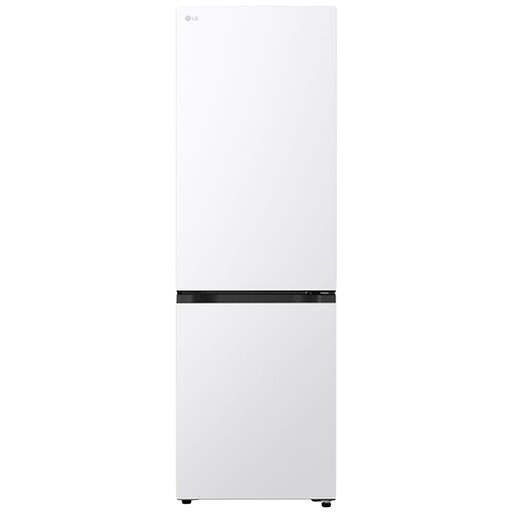
LG GBBSJ1CCSW 333 L white fridge freezer

LG GBBSJ1CCSW 333 L fridge freezer, C rating

For a household needing separate storage for fresh and frozen food in a freestanding appliance.

Advertised with 183 L refrigeration capacity, 113 L freezer capacity, a 37 L compartment, 169 kWh/year, 34 dB and dimensions of 597 × 1 860 × 674 mm.

Total No Frost is specified. Check that the stated clearances and 110° door opening suit the actual installation space.

Joybuy
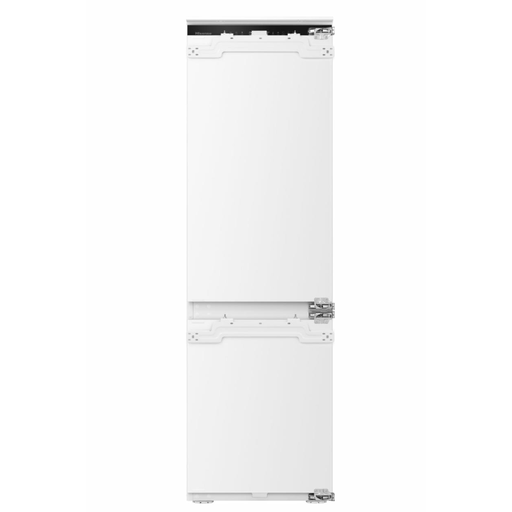
Hisense RB3B250SAWC 252 L built-in fridge freezer

Hisense RB3B250SAWC 252 L built-in fridge freezer, C rating

A built-in fridge freezer for a compatible fitted kitchen, with separate fresh and frozen food capacities.

Advertised with 176 L refrigeration capacity, 76 L freezer capacity, 150 kWh/year, 34 dB, No Frost and dimensions of 540 × 1 772 × 545 mm.

Check the instructions for the recess dimensions, door-panel mounting system and required ventilation clearances.

Joybuy

CHiQ JR263LGE 262 L black fridge freezer

CHiQ JR263LGE 262 L fridge freezer, Low Frost

A freestanding option to consider for a compact kitchen, with the majority of its capacity dedicated to fresh food.

Advertised with 187 L refrigeration capacity, 75 L freezer capacity, 215 kWh/year, 39 dB, a width of 54 cm and a height of 176 cm.

The freezer requires occasional manual defrosting. The model is specified for an ambient temperature range of 16 to 38 °C; also check the required ventilation clearances.

Joybuy
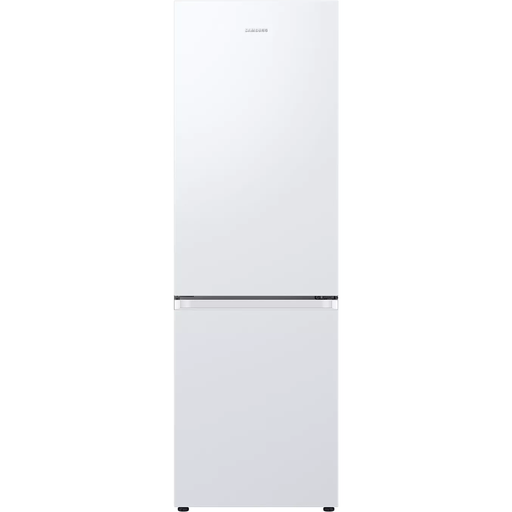
Samsung RB38C600EWW 390 L white fridge freezer

Samsung RB38C600EWW 390 L fridge freezer, E rating

For a household needing plenty of space for fresh and frozen food in a freestanding appliance.

Advertised with 276 L refrigeration capacity, 114 L freezer capacity, 264 kWh/year, 35 dB and dimensions of 59,5 × 203 × 65,8 cm.

Automatic defrosting is specified for both compartments. Measure the installation space and delivery route, then check the instructions for ventilation clearances.

Joybuy

AEG NSC6M18FES 249 L white built-in fridge freezer

AEG NSC6M18FES 249 L built-in fridge freezer, E rating

A medium-capacity built-in fridge freezer for a fitted kitchen with a compatible cabinet.

Advertised with 186 L refrigeration capacity, 62 L freezer capacity, 37 dB, TwinTech Total No Frost, MultiFlow and dimensions of 59,2 × 58,5 × 186,2 cm.

Check the energy label for kWh/year, as well as the recess dimensions, ventilation and door-panel compatibility before installation.

Joybuy

Frequently asked questions

How should I compare the energy consumption of a single-door fridge and a fridge freezer?

First compare the litres in the refrigerated and frozen compartments that match your needs, then compare the kWh/year shown for similar appliances. The European Commission states that the label displays the A to G rating, annual consumption, compartment capacities and noise emissions. The letter alone is therefore not enough when comparing different configurations.

Should I choose a fridge freezer if I sometimes buy frozen food?

Not necessarily. A fridge freezer is suitable when a separate freezer compartment meets your regular needs; a fridge with a freezer compartment may be sufficient if the stated frozen capacity genuinely covers what you require. Check the freezer compartment capacity on the label and product specification before buying.

What should I measure before ordering a fridge?

Measure the installation space, access routes and the clearance needed to open the doors, as well as the recess for a built-in model. Also check the appliance type and model instructions: Bosch specifically points out that ventilation requirements and recess dimensions vary depending on the installation.

How much ventilation space should I leave around the fridge?

Always follow the installation instructions for the model you choose. As manufacturer guidance, Whirlpool specifies 5 cm above and 10 cm behind some freestanding appliances, while Bosch refers to at least 200 cm² of clear space behind and beneath the fridge. These indications do not replace the requirements for the specific model, particularly for a built-in appliance.

Must the seller take back my old fridge when I replace it?

Yes. When you buy an equivalent new appliance, the retailer must offer free ‘one-for-one’ collection, including for distance sales. According to ecosystem, when the new appliance is delivered to your home, the old one must be collected during that delivery from the place where it is used.