When replacing a fridge, first choose between a larder fridge and a fridge-freezer, based on how much space you really need for fresh and frozen food. Then compare the annual kWh consumption of models with a similar size and capacity: the energy-efficiency rating alone doesn’t tell you enough about running costs. Also check the dimensions, installation requirements and noise level of the model you choose.
Who is this choice for?
Households mindful of ongoing energy use
If you’re replacing an ageing appliance to keep your electricity bills under control, start with the annual kWh figure on the energy label. The ADEME recommends checking this label; compare appliances of a similar type and capacity.
Households balancing fresh and frozen food
If you’re choosing between a larder fridge and a fridge-freezer, work out how much space you need in each compartment. The total capacity alone won’t tell you whether the split suits your shopping habits.
Households with kitchen or access restrictions
If your new appliance needs to fit into a housing unit or pass through a narrow access route, check the installation type, available space and delivery route before ordering. An integrated model and a freestanding model have different requirements.
Which criteria should you consider first?
Larder fridge
Consider one if: you already have a separate freezer, or store very little frozen food, and want to use the space for fresh food.
Bear in mind: if you regularly freeze food, you’ll need a suitable separate freezing solution.
Fridge-freezer
Consider one if: you regularly store frozen food and want both refrigeration and freezing in one appliance.
Bear in mind: some of the total capacity is taken up by the freezer, so check how much room is left for fresh food.
Once you’ve chosen a format, compare your household’s actual storage needs with the capacity of each compartment, then compare the annual kWh figures for appliances of a similar capacity.
| Criterion |
What to check |
Relevant to |
| Electricity consumption |
The annual kWh figure on the energy label, comparing appliances of the same type and a similar capacity; your price per kWh to assess running costs. |
If my priority is keeping year-round electricity use under control, I want to be able to compare the running costs of models that meet my needs. Around 45% of consumers would put this expense first. |
| Format and usable capacity |
The litres allocated to fresh food and, for a fridge-freezer, to the freezer; how well this matches your usual storage needs. |
When my shopping includes varying amounts of fresh and frozen food, I want enough room in the right compartment without choosing an appliance that’s too large. Around 33% of consumers would put this match first. |
| Installation and everyday use |
Freestanding or integrated, the dimensions of the space and delivery route, and the model’s noise level. |
In a kitchen where space or access is restricted, I need to be able to get the appliance in and install it, then live with its noise level. Around 22% of consumers would prioritise these considerations. |
Mistakes to avoid
-
Comparing only the energy-efficiency rating
The rating doesn’t replace the annual consumption figure, particularly when the sizes and capacities differ.
Note the annual kWh figures for comparable models, then use your price per kWh if you want to assess the difference in running costs.
-
Choosing a larger capacity “just in case”
Extra capacity can be useful if it suits your storage needs, but it doesn’t automatically mean the appliance will be right for your shopping habits.
Work out how much space you need for fresh and frozen food separately before comparing the capacity of each compartment.
-
Measuring the kitchen, but not the delivery route
An appliance that fits its space may still be difficult to get through a doorway, hallway or lift. An integrated installation also means checking the housing unit.
Measure the access route and the space, then check the model’s instructions for installation and ventilation requirements.
-
Leaving collection of your old appliance until later
Replacing your fridge also means deciding what to do with the old one.
Ask the seller how to arrange collection when you order or book delivery. The ecosystem organisation explains the “1 for 1” take-back scheme linked to buying a new appliance.
Brands to consider when comparing models
Bosch
Bosch France offers freestanding and integrated fridge-freezers, worth considering if you’re looking for a configuration to suit your kitchen.
- The range includes fridge-freezers with different layout options, including NoFrost models featured by Bosch.
- Compare the dimensions, capacities, noise level and annual kWh figure for the specific model, rather than assuming its energy use from the features available across the range.
Liebherr
Liebherr France offers larder fridges and fridge-freezers, in both freestanding and integrated formats.
- This choice of formats lets you consider your refrigeration and freezing needs separately.
- Liebherr’s claims about food preservation or savings don’t replace checking the energy label and capacities of the exact model.
Samsung
Samsung France offers fridge-freezers, including models with connected energy monitoring.
- These features may appeal if you want to monitor how your appliance is used, but check which features are available on the specific model you choose.
- The savings Samsung associates with AI Energy mode depend on the model, connectivity and usage habits; they don’t replace the appliance’s annual kWh figure.
Fridge-freezers on Joybuy
These models combine refrigeration and freezing, with different capacities and installation configurations. For each one, consider whether the capacity suits your actual storage needs and check the energy label for the exact model before comparing annual kWh figures.
 Image unavailable
Hisense RB3B250SAWC, 252 L integrated fridge-freezer
Worth considering if you’re replacing an integrated appliance and need both refrigeration and freezing; check the housing unit dimensions and ventilation requirements.
Advertised total capacity: 252 L. No Frost, energy-efficiency class C and an Inverter compressor are listed in the model name.
View on Joybuy
 Image unavailable
Bosch KGN33NLEB, 282 L fridge-freezer with bottom freezer
Worth considering if you want a bottom freezer in a 282 L appliance; check that the space allocated to each compartment suits your shopping habits.
Advertised with energy-efficiency class E and a stainless-steel finish. Check the model’s annual kWh figure on the energy label before comparing consumption.
View on Joybuy
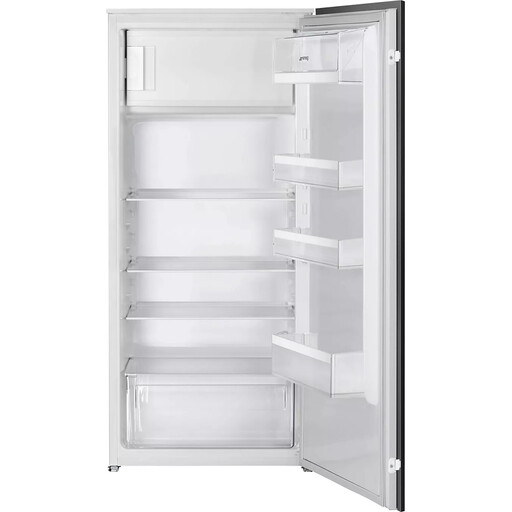 Image unavailable
SMEG S4C122E, 188 L integrated fridge-freezer with top freezer
Worth considering for a fitted kitchen if the housing unit and freezing capacity suit your installation and storage habits.
Top freezer, advertised total capacity of 188 L and energy-efficiency class E. Check the dimensions and fittings required for integrated installation.
View on Joybuy
 Image unavailable
Haier HTW5618ENMG, 360 L three-door fridge-freezer
Worth considering if you regularly store large amounts of fresh and frozen food; make sure the capacity suits your needs and the available space.
Advertised total capacity of 360 L, Total No Frost, energy-efficiency class E, Wi-Fi and My Zone function.
View on Joybuy
 Image unavailable
Candy CFQQ5T817EPS, 467 L four-door fridge-freezer
Worth considering if your storage needs justify a large capacity for fresh and frozen food; also measure the delivery route and the space where it will go.
Advertised total capacity of 467 L, Total No Frost, energy-efficiency class E, Smart Inverter technology and a silver finish.
View on Joybuy
Frequently asked questions
How do you compare the energy consumption of two fridges?
Compare their annual kWh consumption on the energy label, ideally for models with a similar format and capacity. The European label also gives a rating from A to G, but this doesn’t replace the annual figure. To assess running costs, apply your own price per kWh.
Is a larger fridge necessarily better for a family?
No. Usable capacity mainly depends on how much fresh and frozen food you actually store and how often you shop. Check the capacity of each compartment rather than choosing based on the total capacity alone.
What should you measure before delivery?
Measure the space where the appliance will go and the whole route to the kitchen, including doorways, hallways and the lift. Compare these measurements with the appliance and packaging dimensions, if available. For an integrated model, also check the housing unit and installation requirements.
How do you arrange collection of your old fridge?
Choose the collection option when ordering your new appliance and confirm with the seller when the old one will be removed. The ecosystem organisation explains the “1 for 1” take-back scheme linked to buying a new appliance.


