What should you check before choosing?
First work out how much space you need for fresh and frozen food, then make sure the appliance will fit where you plan to install it. To compare models with similar styles and capacities, check the details on their energy labels.
| Factor |
What to check |
Who it matters to |
| Annual energy use |
Compare the A to G rating and kWh per year on the energy labels of models with similar styles and capacities. Also consider whether any extra features will be useful. |
If my appliance is plugged in day and night, I want to keep energy use down without having unused capacity; around 36% of consumers reportedly consider electricity use their main concern. |
| Fresh and frozen food capacity |
Check the usable capacity in litres for the fridge and freezer separately, then compare it with your shopping habits and how much space you need for frozen food. |
When the amount of fresh and frozen food I buy varies, getting the right balance between the two compartments matters most; around 29% of consumers would reportedly prioritise this storage need. |
| Installation and noise |
Measure the space, check how the doors open and make sure there’s clear access for delivery. For a built-in model, check the housing, fixings and ventilation; also compare the stated dB levels. |
In a restricted kitchen or one that opens onto the living area, the appliance needs to fit its space and work for everyday life; around 21% of consumers would reportedly put these restrictions first. |
| Frost and fresh food storage |
Check which compartments have No Frost, and whether the drawers or freshness zones mentioned are available on the model you’re considering. |
If defrosting or organising fresh food matters more to me than other factors, I look for features suited to those needs; around 14% of consumers would reportedly make this their priority. |
These factors can also help you decide on a style. A single-door fridge may suit you if you mostly store fresh food or already have a freezer. A fridge freezer combines fresh and frozen food storage in one appliance, while separate appliances need more space and mean you’ll need to consider the combined annual energy use of both. If your kitchen requires a built-in appliance, making sure it fits the housing and works with the door is essential before you choose a capacity. Styles can overlap: a fridge freezer can also be built in.
Brands to consider, model by model
The features below apply to specific models. Always check the model number and its energy label rather than assuming the same details apply across an entire brand.
Bosch
The range includes both freestanding and built-in fridge freezers, with features that vary by model.
- Bosch lists the KGN36VXCT as rated C, with 218 L of fridge capacity, 103 L of freezer capacity and a noise level of 35 dB.
- These figures don’t apply to other Bosch models: check the model number, dimensions and energy label.
Whirlpool
Its fridge freezers include both freestanding and built-in models, with different features and installation requirements.
- Whirlpool describes the Total No Frost feature on the WFNF82EOXFR as helping to prevent frost in both the fridge and freezer compartments.
- According to Whirlpool, the built-in WHC18T323P requires a 56 cm-wide housing. Check the measurements and fixings for the model you’re considering.
Liebherr
Some models offer dedicated compartments for fresh food; check their layout to see how well it suits your storage habits.
- Liebherr lists a total capacity of 386 L and a noise level of 34 dB for the RBbsb 525i.
- Claims about how long food stays fresh with BioFresh are made by Liebherr and are separate from each model’s capacity and energy figures.
Fridges to compare on Joybuy
These models include multi-door appliances and a built-in fridge freezer, with different capacities for fresh and frozen food. Use their style and capacity to shortlist models, then check the energy label and installation requirements for the one you choose.
 Image unavailable
Candy CFQQ5T817EPS, 4 doors, 467 L
Worth considering if your shopping habits call for plenty of space for fresh and frozen food; make sure this capacity suits your regular needs.
The product name lists 467 L, Total No Frost and an E energy rating. Check the capacity of each compartment and the annual kWh use on this model’s energy label.
View on Joybuy
 Image unavailable
Haier HTW5618ENMG, 3 doors, 360 L
Consider this model if you want fresh and frozen food storage in one three-door appliance, provided its internal layout suits your shopping habits.
The product name lists 360 L, Total No Frost, an E rating, Wi-Fi and My Zone. Check whether these features will be useful and whether the appliance will fit your space.
View on Joybuy
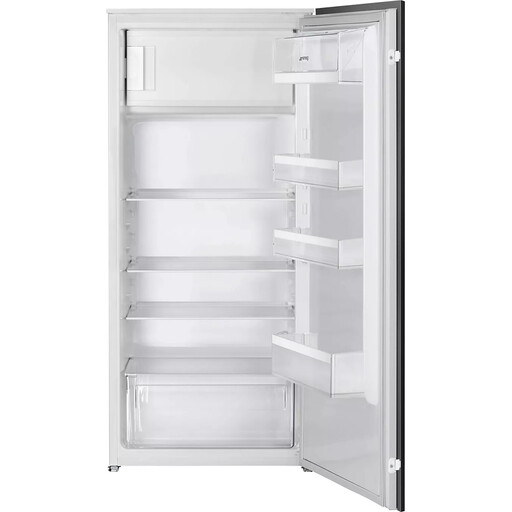 Image unavailable
SMEG S4C122E built-in, 188 L
Worth considering if your kitchen requires a built-in appliance and you mainly need space for fresh food. Check the freezer capacity before choosing it if you regularly buy frozen food.
The product name lists 188 L, a top-mounted freezer and an E rating. Check the manual for the required housing, door fixing and ventilation.
View on Joybuy
 Image unavailable
Samsung RF50C530EB1 multi-door, 495 L
Consider its large capacity alongside your usual storage needs, the space available for the appliance and the room needed to open the doors.
The product name lists 495 L and an E rating. Check the energy label for the annual kWh use before comparing its energy consumption with a different style.
View on Joybuy
 Image unavailable
Sonlu CC-520WE, 444 L
Worth considering if you need plenty of space for fresh and frozen food. Check the capacity of each compartment: the total capacity alone doesn’t tell you how the space is divided.
The product name lists 444 L, frost-free technology, an E rating and 40 dB. Measure the space and check delivery access before ordering, too.
View on Joybuy
Frequently asked questions
How can I compare two fridges to keep energy use down?
First compare appliances with similar styles and usable capacities, then check their A to G ratings and annual kWh use on the energy labels. The rating alone doesn’t tell you how much energy models with very different capacities or features will use.
What fridge capacity should I choose for my household?
The capacity you need depends on how many people are in your household, how you shop and how much frozen food you store. UFC-Que Choisir suggests 100 to 150 L for one person, plus 50 L for each additional person; use this as a starting point and compare the separate capacities of the fridge and freezer.
Does a No Frost fridge always use less energy?
No. No Frost alone doesn’t mean an appliance will use less energy. Check the annual kWh use on the energy label for the specific model; for maintenance, also check whether the feature applies to the freezer, the fridge or both.
How should I arrange collection of my old fridge?
Tell the retailer when you place your order that you need your old appliance collected, and ask how collection will be arranged with delivery. Before the agreed time slot, confirm access requirements and how to prepare the old appliance.
What should I check during installation to avoid wasting energy?
Leave the ventilation clearances specified in the manual, and avoid placing the appliance near a heat source. UFC-Que Choisir also recommends setting the fridge to between 4 °C and 5 °C and the freezer to −18 °C.


