If you regularly store frozen food, compare fridge freezers by checking the fridge and freezer capacities separately. If you mainly keep fresh food, a fridge-only model may suit your needs. Before replacing your appliance, measure the space it will occupy and check how far the door can open. Then compare annual energy consumption and, if it’s near a living area, the stated noise level.
Who is this guide for?
Households replacing a faulty fridge
To keep your food fresh day to day, start by checking the space available and the capacity you need for fresh and frozen food. An appliance that fits in your kitchen must also have enough room for its door to open properly.
Households that regularly store frozen food
Compare the freezer capacity separately from the fridge capacity. A fridge freezer is worth considering if a small freezer compartment doesn’t suit your storage habits.
People living in a studio flat or a home with an open-plan kitchen
Width, depth and door clearance matter just as much as capacity. The stated noise level is a useful first guide: UFC-Que Choisir points out that how disruptive a sound feels also depends on its nature.
What should you check before choosing?
First decide whether you need a proper freezer compartment, then whether the appliance needs to fit into a housing unit or can be freestanding. Measurements and the energy label can then help you compare models in your chosen size.
| What to consider | What to check | Your needs |
|---|
| Fresh and frozen food capacity |
Compare the usable litres in each compartment, not just the total capacity. Distinguish between a small freezer compartment and a separate freezer. |
I mainly store fresh food, or I also need space for frozen food every week. |
| Energy consumption |
Check the annual energy consumption in kWh on the energy label. Compare appliances of a similar size and capacity: ADEME points out that a fridge runs continuously. |
I want to choose the right capacity without overlooking the energy consumption of an appliance that’s always switched on. |
| Dimensions and doors |
Measure the height, width, depth and clearance needed for the door to open. For a built-in model, also check the housing unit and door fitting in the installation instructions. |
The new appliance needs to fit where the old one stood without blocking nearby cabinets or the way through. |
| Noise |
Compare the stated noise level in dB(A). In an open-plan room, look for an independent review if possible too: according to UFC-Que Choisir, decibels alone don’t tell you how disruptive a sound will be. |
My kitchen is near the living room or where I sleep, so operating noise matters in everyday life. |
| Food storage and maintenance |
Check the cooling system and storage guidance. Anses recommends keeping food between 0 and +4 °C in the coldest part of the fridge. |
I want storage that suits the food I buy and an appliance I can maintain regularly. |
What mistakes should you avoid?
-
Choosing based on total capacity alone
A suitable total capacity can hide a freezer that’s too small for your needs, or leave much of the fridge compartment unused.
Work out how much room you need for fresh and frozen food separately, then compare this with the usable capacity listed for each compartment.
-
Assuming a newer appliance will always use less energy
The size and features affect the energy consumption of an appliance that runs continuously, as ADEME points out.
To compare two models of a similar size and capacity, check their annual energy consumption in kWh rather than looking only at their energy rating.
-
Forgetting about depth and door clearance
An appliance with the right capacity may obstruct a walkway or not fit an existing housing unit. A built-in model also needs a compatible door fitting.
Measure the space and the clearance in front of the appliance. For a built-in model, check the housing unit dimensions and fixing system against the instructions for the model you’re considering.
-
Assuming the decibel rating guarantees quiet operation
UFC-Que Choisir highlights that how people perceive noise is subjective: the stated figure alone doesn’t tell you about vibrations or the nature of the sound.
In an open-plan kitchen, use the dB(A) rating as a first filter and, where possible, look for an independent review of the exact model.
A guide to some of the brands
These model examples can help you make sense of product specifications. The features listed don’t apply to every model from each brand.
Bosch
Bosch freestanding fridge freezers let you compare the dimensions and capacity split of specific models.
- Bosch lists the dimensions of the KGN33NWDA as 1 754 × 614 × 663 mm.
- These dimensions don’t apply to other Bosch fridge freezers, so check the specifications for the model you choose.
Liebherr
The models featured include a freestanding fridge freezer and a built-in model, so you can compare them against your kitchen layout.
- Liebherr lists the CBNsfc 5223 at 320 L and 35 dB. For the built-in ICBNci 5663, the specified housing unit measures 194 to 195 × 56 to 57 × 55 cm.
- These measurements relate to two different models. Check the housing unit dimensions for the exact built-in model you’re considering.
Electrolux
When replacing a built-in appliance, the model’s documentation matters just as much as its stated capacity.
- Electrolux lists a housing unit height of 1 780 mm for the built-in fridge freezer ENV9GB18S.
- The height alone isn’t enough to confirm that it will fit. Check all the dimensions and the door fitting against the instructions.
Whirlpool
You can compare the brand’s freestanding fridge freezers using the measurements for each individual model.
- Whirlpool lists the W9C841COX as 59,5 cm wide, 188,9 cm high and 65,2 cm deep.
- These measurements apply to the W9C841COX. Also check door clearance and the recommended ventilation gaps for your installation.
Fridges available on Joybuy
This selection includes freestanding fridge freezers and a built-in model. First choose based on your freezer needs and the type of space you have, then check the specifications for the model you’re considering.
 Image unavailable
Samsung RB33B612EBN, black fridge freezer, 344 L, energy rating E
A fridge freezer to consider if you need space for both fresh and frozen food. The title lists a total capacity of 344 L and energy rating E. Check the capacity of each compartment, the dimensions and the door clearance for your kitchen.
View on Joybuy
 Image unavailable
Candy CFQQ5T817EPS, four-door fridge freezer, 467 L, Total No Frost, energy rating E
Consider this four-door model if you’re looking for a total capacity of 467 L for fresh and frozen food. Check how the capacity is split between compartments and make sure there’s enough room to open the doors. The title also mentions Total No Frost and energy rating E.
View on Joybuy
 Image unavailable
LG GBBSJ1CCSW, white fridge freezer, 333 L, energy rating C
This 333 L fridge freezer is an option if you want both refrigeration and freezer space in one appliance. It has an energy rating of C. To compare its energy use with other models, also check the annual consumption in kWh. Make sure the dimensions and door-opening direction suit your home.
View on Joybuy
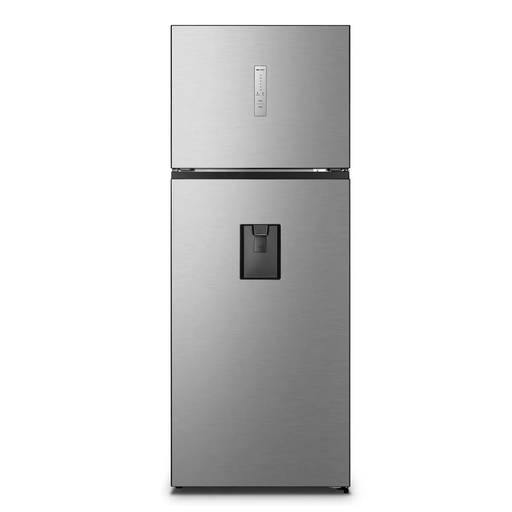 Image unavailable
Hisense FTN461WCE1, fridge freezer, 467 L, Total No Frost, energy rating E
This 467 L fridge freezer has space for both fresh and frozen food. The title mentions Total No Frost and energy rating E. Before choosing this capacity, compare the space in each compartment and check the overall dimensions and door clearance.
View on Joybuy
 Image unavailable
AEG NSC6M18FES, built-in fridge freezer, 249 L, TwinTech No Frost, energy rating E
This 249 L built-in fridge freezer is designed for kitchens with a suitable housing unit. The title mentions TwinTech No Frost and energy rating E. Check the housing unit dimensions and door fitting in the instructions, then look at the annual energy consumption before comparing models.
View on Joybuy
Frequently asked questions
What temperature should I set my new fridge to?
Anses recommends keeping food between 0 and +4 °C in the coldest part of the fridge. Check the temperature inside the appliance rather than relying only on the dial setting.
Should I choose a No Frost fridge?
Not necessarily. Your choice depends, among other things, on your storage and maintenance habits. Gifam uses the term “No Frost” for fan-assisted cooling. Compare the model’s cooling system and food storage guidance with the way you use your fridge.
How should I factor in noise in an open-plan kitchen?
Start by comparing the stated noise level, then look for an independent review of the model if noise is a deciding factor for you. UFC-Que Choisir points out that how people perceive noise is subjective: a decibel rating alone can’t tell you how disruptive it will be in your home.


