Households weighing up repair versus replacement
Your appliance has broken down or no longer seems right for your needs. A repair quote, its general condition and the availability of spare parts can help you decide whether it’s worth keeping.


Before replacing a fridge or freezer, compare a repair quote with the appliance’s condition and how you actually use it. If replacement makes more sense, first choose the capacity and layout you need, then compare the annual energy consumption in kWh of similar models with comparable functions and capacity. A good energy rating alone isn’t enough to judge how much energy an appliance will use in your home.
Your appliance has broken down or no longer seems right for your needs. A repair quote, its general condition and the availability of spare parts can help you decide whether it’s worth keeping.
You want to compare appliances that run continuously without choosing more capacity than you need. ADEME recommends taking the size of the appliance into account, while the energy label lets you check the annual kWh consumption of the model you’re considering.
You need to choose between a fridge, a fridge-freezer and a freezer based on the space available and how much fresh and frozen food you need to store. Dimensions, ventilation requirements and noise levels also matter, especially in an open-plan kitchen.
First, decide whether it’s worth getting a repair quote for your current appliance. If you’re replacing it, work out what you need to keep chilled or frozen and how much space you have before comparing the energy labels of similar models.
| Criterion | What to check | Who this matters to |
|---|---|---|
| Repair or replace | Ask for a detailed quote and check the appliance’s general condition, as well as whether parts are available for its model. | If my appliance breaks down, I want to know whether a repair could extend its useful life before I consider buying a new one. Around 36% of consumers put this decision first. |
| Annual energy consumption | Compare the kWh/year shown on the energy label for appliances with the same function and similar capacities; don’t look at the A to G rating alone. | My appliance runs continuously, and I want to choose a model whose stated energy use matches the capacity I need. This is a priority for around 29% of consumers. |
| Capacity and installation | Check the capacity in litres for chilled and frozen food separately, then look at the dimensions, noise level and required clearance. | I need an appliance that fits in my kitchen and has enough room for the food I actually store. Around 21% of consumers prioritise getting the right fit. |
| Buying second-hand and disposing of your old appliance | For a second-hand appliance, check the model, condition and seller’s status. For a new one, agree the collection arrangements before delivery. | I want to assess the condition of a second-hand appliance or plan what will happen to my old one. Around 14% of consumers put these arrangements first. |
A breakdown doesn’t necessarily mean the appliance can’t be kept. Whether a repair makes sense depends, among other things, on its general condition and the parts required.
Ask what the repair includes, check whether the parts are available and, if the appliance is out of warranty, ask a QualiRépar repairer about the conditions for the Bonus Réparation scheme.
Two models won’t necessarily have the same capacity or annual energy consumption. For refrigeration appliances, the European Commission says the energy label includes information such as annual consumption in kWh.
Compare this figure for appliances that meet the same storage needs, then look at how the capacity is divided and how noisy they are.
According to ADEME, the size of an appliance and having more capacity than you need can affect the energy use of appliances that run continuously. On the other hand, an appliance that’s too small may not meet your storage needs.
Work out how much chilled and frozen storage you need, then measure the space and check the model’s installation requirements.
A larger appliance takes up more room in your everyday life.
Collection depends on knowing what arrangements are available for taking away your old appliance. Without planning ahead, you may be left with something to store or transport.
Arrange collection when you place your order and keep a record of the details. If the appliance still works, consider donating it or giving it a new lease of life. Otherwise, find out about a suitable collection service.
Worth considering if spare-part availability matters when choosing a fridge, fridge-freezer or freezer identified by its E-Nr.
Worth considering among fridge and fridge-freezer ranges if the food-preservation features on offer suit your needs.
Worth considering if you’re looking for a fridge-freezer with Total No Frost.
These models are options for replacing your appliance with a fridge-freezer, for households that need both a fresh-food compartment and a freezer compartment. Compare their capacity with your needs, then check the annual energy consumption shown on the label for each model.
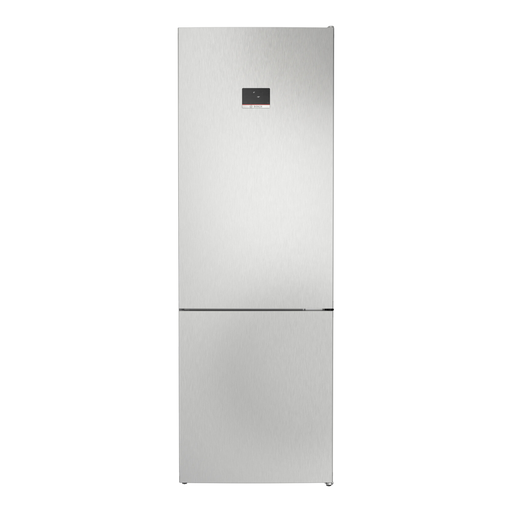 Image unavailable
Consider this if you need one appliance for chilled and frozen food and have room for this capacity. The product name lists an energy rating of D; check the annual energy consumption and the capacity of each compartment on the label for the exact model.
Before replacing your current appliance, also check the installation dimensions, spare-part availability and service conditions.
 Image unavailable
Worth considering if this capacity suits the way you usually divide storage between fresh and frozen food. The product name lists an energy rating of E; check the label for the kWh/year figure and the capacity of each compartment.
Before buying, check the model’s dimensions against the space available and read the ventilation requirements.
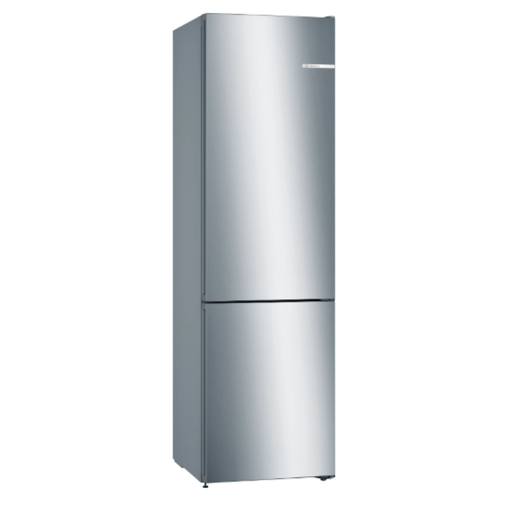 Image unavailable
Worth comparing if you’re looking for a fridge-freezer and need to balance space for fresh and frozen food. The product name lists an energy rating of E; check the label for the kWh/year figure and the capacity of each compartment.
Check the dimensions and required clearance, as well as spare-part availability for this model.
 Image unavailable
Worth considering if a three-door layout suits the way you store fresh and frozen food. The product name mentions Total No Frost, Wi-Fi, My Zone and an energy rating of E; check the features and kWh/year figure for the exact model in its documentation.
Measure the available space, including the clearance needed for installation, before choosing this model.
 Image unavailable
Consider this if the capacity is enough for your fresh and frozen food. The product name lists an energy rating of E and a bottom freezer; compare its kWh/year figure and the capacity of each compartment on the label.
Check the dimensions, ventilation requirements and repair options for this model.
When choosing a fridge, start with its energy label and the repair information for the specific model. The categories covered by these indices change over time, so check the list published by the French Ministry for Ecological Transition before assuming that an index must appear on the appliance you’re considering.
Start by comparing the kWh/year figures for appliances with the same function and similar capacities. The European Commission also lists compartment capacities and noise information; the energy rating alone doesn’t show all these differences.
Yes, subject to conditions, for an out-of-warranty fridge or freezer with an eligible fault, repaired by a QualiRépar professional, according to ecosystem. When requesting a quote, ask whether the repair qualifies.
Confirm the collection arrangements before completing the purchase of a new, equivalent appliance. According to ecosystem, these depend in part on the collection method or delivery location, so check where and when your old appliance needs to be made available.
For purchases from a professional seller in France, the legal guarantee of conformity also applies to second-hand goods, according to the French Ministry of the Economy. If you’re buying from a private seller, don’t assume you have the same guarantee. Check the seller’s status, the model and the appliance’s condition before committing.