Households noticing higher energy use
You want to find out whether the increase could be caused by the installation, maintenance or a repairable fault before choosing a new appliance.


Before replacing the appliance, have any repairable fault or maintenance issue assessed. If you do need to buy a new one, choose the format based on your actual fresh and frozen food needs first, then compare the net capacities, kWh/year, noise level and installation requirements of the exact model.
You want to find out whether the increase could be caused by the installation, maintenance or a repairable fault before choosing a new appliance.
You mainly need to store fresh food and want to avoid giving up a large amount of space to a freezer you rarely use.
You regularly store fresh and frozen food and need to balance net capacity, annual energy use, noise and installation requirements.
Start by comparing how you actually use the compartments, then check the energy label data and the installation dimensions for your chosen model.
| Priority | What to check | Your needs |
|---|---|---|
| Energy use and label | Compare the A to G rating, kWh/year, compartment capacities and noise level. Use the label’s QR code to view the model’s regulatory information where available. | I want to compare appliances with similar capacities and formats, rather than choosing based on the rating letter alone. |
| Usable capacity | Check the fridge and freezer capacities separately. Decide between a fridge, a model with a freezer compartment or a fridge-freezer before considering secondary features. | My shopping is mainly fresh food, or I need a separate freezer space for the frozen foods I use every day. |
| Installation | Measure the height, width and depth, including the surrounding units. Check the instructions for ventilation clearances, the door-opening direction and access to the drawers. | The appliance must fit in my kitchen without obstructing the door or restricting airflow. |
| Repair before replacement | Request a diagnosis and quote. In particular, check the condition of the seal, any frost build-up, the condenser and ventilation before deciding to replace the appliance. | I want to distinguish between a lasting fault, a maintenance issue and a problem that can still be repaired. |
The rating alone does not tell you how much usable space is available or how much room is dedicated to freezing. Appliances in very different formats should be compared model by model.
Compare the rating, kWh/year, net capacity of each compartment and noise level across appliances with similar capacities. Rule out unnecessary capacity first.
Blocked ventilation or insufficient clearance around the door can restrict access to the shelves and drawers and prevent the appliance from operating normally.
Take the actual measurements in your kitchen and confirm the ventilation clearances and opening angle in the model’s installation manual.
A worn seal, frost build-up, a dirty condenser, insufficient ventilation or a specific fault will not always require the entire fridge to be replaced.
Request a diagnosis and quote, then check the service terms with a QualiRépar repairer if your appliance is out of warranty.
The models mentioned illustrate the difference between a single-door appliance with a large fridge capacity and a model with a 4-star freezer compartment.
The KGN39EXCF is an example of a freestanding fridge-freezer for a household using both the fridge and freezer spaces every day.
The ENP7MD19S is an example of an integrated fridge-freezer designed for a fitted kitchen with a compatible housing unit.
Joybuy options include fridge-freezers for fresh and frozen food, as well as models with a limited freezer compartment for households that prioritise fresh produce.
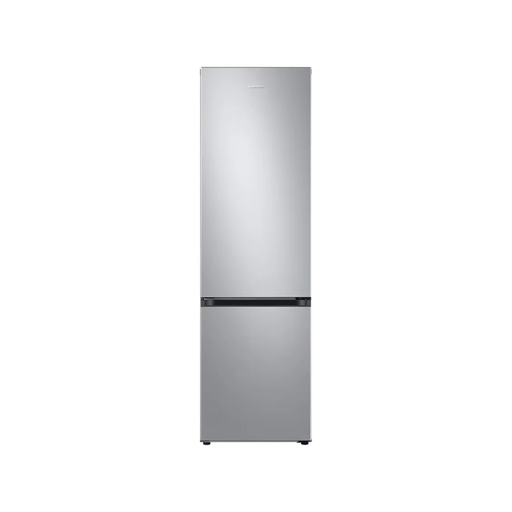 Image unavailable
For a household using both the fresh and frozen food compartments every day.
Stated capacities: 276 L of fridge space and 114 L of freezer space; 211 kWh/year. Check the ventilation clearances and opening angle in the instructions.
 Image unavailable
A compact option when fresh food makes up the largest part of your shopping.
Stated capacities: 187 L of fridge space and 75 L of freezer space; stated annual energy use of 215 kWh. The Low Frost freezer requires occasional manual defrosting.
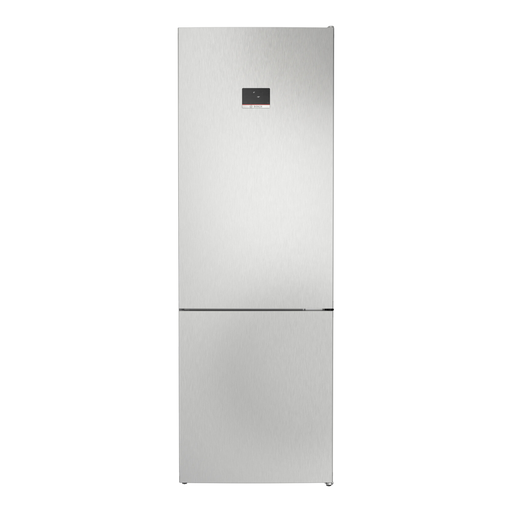 Image unavailable
Worth considering for a household that genuinely uses large fresh and frozen food capacities.
Stated capacities: 311 L of fridge space and 129 L of freezer space; 223 kWh/year. Its stated dimensions are 70 × 203 × 66,7 cm.
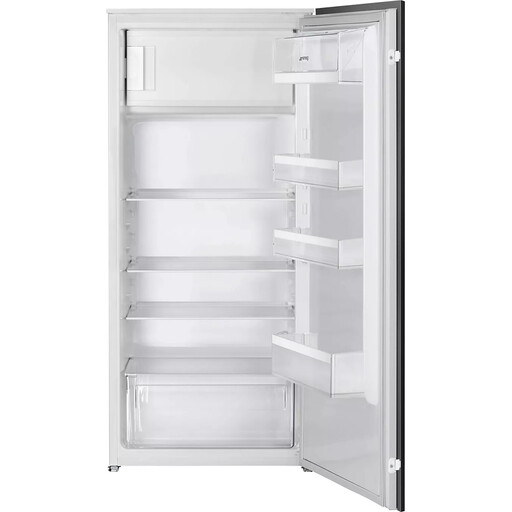 Image unavailable
For a fitted kitchen and a limited need for frozen food.
Stated capacities: 174 L of fridge space and 14 L of freezer space; stated annual energy use of 146 kWh. Installation requires a 56 × 122,5 × 55 cm housing unit, and the door front is not included.
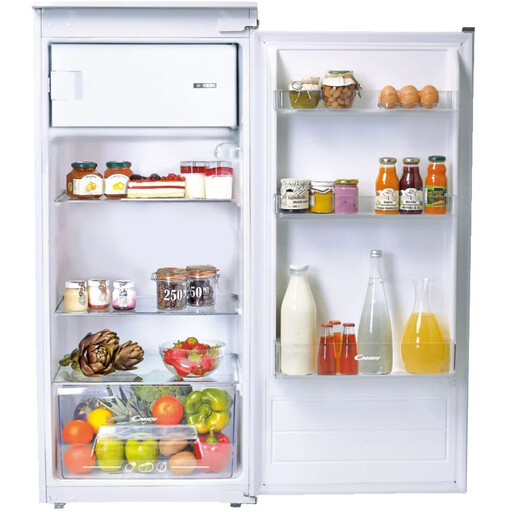 Image unavailable
A format focused on fresh food, with a small freezer area.
Stated capacities: 163 L of fridge space and 16 L of freezer space; E rating and 148 kWh/year. Confirm that the installation method is suitable for your kitchen before ordering.
Yes. The European energy-labelling regulation covers mains-powered refrigeration appliances with a capacity greater than 10 L and less than or equal to 1,500 L. Check the label and product information sheet for the exact model.
At a minimum, compare the A to G rating, stated annual energy use, compartment capacities and noise level. The European Commission states that the label’s QR code provides access to additional product information in EPREL.
It may be suitable for limited needs. For example, Liebherr lists a 4-star compartment and a declared freezing capacity of 4,50 kg/24 h for the KPe290-26; for regular and substantial frozen-food storage, a fridge-freezer with a separate compartment generally offers more space and better organisation.
UFC-Que Choisir recommends, as a general guide, at least 5 cm on each side and behind the appliance, plus 10 cm above it for a freestanding model. The clearances specified in the chosen model’s manual take precedence, particularly for an unusual installation.