If you mainly store fresh meals and leftovers, start by choosing enough fridge space for your containers; a small freezer compartment may be all you need for occasional use. If you regularly freeze portions, compare the usable capacity of both sections in a fridge-freezer, then consider a separate freezer if its drawers are still too small. In every case, check how the temperature can be adjusted and monitored, and make sure you have enough space to install the appliance.
Who is this guide for?
Households preparing several fresh meals each week
You need to be able to store containers, cooked dishes and leftovers without filling the appliance so much that it restricts the circulation of cold air. Fridge capacity and shelf layout matter just as much as the advertised total capacity.
Households that freeze some of their prepared meals
Your choice depends on how much space your frozen portions take up at the same time: a few items in an integrated compartment, drawers in a fridge-freezer or, if those drawers are often full, a separate freezer.
Households with a compact or open-plan kitchen
Usable capacity is only helpful if the appliance fits in the space available and you can open its doors and drawers easily. In an open-plan kitchen, also check the noise level stated for the model.
Which features should you prioritise?
First decide how much space you need for fresh meals and frozen portions, then check how you can monitor the temperature without overfilling the appliance.
Small freezer compartment
Consider this if: your prepared meals are mainly kept in the fridge and you freeze very little.
The trade-off: freezer space may not be enough for several batches of portions.
Fridge-freezer
Consider this if: you want to keep fresh meals and a regular supply of frozen portions in one appliance.
The trade-off: a large total capacity does not necessarily mean the space is divided in a way that suits your meals.
Separate freezer
Consider this if: frozen portions regularly fill the drawers in your fridge-freezer.
The trade-off: you will need space for a second appliance, and should also check its energy label.
| Feature | What to check | Who this matters to |
|---|
| Space for fresh meals |
Compare the usable fridge capacity in litres, then check the height and layout of the shelves against your usual containers. |
If you need to keep several dishes and containers within easy reach between meal-prep sessions, fridge space takes priority over total capacity. Around 36% of consumers would make this their main priority. |
| Temperature control |
Check how to adjust the temperature and monitor the coldest area; leave enough space for air to circulate. |
If you regularly store leftovers or perishable food, you’ll want to be able to monitor the storage conditions. This would be the priority for around 29% of consumers; Anses recommends a storage temperature of between 0 °C and +4 °C in the coldest part of the fridge. |
| Freezer space |
Check the freezer’s usable capacity separately, and make sure its drawers are easy to access for the number of portions you need to store. |
If you freeze several batches of meals, you need to be able to find and store portions without overfilling the drawers. This would be the main requirement for around 21% of consumers. |
| Installation and use |
Measure the space and required clearances; compare the energy labels and noise levels of models with similar formats and capacities. |
In a compact or open-plan kitchen, an appliance needs to be big enough for your dishes, fit its allotted space and suit the room. Around 14% of consumers would prioritise these considerations. |
Mistakes to avoid
-
Looking only at the total capacity
A spacious appliance may still lack room for either fresh dishes or frozen portions. The shape of your containers and how easily you can reach the shelves also affect how much space you can really use.
Measure your usual containers and compare the usable capacity and layout of each compartment.
-
Filling every shelf
According to Anses, temperature and consistency are important for maintaining the cold chain. Overfilling the fridge restricts the circulation of cold air, even if the appliance has a fan-cooling function.
Leave some room for storage and find out where the coldest area is before putting food that needs it there.
-
Assuming the display guarantees the right temperature
A display or temperature setting does not remove the need to consider how full the appliance is or how food is arranged. The controls and alarms available vary by model.
Check the product information and manual to see what the appliance displays or lets you adjust, then monitor the temperature in real-life conditions.
-
Forgetting about installation and your old appliance
A fridge needs to fit in its allotted space, remain accessible and meet the clearance requirements in its manual. Check its energy label before choosing between comparable models.
Measure the delivery route too, and ask the retailer about arrangements for taking away your old appliance.
Depending on the retailer and access to your home, delivery, disconnection or removal of your old appliance may require extra arrangements.
Brands to consider
Bosch
Worth considering for fridge-freezers whose capacity and temperature controls suit the way you divide space between fresh meals and frozen portions.
- Bosch says that the temperatures in the two compartments of the KGN36VLED can be controlled independently.
- This feature applies to the model mentioned only. Check that it is included, along with the capacity and energy label, on the model you’re considering.
Liebherr
Worth considering if separate storage zones and settings suit the way you like to organise your food.
- Liebherr describes the CBNstb 579i as featuring DuoCooling, which the brand says is designed to prevent air from passing between the fridge and freezer.
- This description does not automatically apply to other models; check the features of the exact model you’re considering.
Samsung
Worth considering for fridge-freezers when you need a particular capacity that will still fit in your kitchen.
- Samsung offers a range of storage layouts and air-circulation solutions across its fridge-freezer range.
- For each model, compare the capacity of each compartment, dimensions, noise level and energy label rather than assuming these features are the same across the range.
Fridge-freezers on Joybuy
These models combine a fridge and freezer in one appliance. Compare their total capacity with the space you need for fresh dishes, frozen portions and installation; total capacity alone does not tell you how the space is divided inside.
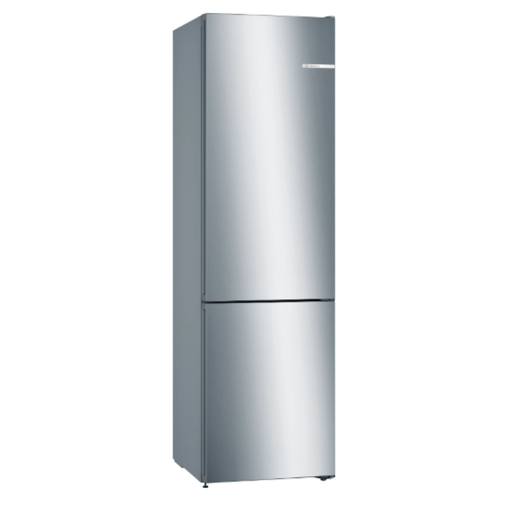 Image unavailable
Bosch KGN39VLEB, 368 L, Class E
A fridge-freezer to consider if you want to store fresh meals and set aside a separate section for frozen portions.
Advertised total capacity: 368 L; energy class E. Check the capacity of each compartment, the space for your containers and the temperature-control options.
View on Joybuy
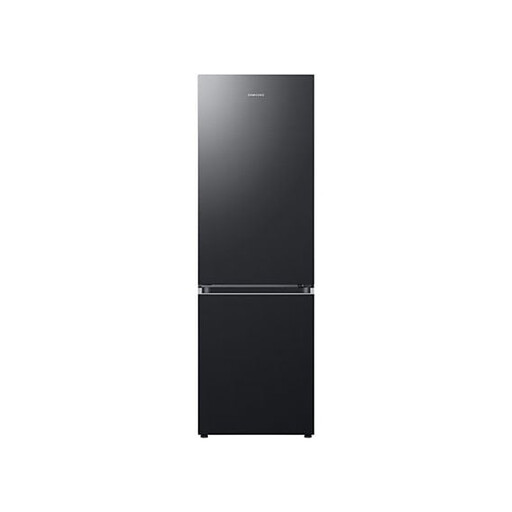 Image unavailable
Samsung RB34C704DB1, 344 L, Class D
This fridge-freezer is worth comparing if you need space for fresh meals as well as a regular supply of frozen food.
Advertised total capacity: 344 L; energy class D. In particular, measure the available depth and check the model’s temperature controls.
View on Joybuy
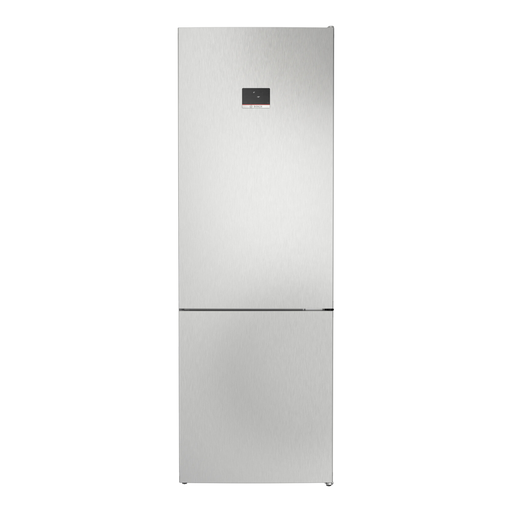 Image unavailable
Bosch KGN497LDF, 440 L, Class D
Its advertised total capacity may appeal to a household that stores several dishes while keeping a supply of frozen food.
Advertised total capacity: 440 L; energy class D. Check the dimensions, how the space is divided between compartments and how the temperature can be adjusted.
View on Joybuy
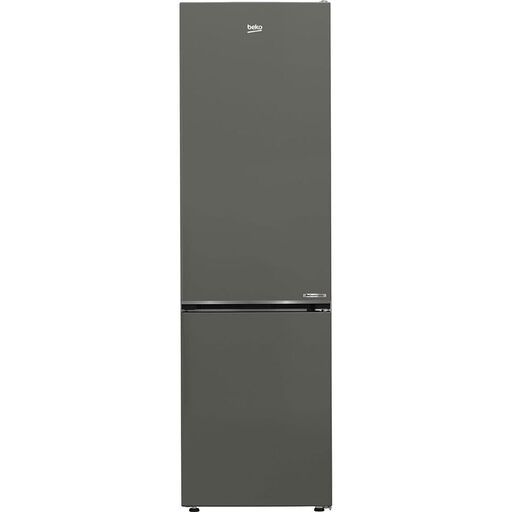 Image unavailable
Beko B5RCNE406HG, 355 L, Total No Frost, Class C
This fridge-freezer is worth considering if you regularly divide your prepared meals between the fridge and freezer.
Advertised total capacity: 355 L; energy class C; Total No Frost is stated in the model name. Check the interior layout against your usual containers.
View on Joybuy
 Image unavailable
Samsung RF50C530EB1 multi-door fridge-freezer, 495 L, Class E
Consider this multi-door model if you want to compare a larger total capacity for fresh and frozen meals.
Advertised total capacity: 495 L; energy class E. Measure the space and delivery route, then check the interior layout and temperature controls.
View on Joybuy
Frequently asked questions
What temperature should you aim for when storing prepared meals and leftovers?
Anses recommends a storage temperature of between 0 °C and +4 °C in the coldest part of the fridge. Find this area for food that needs to be kept there and check the temperature; a display on the appliance does not remove the need to check your storage conditions.
What capacity should you choose if you prepare several meals in advance?
Choose your fridge capacity based on your containers and shopping habits, then assess freezer space separately. UFC-Que Choisir gives a general guideline of 100 to 150 L for one person and 50 L for each additional person, but you should adjust this to the number of dishes you store at the same time.
When should you consider a separate freezer?
Consider one when prepared portions regularly fill the drawers in your fridge-freezer. Compare the accessible capacity with the space needed for installation: UFC-Que Choisir distinguishes between upright freezers, arranged in drawers, and larger chest freezers.
How can the energy label help when shopping online?
It lets you check the specifications of the exact model before you buy. ADEME notes that large household appliances must display an energy label online as well as in shops. When comparing energy use, also take the format and capacity of the appliances into account.


