Households that use both fresh and frozen food
If you want to store both in one appliance, check the litres available in each compartment separately, as shown on the label described by the European Commission.


Start by working out how much space you need for fresh food and how much for frozen food. A fridge, fridge-freezer or separate freezer won’t all suit the same everyday shopping habits. When comparing appliances of similar size and capacity, the energy label introduced by the European Commission lets you compare compartment volumes, energy class, kWh/year and noise levels. ADEME also reminds us that size and extra features matter for appliances that run continuously. Check the available space and make sure you can set the fridge temperature below 4°C, as advised by Anses.
If you want to store both in one appliance, check the litres available in each compartment separately, as shown on the label described by the European Commission.
If you buy frozen food in bulk or freeze meals for later, work out how much freezer space you really need before considering a separate appliance.
A compact model is worth considering if you have limited storage needs or a small kitchen. Check its dimensions, usable capacity and the annual energy consumption shown on the label.
Consider this if: you mainly store fresh food and have little frozen food, or already keep it elsewhere.
Bear in mind: the space available for frozen food varies by model; check whether it has a freezer compartment.
Consider this if: you regularly use both the fridge and freezer compartments but don’t want to install two appliances.
Bear in mind: the amount of space in each compartment varies by model. A large total capacity doesn’t guarantee that each compartment will have the space you need.
Consider this if: your usual supply of frozen food exceeds the freezer capacity you’d get from a fridge-freezer.
Bear in mind: you’ll need room for a second appliance, which also runs continuously, as ADEME reminds us when it comes to refrigeration appliances.
A compact model can suit any of these options. Choose one only if its usable capacity is enough for your usual shopping and it fits your kitchen.
| Consideration | What to check | Who it matters to |
|---|---|---|
| Space for fresh and frozen food | Compare the litres in each compartment separately with the food you usually buy and prepare. | I keep fresh and frozen food in the house every week, so I need enough room for both and can’t rely on the total capacity alone. Around 36% of consumers would prioritise this balance. |
| Continuous energy use | For appliances of a similar type and capacity, compare the A to G energy class, kWh/year and extra features. | The appliance runs day and night, so I want enough capacity without paying for features I’ll rarely use. Keeping energy use under control is said to be the main concern for around 29% of consumers. |
| Freezer capacity | Work out how many litres you need for frozen food. If you add a freezer, take its kWh/year into account too. | If I want to store bulk buys or meals I’ve prepared for freezing, having the right amount of freezer space matters most. Around 21% of consumers would put this capacity first. |
| Space it takes up | Measure the space and check that the doors can open fully, then check the model’s usable capacity and noise level. | In a small kitchen, I need an appliance that fits without having to cram in the food. This would be the main concern for around 14% of consumers. |
The European Commission says the label also shows kWh/year, compartment volumes and noise levels. Appliances with different capacities won’t necessarily meet the same needs.
First decide how much fresh and frozen food you need to store, then compare the energy class and kWh/year of similar models.
ADEME reminds us that refrigeration appliances run continuously, and that their size and certain extra features can affect energy consumption.
Think about how much food you usually store before choosing a large capacity or a feature that needs to stay on all the time.
An oversized appliance or one with features that run continuously can use more electricity over time.
A smaller capacity can mean overfilling the fridge. Food also needs to be kept at the right temperature: Anses advises setting the fridge below 4°C.
Measure the space, check the clearances specified in the manual and make sure the door can open fully. Check the temperature after installation.
When you replace an appliance, the “one-for-one” take-back service described by the Ministry for the Ecological Transition applies when you buy a product of the same type. This does not, by itself, specify who will disconnect or move your old appliance.
Before placing your order, confirm the arrangements for take-back, disconnection, access to your home and delivery with the seller.
Its built-in and freestanding fridge-freezers let you compare factors such as dimensions, the capacity of each compartment and noise levels, depending on the model.
Its fridge-freezers are worth considering if you’re comparing capacity, noise levels and frost-management features model by model.
Its fridge-freezers with two compartments are worth considering if you’re looking for frost-management features for storing fresh and frozen food.
These fridge-freezers and multi-door models are worth considering if you want to store fresh and frozen food in one appliance. Compare the capacity of each compartment and the energy label with your usual shopping needs. This selection does not include separate freezers.
 Image unavailable
Worth considering if you’re looking for a fridge-freezer for fresh and frozen food. The product name lists a total capacity of 333 L and energy class C; check the label for the capacity of each compartment and the kWh/year.
Measure the space and allow for the necessary clearances before choosing this model.
 Image unavailable
Worth considering if you want to divide fresh and frozen food between compartments in a three-door appliance. The product name lists a total capacity of 360 L and energy class E; check the label for the separate compartment capacities and kWh/year.
Check the dimensions and the space needed to open the doors.
 Image unavailable
Worth considering if your fresh and frozen food needs call for a large-capacity multi-door appliance. The product name lists a total capacity of 467 L and energy class E; check the label for the capacity of each compartment and the kWh/year.
Check the space available, the access route for delivery and whether the doors can open fully.
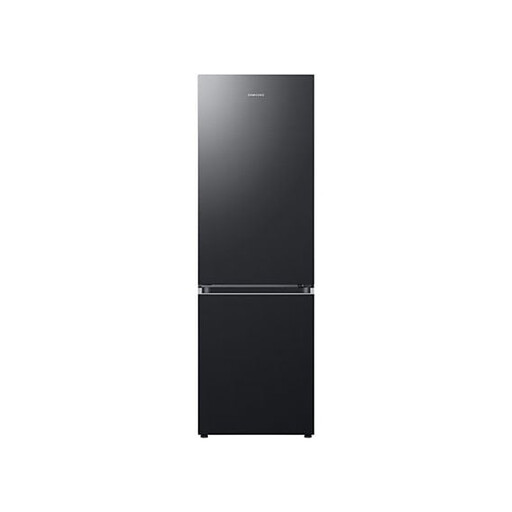 Image unavailable
Worth considering if you’re looking for a fridge-freezer with a total capacity of 344 L and energy class D, according to the product name. Check the model’s label for the capacity of each compartment and its annual energy consumption in kWh.
Check the depth, clearances and door opening space in your kitchen.
 Image unavailable
Worth considering if you need plenty of space in a multi-door appliance. The product name lists a total capacity of 495 L and energy class E; check the label for the separate storage capacities and kWh/year.
Measure the space and check there’s access for delivery. If you plan to use a water or ice dispenser, confirm the installation requirements before buying.
Look at the A to G energy class, annual consumption in kWh, compartment capacities and noise levels together. According to the European Commission, this information appears on the label. Compare similar-sized appliances with similar capacities, and use the QR code to view the model details in EPREL.
Anses advises setting your fridge below 4°C. Check its temperature after installation, particularly if the room is warm, the door is opened often or the appliance is very full.
Not necessarily. This feature is most worth considering if frost management and defrosting matter to you. Liebherr, for example, says that the NoFrost feature on its CNsfd 5704 helps prevent frost build-up in the freezer compartment. Compare the capacity, kWh/year and noise levels of the models you’re considering too.
The statutory guarantee of conformity applies to new, second-hand and refurbished goods sold by a professional to an individual in France, as explained by the Directorate-General for Competition, Consumer Affairs and Fraud Control. Keep your receipt and the product description so you can report an appliance that doesn’t match what was agreed.
If you buy an appliance of the same type, ask about the “one-for-one” take-back service described by the Ministry for the Ecological Transition. Confirm with the seller where and when it will be collected, as well as the arrangements for disconnection and handling.