Households that prepare meals
If you store fresh shopping as well as several prepared meals, make sure you have enough room to put everything away without blocking the airflow. Anses recommends keeping perishable food in the coldest zone.


Choose according to how much space you need for fresh food and portions to freeze. A fridge-freezer combines both functions, while a separate freezer is a good choice if you need more room for frozen food. Compare the capacity of each compartment, the space the appliance will take up and its kWh/year rating. Anses also recommends not overfilling your fridge and keeping perishable food in its coldest zone.
If you store fresh shopping as well as several prepared meals, make sure you have enough room to put everything away without blocking the airflow. Anses recommends keeping perishable food in the coldest zone.
If you regularly freeze portions or shopping, compare the usable capacity of a fridge-freezer’s freezer compartment with that of a separate appliance. Product information from Whirlpool France and Liebherr France shows the different formats and capacities available.
If space is limited, check the dimensions, installation type, and fridge and freezer capacities rather than relying on the total capacity alone. The European Commission says that the label on fridges and freezers includes details such as capacity and energy consumption.
A good choice if: you need to store fresh food and frozen portions in one appliance.
Bear in mind: the freezer capacity is only part of the total. Check that it’s enough for the food you plan to store.
A good choice if: most of your shopping is fresh and you only freeze food occasionally.
Bear in mind: a small compartment may not fit several batches of prepared meals. Check its capacity and specifications.
A good choice if: your fridge already meets your fresh food storage needs and you want more room for frozen food.
Bear in mind: a separate appliance needs its own space and won’t keep fresh food chilled.
A good choice if: you need plenty of space for both fresh and frozen food and have two suitable places for the appliances.
Bear in mind: add together the declared annual energy consumption figures and check how much space both appliances will take up.
| What matters to you | What to check | Who is it for? |
|---|---|---|
| Fridge space | Fridge capacity in litres; shelves and storage; position of the coldest zone. | If I prepare several meals, I want to be able to store containers without taking up useful fridge space. Around 31% of consumers prioritise fridge space. |
| Freezer capacity | Freezer capacity in litres; drawer or chest storage; freezing capacity in kg/24 h, if listed. | When I freeze several portions or items from my shopping, I check that the compartment can fit them. Around 25% of consumers prioritise freezer space. |
| Space and installation | External dimensions; housing dimensions and installation type for an integrated model; space for each appliance. | If my kitchen has specific size constraints, I want to check the installation requirements before choosing a format. Around 25% of consumers put fitting the appliance into their kitchen first. |
| Energy consumption | Declared consumption in kWh/year; combined figures for two appliances. | If the appliance runs continuously, I compare its energy consumption with that of models that meet my storage needs. Around 19% of consumers make energy consumption their top priority. |
Two appliances can divide their capacity differently between fridge and freezer space. A small freezer compartment may not be suitable for storing several batches of prepared meals.
Check the capacity of each compartment separately and compare it with the containers you usually store.
Anses recommends not overfilling the appliance, so that air can circulate, and keeping perishable food in the coldest zone.
Check the manual to find this zone and make sure your usual containers fit there without blocking the available space.
The label shows each appliance’s annual energy consumption in kWh. If you add a separate freezer, its consumption will be on top of the fridge’s.
Compare the kWh/year figures for the models you’re considering and add them together if you choose two appliances.
Manufacturers use different systems across their models. Reduced frost doesn’t necessarily mean that defrosting will never be needed.
Check the cooling system and care instructions for the exact model number.
Freestanding fridge-freezers are worth considering if you want both functions in one appliance. For the KGN39VLEB, Bosch lists 279 l of fridge capacity and 89 l of freezer capacity.
There are two formats to consider: the integrated ARG7342FR fridge with a small freezer compartment, and the freestanding WHFF6403W4E upright freezer.
The CUe231-26 fridge-freezer and CFe 2500 chest freezer suit different capacity and space requirements.
Beko fridge-freezers can be compared by looking at the features listed for each model, including air distribution and dedicated storage zones.
Integrated fridge-freezers are worth considering when the dimensions of the housing determine your choice.
These products cover the need to keep food chilled and frozen in a fridge-freezer, as well as the option of a standalone upright freezer for storing frozen food.
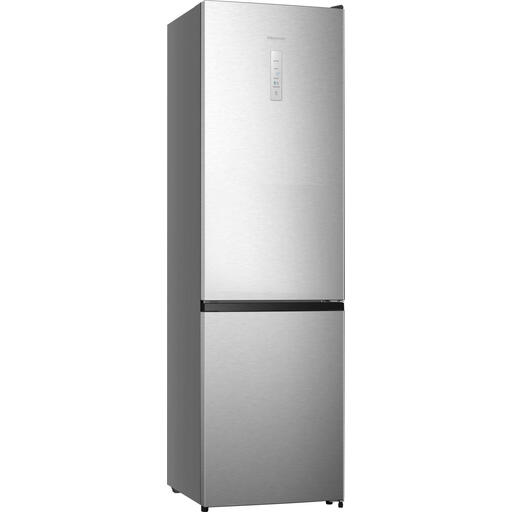 Image unavailable
For storing fresh shopping and frozen portions in one fridge-freezer.
336 l total capacity: 238 l for the fridge and 98 l for the freezer. 135 kWh/year, energy class B, No Frost and Multi Air Flow.
The product information lists a noise level of 35 dB.
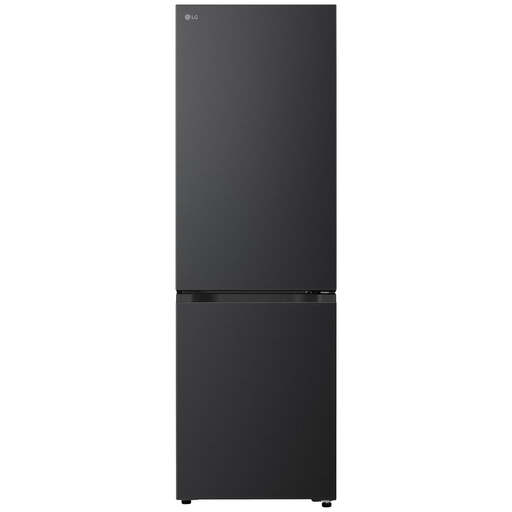 Image unavailable
For keeping fresh and frozen food in separate compartments in one appliance.
183 l of fridge capacity, 113 l of freezer capacity and a 37 l fresh-food compartment. Listed energy consumption: 169 kWh/year, energy class C.
The product information lists a Fresh Converter drawer and Total No Frost.
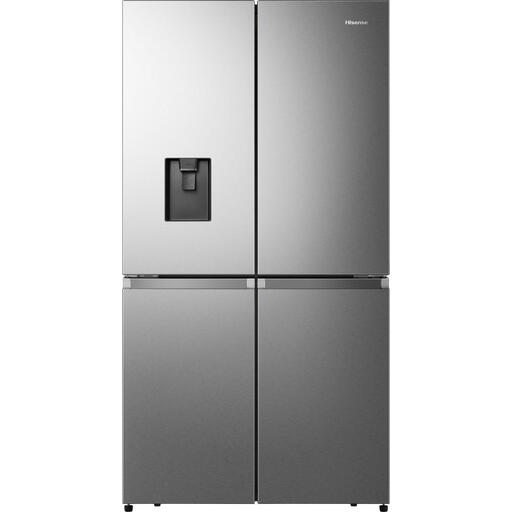 Image unavailable
For plenty of fridge space and an adjustable zone, provided you have enough room for a four-door model.
The product information lists 390 l of fridge capacity, 95 l of freezer capacity and an adjustable My Fresh Choice zone of approximately −20 °C to +5 °C.
It also lists 2-star compartments of 108 l and 13 l. Check how these are intended to be used in the model information. The freezer has drawers, and a water dispenser with a tank is listed.
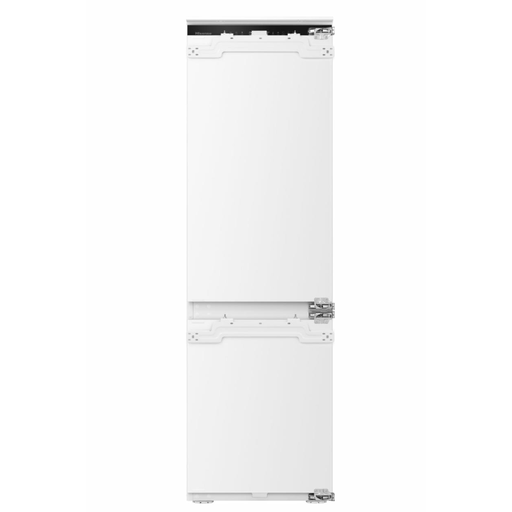 Image unavailable
For fitting refrigeration and freezing into a fitted kitchen, with a compatible housing.
252 l total capacity: 176 l for the fridge and 76 l for the freezer. 150 kWh/year, energy class C and a listed freezing capacity of 6 kg/24 h.
The product information lists three freezer drawers and states that the appliance must be installed and secured inside a unit.
 Image unavailable
For extra frozen food storage when your fresh food is already being kept chilled.
Listed capacity: 161 l, with three drawers and two shelves. Energy class C; the description mentions No Frost and Fast Freeze.
The listed temperature range is −14 °C to −22 °C. This appliance on its own won’t replace a fridge.
Make a list of the shopping and meals you store at the same time, then compare fridge and freezer capacities separately. UFC-Que Choisir suggests an average guide of 100 to 150 l for one person, plus 50 l for each additional person. This isn’t a universal threshold: how often you shop, the meals you prepare and the space available all matter too.
According to Anses, keep perishable food, including prepared meals, in the coldest zone and check that the temperature there is 4 °C. Avoid overfilling the appliance. Check the manual to find this zone, as its position depends on the fridge design.
No. No Frost relates to frost management on models with this feature, but it doesn’t remove the need to check the temperature or allow air to circulate. Follow the manual for your chosen model for advice on settings and loading.
Check the kWh/year figure for each model and add together the figures for the separate fridge and freezer. Then compare the total with that of a fridge-freezer that meets your capacity needs. Declared energy consumption figures don’t guarantee your actual consumption at home.
In France, when a private individual buys an appliance from a professional seller, the statutory guarantee of conformity is mandatory and can be claimed for two years. The Ministry of the Economy and Finance explains that claims are made through the seller and that this guarantee is separate from an optional commercial guarantee. The DGCCRF also states that an energy label is mandatory for relevant new household refrigeration appliances.