Households that quickly fill their fridge
If you prepare meals for several days at a time, start by comparing the capacity available for fresh food. Then check that the width, depth and interior layout suit your kitchen and the way you usually shop.


Start by considering how much room you need for fresh and frozen food: a fridge-freezer gives you both compartments in one appliance, while a single-door fridge or an additional freezer suits households with a greater need for one or the other. Then check the dimensions, the capacity of each compartment and the model’s annual energy consumption. A generous total capacity won’t make up for a compartment that’s too small or an appliance that won’t fit in your kitchen.
If you prepare meals for several days at a time, start by comparing the capacity available for fresh food. Then check that the width, depth and interior layout suit your kitchen and the way you usually shop.
If frozen food or prepared portions take up most of your storage space, check the freezer capacity separately. A fridge-freezer with a suitable freezer compartment or an additional freezer can meet different space requirements.
If you have an alcove, a spot against a wall or a narrow delivery route, measure the access route and available space. Before settling on a capacity, also check how the doors open and the ventilation instructions for the exact model.
If you’re storing several days’ worth of shopping, first work out how much space you need for fresh and frozen food. Then check that your chosen configuration fits the available space and consider its annual energy consumption.
Consider this if : you mainly store fresh food and already have another way to freeze food.
Bear in mind : regular purchases of frozen food will need a separate freezer compartment.
Consider this if : your shopping includes both fresh and frozen food and you want to store it all in one appliance.
Bear in mind : the split between the two compartments is fixed for each model. The total capacity won’t tell you which one will fill up first.
Consider this if : you need both functions in a more restricted space.
Bear in mind : check how much capacity is set aside for frozen food, rather than relying on the total capacity alone.
Consider this if : your fridge has enough room for fresh food, but you regularly run short of freezer space.
Bear in mind : a second appliance takes up extra space and also runs continuously.
| Consideration | What to check | Shoppers concerned |
|---|---|---|
| Room for fresh food | Usable fridge capacity, followed by the layout of the shelves and drawers. | When I’m planning several days’ worth of meals, I want to be able to store fresh food without choosing based on total capacity alone. This would be a priority for around 33 % of shoppers. |
| Freezer space | Usable freezer capacity and drawer layout; for a second appliance, how much space it takes up. | If I freeze portions or often buy frozen food, my first question is how much usable space there is for it. Around 27 % of shoppers would prioritise freezer space. |
| Installation | Appliance and access-route dimensions, any alcove, door opening and the ventilation requirements in the manual. | In a fitted kitchen, I need to be able to get the appliance in and install it before I can make use of its capacity. This would come first for around 20 % of shoppers. |
| Energy use and noise | kWh/year for similar types and sizes of appliance, followed by the stated noise level. | As an appliance runs continuously, I prefer to check its energy use and noise level before opting for a larger capacity. Around 20 % of shoppers would make this their priority. |
A fridge-freezer may have enough total capacity, but the compartment you rely on most could fill up too quickly.
Think about a typical week’s shopping and compare the usable fridge and freezer capacities separately.
The appliance dimensions don’t tell you whether it will fit in an alcove or meet the ventilation requirements. You’ll also need to consider how the doors open and the route into your kitchen.
Measure the space and delivery route, then check the installation instructions for your chosen model before placing your order.
According to ADEME, fridges and freezers run continuously. The energy rating alone won’t tell you the stated annual energy consumption or whether the capacity suits your needs.
Compare the kWh/year figures for appliances of the same type and similar capacity, using the energy label as an additional guide.
Reviews shown on a manufacturer’s page relate to the models and platform in question. They won’t tell you whether an appliance will fit in your kitchen or offer the right split of capacity.
Use them alongside the dimensions, separate compartment capacities, stated noise level and delivery terms for the exact model.
Bosch’s listed models include freestanding fridge-freezers and an upright freezer. These are configurations to consider depending on how much space you need for fresh and frozen food.
The Liebherr models mentioned here let you compare a built-in, single-door fridge with a compact fridge-freezer.
The Electrolux product pages mentioned here cover a built-in fridge-freezer and freezer, for kitchens where niche dimensions are key.
These five fridge-freezers combine fresh and frozen food storage in a single appliance. Compare their capacity with the space you have available for your usual shopping, then check the installation requirements for the model you choose.
 Image unavailable
Worth considering if you want to store fresh and frozen food in a multi-door appliance. Make sure the doors can open fully in the space available.
Rated E and Total No Frost are listed in the model name. Check the manual for ventilation clearances.
 Image unavailable
If you need plenty of storage in a single appliance, check how much space this multi-door design takes up and allow enough room for the doors to open.
Rated E is listed in the model name. If a water dispenser is important to you, confirm that this version includes one and check whether any connection requirements apply.
 Image unavailable
If your shopping includes both fresh and frozen food, compare the capacity of each compartment with what you buy rather than choosing on total capacity alone.
Rated E is listed in the model name. Measure the delivery route and check the ventilation clearances in the manual.
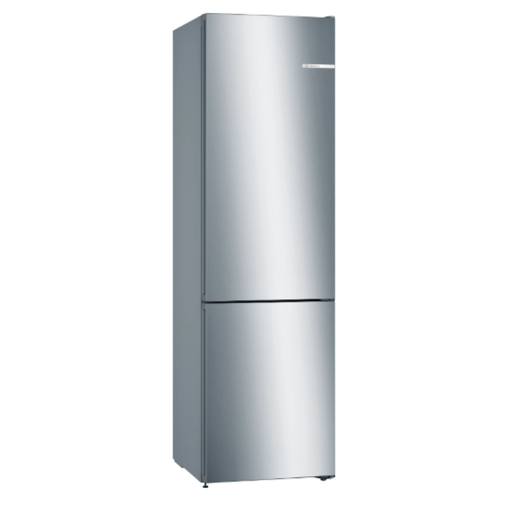 Image unavailable
Worth comparing if fresh food makes up a large part of your shopping, while still giving you a separate freezer compartment.
Rated E is listed in the model name. Before ordering, measure the delivery route and allow enough space for the doors to open.
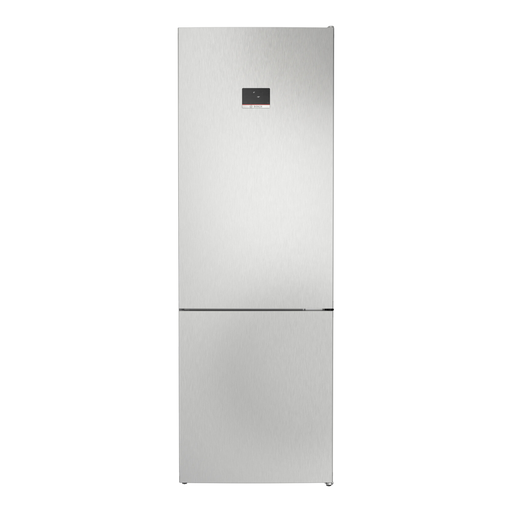 Image unavailable
If you do a large shop with both fresh and frozen food, check that each compartment meets your needs and that the appliance will fit in your kitchen.
Rated D is listed in the model name. If ease of freezer maintenance is important, confirm how this model defrosts and check its ventilation requirements.
Start by comparing the capacity of each compartment: the fridge capacity tells you how much room there is for fresh food, while the freezer capacity shows how much space you’ll have for frozen food and prepared portions. Total capacity alone isn’t enough to compare models with different compartment layouts.
Measure the niche and delivery route, then check the door-mounting system for the exact model. Also read its installation instructions: Liebherr points out, in particular, that nothing should obstruct the appliance’s ventilation and airflow.
Compare their kWh/year figures when they’re the same type and have a similar capacity, then use their energy ratings as an additional guide. ADEME points out that fridges and freezers run continuously, so choose a capacity that suits your shopping too.
Not necessarily. A second appliance makes most sense if you regularly run short of freezer space and have somewhere to put it. You could also compare fridge-freezers with a capacity split that better suits your shopping, bearing in mind that an additional freezer will run continuously.
Decide where it will go before your new appliance is delivered. The ministry responsible for ecology outlines options for reusing, repairing and recycling large electrical appliances. Ask the retailer what collection and removal services are available with your order.