What should you consider when comparing options?
As ADEME recommends, check what you have in stock before you shop. This will help you tell the difference between a lack of space and a storage problem. If you still need more chilled storage, work out which compartment needs to be bigger, then compare appliances against the space available and their stated energy consumption.
| Criteria |
What to check |
Who this matters to |
| Space for fresh and frozen food |
Compare the usable litres in each compartment and the layout of the shelves and drawers, not just the total capacity. |
I shop for several days at a time and want to store fresh and frozen food in one appliance without running short of room in either section. Around 31% of consumers would make this balance a priority. |
| Frozen food storage |
If you already have enough room for fresh food, compare the space needed for an upright or chest freezer, as well as how easy it is to access your food. |
My fridge is big enough, but batch-cooked portions and bulk buys fill up the freezer section. Around 31% of consumers would prioritise this extra capacity. |
| Space and noise |
Measure the appliance, access routes and door clearance; also compare the stated noise level in dB(A). |
In my compact or open-plan kitchen, I need to be able to open the appliance and live nearby without too much disturbance. Around 23% of consumers would prioritise these installation and day-to-day considerations. |
| Energy consumption |
Check the energy rating and kWh/year on the energy label, then compare them with the capacity you need. |
I want enough room for my shop without choosing an unnecessarily large appliance that will be running all the time. Around 15% of consumers would put getting the right size and energy consumption first. |
If you only keep a small amount of frozen food, check the capacity and exact type of freezer compartment in a fridge before comparing it with a fridge freezer. If freezer space is your only issue, an upright makes it easier to organise food by shelf; a chest freezer needs enough room for the lid to open fully, and a layout that helps you avoid forgetting food at the bottom. Containers can help you keep track of what you already have, but they can’t make up for a lack of usable capacity.
Brands to compare
These ranges offer useful comparisons for the configurations discussed here. Check the specifications of each model rather than assuming they apply to every appliance from a brand.
Bosch
Bosch’s fridge freezer range includes freestanding and integrated models that bring fresh and frozen food together.
- Bosch offers different formats and, depending on the model, storage and defrosting options.
- For your chosen model, check the capacity of each compartment, dimensions, noise level and energy label.
Liebherr
Liebherr upright and chest freezers are worth considering if your main aim is to increase frozen food storage.
- Liebherr says that some of its chest freezers with FrostProtect can be installed in an unheated room, subject to the conditions for each model.
- Don’t assume this applies to every model: check the instructions and permitted ambient temperatures before considering a garage or cellar.
Whirlpool
Whirlpool’s fridge freezer range includes freestanding and integrated appliances that combine a fridge and freezer.
- Depending on the model, Whirlpool offers different defrosting options and interior layouts.
- Capacity, alarms and other features vary between models. Compare the specifications of the model you’re considering with your storage needs.
Appliances for different storage needs
This selection of Joybuy appliances includes fridge freezers for storing fresh and frozen food together, as well as an upright and a chest freezer for separate storage. The convertible chest freezer runs in the mode you select; it doesn’t provide two usable compartments at the same time.
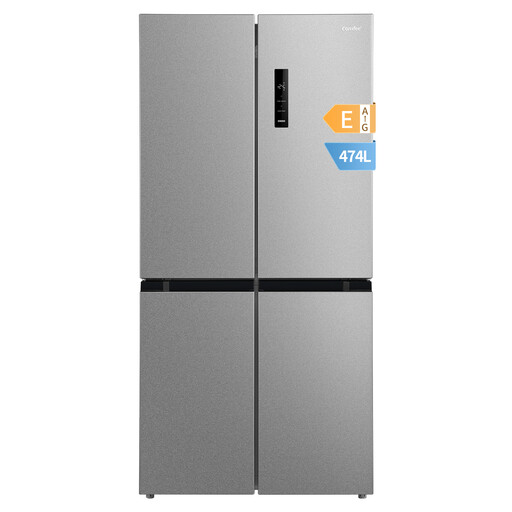 Image unavailable
COMFEE' RCF470LS2EU(E), four-door fridge freezer, 474 L
Worth considering if you want to store fresh and frozen food together in a four-door appliance. The product name states a capacity of 474 L, a three-temperature vegetable drawer and an E energy rating. Check how the capacity is divided between compartments, as well as the space needed to open the doors.
View on Joybuy
 Image unavailable
CHiQ JR227LSE, 227 L fridge freezer, silver
If you want to store fresh and frozen food together but have limited space, compare the stated capacities of 153 L for the fridge and 74 L for the freezer. The product name also lists Low Frost, a reversible door and an E energy rating. Check the installation dimensions and kWh/year on the energy label.
View on Joybuy
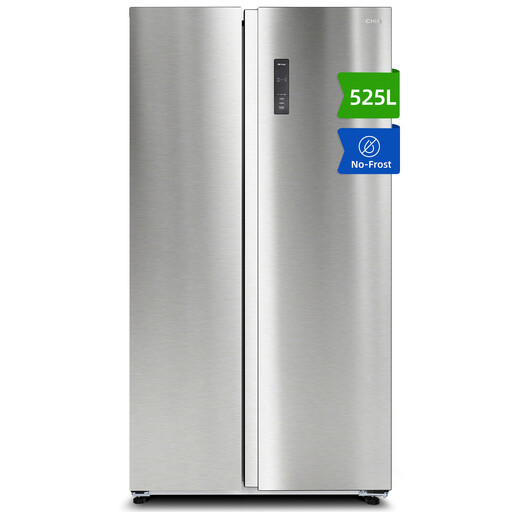 Image unavailable
CHiQ JR525WSE, 525 L side-by-side fridge freezer
Worth comparing if your shop needs plenty of space in both sections: the product name states a capacity of 333 L for the fridge and 192 L for the freezer. It also lists No Frost, 37 dB and an E energy rating. Measure the space and access routes, then check the kWh/year before you choose.
View on Joybuy
 Image unavailable
Heinrich´s, 161 L upright freezer, stainless steel
Worth considering if you already have enough space for fresh food and want a dedicated area for frozen food. The product name lists three freezer drawers, No Frost and a C energy rating; this freezer doesn’t replace a fridge. Check its dimensions and kWh/year for the space you have in mind.
View on Joybuy
 Image unavailable
AUCMA, 291 L convertible chest fridge or freezer
This chest appliance is worth considering if you need a large amount of separate storage, in either fridge or freezer mode, but not both at once. The product name lists a capacity of 291 L, a removable basket, a defrost drain and an E energy rating. Allow enough space to lift the lid and check the installation requirements for the model.
View on Joybuy
Frequently asked questions
Fridge freezer or separate freezer: which should you choose for your weekly shop?
A fridge freezer suits you if you regularly need to store fresh and frozen food in one appliance. A separate freezer is worth comparing if your current fridge is big enough but you’re running out of room for frozen food. In either case, check the usable litres in the compartment that’s limiting your shop.
Which figures should you check on the energy label?
Compare the energy efficiency rating and stated annual consumption in kWh, then consider them alongside the usable capacity you need. When comparing appliances with different capacities or layouts, the rating letter alone doesn’t tell the whole story. ADEME points out that cooling appliances run continuously.
Does noise matter in an open-plan kitchen?
Yes. It’s worth comparing the stated noise level in dB(A) if the appliance will be near a living area. In its fridge buying guide, Que Choisir says that models rated below 40 dBA are among the quietest. This doesn’t guarantee the same level of comfort in every home.
What should you arrange for delivery and your old appliance?
Before ordering, check that the new appliance will fit through your access routes and ask the retailer about delivery, any installation service and removal of your old appliance. Also confirm the time slot and where each service will take place.


