Which factors should you prioritise?
After shopping or preparing meals, work out what you need most: easy-to-reach space for fresh food, reliable temperature control or extra freezer capacity. Suitable containers can make leftovers easier to store, but they won’t increase your fridge’s capacity.
A better-organised fridge
Consider this if: your freezer is big enough, but fresh food or leftovers are difficult to store and find.
Bear in mind: dedicated compartments don’t remove the need to check the temperature or avoid overfilling the fridge, as Anses points out.
Fridge-freezer
Consider this if: you regularly need room for both fresh and frozen food in one appliance.
Bear in mind: the split between the two compartments varies by model, so total capacity alone isn’t enough to make your choice.
Additional freezer
Consider this if: your current fridge has enough room for fresh food, but there’s not enough space for frozen portions.
Bear in mind: you’ll need space for this second appliance, and it will have its own annual energy consumption.
| What matters to you | What to check before buying | Who this applies to |
|---|
| Usable space and storage |
Compare fridge and freezer capacities separately, then check the shelf space available for your containers. |
When shopping and leftovers pile up, I want to be able to put everything away without losing track of what needs using up; around 42% of consumers would make usable space their priority. |
| Temperature and food storage |
Find the coldest part of the fridge and plan to check its temperature after installation. For the foods in question, Anses recommends 0 °C to +4 °C in this area. |
To keep fresh food and leftovers, I need to be able to check that the fridge is cold enough without overfilling it; around 33% of consumers would prioritise temperature control. |
| Freezer capacity and space taken up |
Check the freezer capacity, dimensions and door opening direction. Compare kWh/year and noise levels for appliances with similar capacities and layouts. |
If my portions for freezing already fill the compartment, I need more freezer space without overlooking how much room the appliance takes up; around 25% of consumers would prioritise this balance. |
A fridge-freezer for fresh and frozen food
This freestanding fridge-freezer combines refrigeration and freezing in one appliance. If you’re mainly short of space for frozen food and your current fridge is big enough, compare it with the option of an additional freezer.
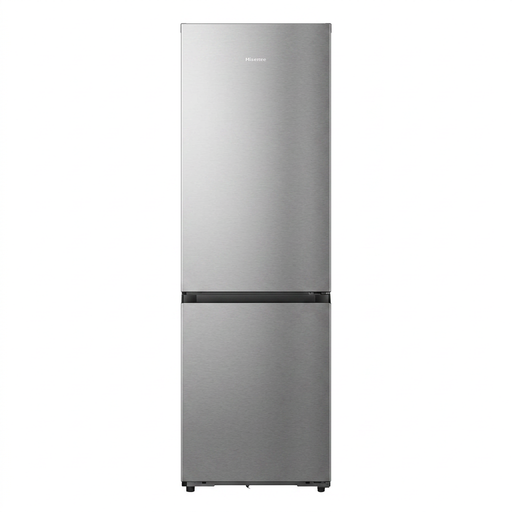 Image unavailable
Hisense RB3K330SAFC, 330 l freestanding No Frost fridge-freezer
Worth considering if you want to keep fresh food and portions for freezing in one freestanding appliance.
Listed total capacity: 330 l; listed noise level: 35 dB. The model name indicates No Frost technology.
Before choosing, compare the space available in each compartment, check that your containers will fit and measure the temperature in the coldest part after installation.
View on Joybuy
Frequently asked questions
What temperature should my fridge be?
For the foods in question, Anses recommends 0 °C to +4 °C in the coldest part of the fridge. Check this area regularly, using a thermometer if needed, and keep your most perishable food there.
Is total capacity enough to choose between two fridge-freezers?
No. Compare the space for fresh and frozen food separately, then check whether the shelves and drawers can accommodate the meals and containers you use.
How should I store leftovers after preparing several meals?
Cover the portions and leave enough space for cold air to circulate. Anses recommends not leaving hot food out for more than two hours before refrigerating it. Suitable containers make things easier to organise, but they’re no substitute for a safe temperature.
What should I compare to estimate energy use and noise?
Compare annual energy consumption in kWh and the noise emissions shown on the EU energy label, ideally between appliances with similar capacities and layouts. Also consider how much space an additional freezer would take up.
Will a larger fridge reduce food waste?
Not on its own. Extra capacity can help if you’re genuinely short of space, but ADEME also recommends checking what you have before shopping and regularly organising your fridge so food is easier to spot.


