Households that cook ahead
If you freeze portions for several days or weeks, consider the available space and how easy it will be to find each dish.


Start by considering how much space your food needs in the fridge and freezer. A fridge-freezer combines both functions, a large fridge gives priority to fresh food, while a separate freezer is ideal for a bigger frozen stock. Then compare the capacity of each compartment, the space needed for installation and annual energy consumption. As the ADEME points out, refrigeration appliances run continuously.
If you freeze portions for several days or weeks, consider the available space and how easy it will be to find each dish.
If your meals are mainly based on fresh food, fridge capacity and an easy-to-navigate layout matter more than the total capacity alone.
If you buy more on each shopping trip, work out how much space you need for fresh and frozen food before choosing between one appliance and a separate freezer.
How you divide your food between fresh and frozen determines which format to consider. The layout and available space can then help you narrow down your options.
Consider it if: you regularly store fresh and frozen food in one place.
Bear in mind: the space for each type of food is determined by how the model divides its capacity.
Consider it if: most of your food is fresh and you want it to be easy to see every day.
Bear in mind: more fridge space won’t meet a high demand for freezer capacity.
Consider it: as a companion to your fridge, for organising frozen portions in easy-to-access drawers.
Bear in mind: it takes up extra space and doesn’t provide any refrigeration capacity.
Consider it if: your priority is plenty of freezer space and you have enough room for it.
Bear in mind: items at the bottom need careful organisation, and the lid must be able to open fully.
| Factor | What to check | Who is it for? |
|---|---|---|
| Frozen food storage | Usable freezer capacity and how the drawers or baskets are arranged. | If I prepare several portions in advance, I want enough space to store them and find them easily, without cramming them into a small compartment. Around 33% of consumers put freezer space first. |
| Fresh food in view | Usable fridge capacity and the layout of the shelves and drawers. | When I plan meals around fresh food, I need to spot what should be used before my next shop; around 25% of consumers prioritise this visibility. |
| Less frequent shopping | Fresh and frozen capacity separately, rather than total capacity alone. | If I shop less often, I need enough room for both types of food. Around 25% of consumers prioritise this balance. |
| Energy use and space | Annual energy consumption in kWh and dimensions, including the necessary clearance. | With limited space, I don’t want to choose an appliance larger than my food stocks require. For around 17% of consumers, space and energy use come before other factors. |
Storage boxes or labels can help you make the most of an already suitable layout. However, they can’t make up for insufficient capacity or the wrong temperature setting.
The capacity is split between two compartments, so an appliance that looks spacious may leave too little room for frozen portions or fresh food. For example, Bosch lists 237 l of fridge capacity and 89 l of freezer capacity for the KGN36VLED.
Consider the food you usually store, then compare the usable capacity of each compartment.
The ADEME points out that refrigeration appliances run continuously, and that their size and certain features can affect energy consumption.
Choose an appliance to suit your food stocks, then compare annual kWh for models with a similar format and capacity.
Whether an appliance can be used in a cold room depends on the model. Liebherr states that the CFd 2505 Plus can be used at temperatures down to −15 °C; Beko gives the same limit for the B1RFNE314W.
Check the manual for the permitted ambient temperature range of the model you’re considering.
Better organisation makes it easier to keep track of food, but it doesn’t replace checking what you already have. The ADEME recommends checking your food stocks before writing your shopping list.
Keep food in easy-to-check areas and see what you have before each food shop.
A range of fridge-freezers and upright freezers to compare based on how much space you need for fresh and frozen food.
A brand to look at if you’re considering a chest freezer for storing a large amount of frozen food.
Large-capacity fridges and upright freezers to consider based on the type of food you need to store.
Fridge-freezers to consider if you want to see exactly how much space is available for fresh and frozen food.
These appliances combine refrigeration and freezing. To choose between them, compare the space you have with the amount of food you usually store. If you need a separate freezer, take a look at the factors for standalone freezers covered above.
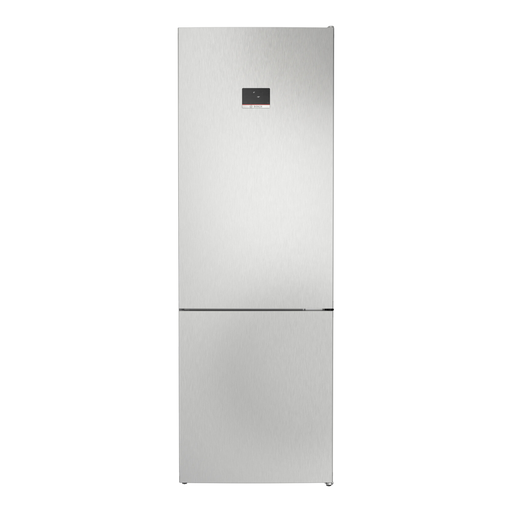 Image unavailable
Worth considering if you want to store fresh and frozen food in one appliance. Check how the capacity is divided, how to maintain the freezer compartment and how much clearance is needed for installation.
 Image unavailable
Worth a look if you want to keep different types of food separate in a multi-door appliance. This version is listed as Total No Frost; also check how much space is needed to open the doors.
 Image unavailable
Worth considering for storing fresh and frozen food in one appliance. Confirm the exact door layout and check whether this version needs a water supply before deciding where to put it.
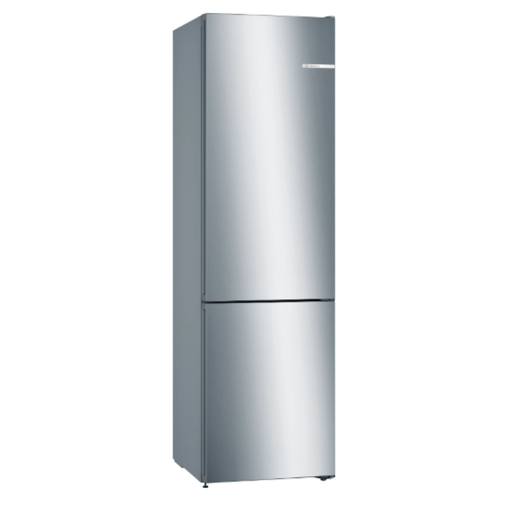 Image unavailable
Worth comparing if you want to divide your food between two compartments in one appliance. Check that the freezer space is right for your portions and that you can leave the clearance specified for this model.
 Image unavailable
Worth considering if you prefer a bottom freezer but want both functions in one appliance. Check that the fridge compartment is large enough for your fresh food shopping, and follow the transport and installation instructions for its flammable R600a refrigerant.
The Ministry of Agriculture recommends +4 °C for the fridge and −18 °C for the freezer. Also follow any food-specific storage instructions and take account of the temperature zones in your appliance.
No. Capacity doesn’t replace keeping track of your food. The ADEME recommends checking what you have before writing your shopping list and tidying your fridge regularly.
Compare their energy ratings and annual consumption in kWh, then check the capacity of each compartment and the noise level. Comparing energy use is more useful for appliances with a similar format and capacity.
Yes, if the model’s permitted ambient temperature range covers the conditions in your garage. Liebherr states that the CFd 2505 Plus can be used at temperatures down to −15 °C, as does Beko for the B1RFNE314W. Check the manual before installing any other model.