Households that cook and keep leftovers
If your food shopping, prepared meals and opened containers mainly take up space in the fridge, look at the layout of the shelves and drawers as well as the fridge capacity.


Start by considering how much space you need for fresh food and how much for frozen food. A fridge-freezer combines both in one appliance. If your fridge already has enough room for fresh food but you’re short on space for frozen items, a separate freezer could be a good option. However, an extra appliance will run continuously. ADEME advises taking the size and number of appliances into account, while the EU energy label lets you compare annual energy consumption, storage volumes and noise levels.
If your food shopping, prepared meals and opened containers mainly take up space in the fridge, look at the layout of the shelves and drawers as well as the fridge capacity.
If you’re mainly short on space for frozen food, compare the freezer capacity of a fridge-freezer with that of a separate freezer, then check how much room you have at home.
Before replacing or adding an appliance, compare the kWh/year, storage volumes and noise levels shown on the EU energy label. ADEME points out that fridges and freezers run continuously.
Worth considering: if most of your food is fresh and you don’t need to freeze food regularly.
Bear in mind: check what type of freezer compartment, if any, the appliance has before relying on it to freeze food.
Worth considering: if you regularly use both the fridge and freezer and want both compartments in one appliance.
Bear in mind: the total capacity can hide a compartment that’s too small for your needs, so compare the capacities separately.
Worth considering: if your fridge already meets your fresh-food needs, but you need more room to freeze food or store frozen items.
Plan for: space for the appliance and its ongoing energy use, on top of that of your existing fridge.
Once you’ve chosen the type of appliance, compare the compartments and installation requirements rather than looking at the stated total capacity alone.
| Factor | What to check | How it suits my needs |
|---|---|---|
| Capacity and storage | Compare the fridge and freezer capacities in litres separately, then look at the layout of the shelves, drawers and compartments. Measure the space where you plan to put the appliance too. | My food shopping and leftover containers mainly need fridge space; a large total capacity won’t help if the fridge section is still too small. |
| Freezing | If you want to freeze food, check the type of compartment, its star rating and the instruction manual. The French Ministry of Agriculture distinguishes a freezer from a simple ice box, which is intended for temporarily storing food that is already frozen. | I prepare portions in advance, so I need a compartment suitable for freezing food, not just space to store frozen items. |
| Energy use and noise | Check the kWh/year, storage volumes and airborne noise emissions together on the EU energy label. To compare energy use, look at appliances of the same type and with a similar capacity. | If I add a freezer to my fridge, I’ll take both appliances’ ongoing energy use into account, as ADEME advises. |
| Maintenance and installation | Check the defrosting technology of the specific model, its external dimensions and the clearances specified in the instruction manual. Make sure the storage compartments are easy to access for cleaning. | I want to be able to install the appliance and reach my food without cramming in containers or making routine maintenance harder. |
Two fridge-freezers can split their capacity differently between the fridge and freezer compartments. The compartment you’re short on space in could still be too small.
Think about what’s currently taking up space — fresh food shopping, leftovers or frozen food — then compare the capacity and storage layout of each compartment.
According to the French Ministry of Agriculture, a simple ice box is for temporarily storing food that’s already frozen; it doesn’t do the same job as a freezer when it comes to freezing food.
If you want to freeze meals or portions, check the type of compartment, its star rating and the guidance in the instruction manual.
The energy rating alone won’t tell you the storage capacity or the model’s annual energy consumption. ADEME also notes that an appliance’s size and having more appliances than you need can affect a household’s energy use.
Compare the kWh/year, storage volumes and noise levels on the EU label for appliances of a similar type and capacity.
Hard-to-reach storage makes it more difficult to organise your food. The defrosting technology also affects the maintenance required.
Take a look at the drawers and shelves of the model you’re considering, then check the instruction manual for details of defrosting and cleaning.
These brand examples highlight features to check on each model; they don’t necessarily reflect the appliances featured below.
The French product information for the freestanding KGN33NWDA fridge-freezer lets you look at capacity and energy use separately.
Whirlpool describes its fridge-freezers as appliances that combine refrigeration and freezing.
Beko features, among other options, a fridge model with a capacity of over 500 litres.
These Joybuy options include fridge-freezers that keep fresh and frozen food in one appliance, as well as a separate freezer for extra frozen-food storage.
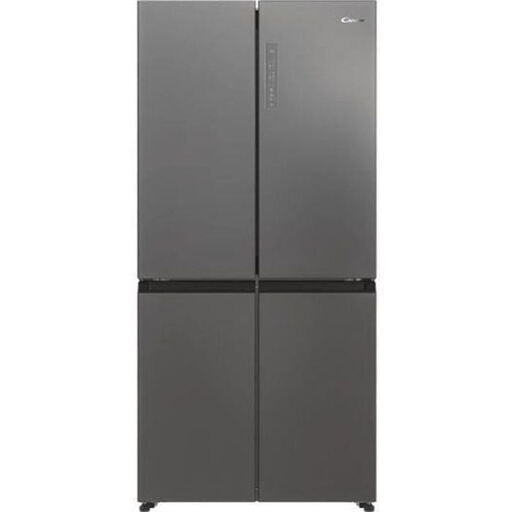 Image unavailable
Worth a look if you want fresh and frozen food in one four-door appliance. The product title lists a capacity of 467 L, an energy rating of E and Total No Frost. Check how the capacity is split between compartments, as well as the width and access routes, before choosing this format.
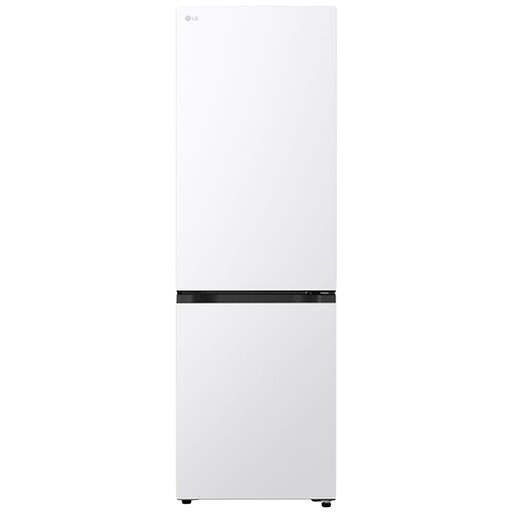 Image unavailable
An option to compare if you need both fridge and freezer space in one appliance. The product title lists a capacity of 333 L and an energy rating of C. Check the respective capacities for fresh and frozen food, then confirm the installation clearances specified for this model.
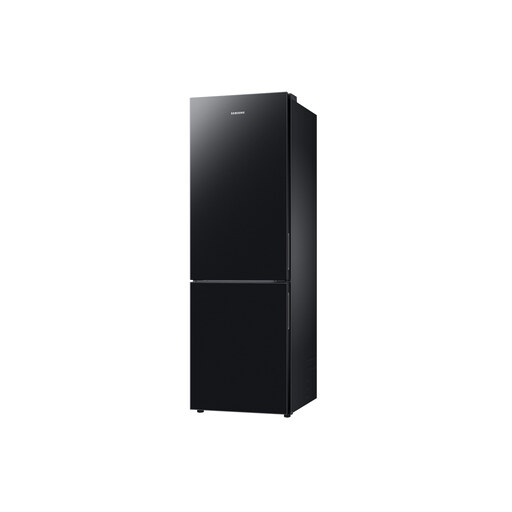 Image unavailable
This fridge-freezer is worth comparing if you want to store fresh and frozen food in one appliance. The product title lists a capacity of 344 L and an energy rating of E. Look at the space available for each type of food separately, and check the compartment type if you plan to freeze fresh food.
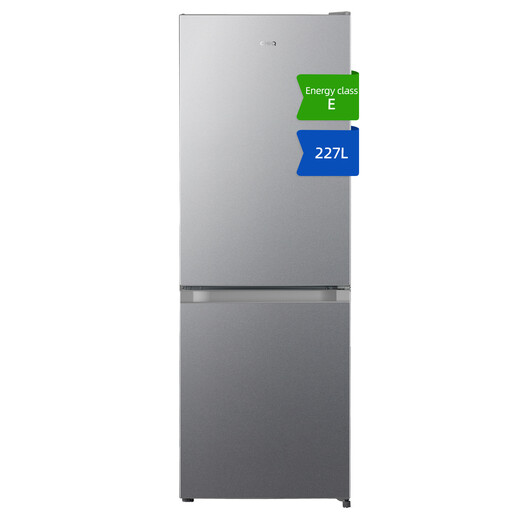 Image unavailable
Worth considering if space is limited in width, but remember to check the height and depth required for installation too. The product title lists a 153 L fridge capacity and a 74 L freezer capacity, with a four-star compartment, Low Frost and an energy rating of E. Check the instruction manual for freezer maintenance guidance.
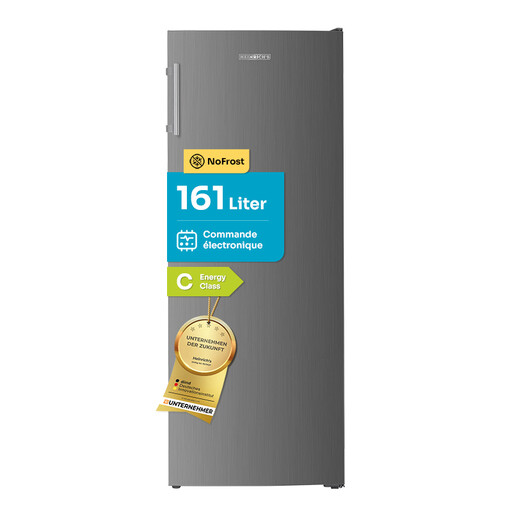 Image unavailable
Worth considering if your fridge already meets your fresh-food needs and you’d like more room for frozen food. The product title lists a capacity of 161 L, No Frost, three freezer drawers and an energy rating of C. Check the kWh/year, dimensions and noise level before deciding where to put it.
The EU energy label shows information including the energy rating, annual energy consumption in kWh, storage volumes and airborne noise emissions. When choosing between appliances of the same type and similar capacity, consider these details together: the rating alone won’t tell you how much space is available for fresh and frozen food or how noisy the appliance is.
No, a simple ice box isn’t a substitute for a freezer. The French Ministry of Agriculture says it’s for temporarily storing food that’s already frozen. If you want to freeze meals or portions, check the star rating and the instruction manual for the compartment you’re considering.
The French Ministry of Agriculture recommends +4 °C for the fridge and −18 °C for the freezer. Anses recommends keeping the coldest part of the fridge between 0 °C and 4 °C. Check the temperature, particularly if the appliance is very full or often opened.
The French Ministry for the Ecological Transition says an electrical appliance can be taken to a collection point or recycling centre, returned to a retailer or given to a social and solidarity economy organisation. When buying a replacement of the same type, also ask the retailer about their ‘one-for-one’ take-back arrangements.