Buying priorities
Start by working out how much space needs to be divided between fresh food and frozen portions, then check the installation requirements and running costs for models with a similar type and capacity.
| Priority |
What to check |
Your needs |
| Dividing fresh and frozen food |
Compare the usable litres of the fridge and freezer separately. Also check the drawers, baskets or adjustable areas for large dishes. |
I want to keep ingredients for upcoming meals while storing ready-made portions, without overfilling a single compartment. |
| Continuous energy use |
For a new appliance, check the energy rating and kWh/year. Compare appliances with similar capacities and configurations, as ADEME points out that size and excessive features can increase energy bills. |
As these appliances run continuously, I am looking for a suitable capacity rather than excessive space or unnecessary functions. |
| Frost and access to portions |
Identify the exact technology: NoFrost, SmartFrost and StopFrost do not necessarily work in the same way. Also compare a fast-freezing function if you add large batches all at once. |
I want boxes and bags to remain easy to store and retrieve over the weeks. |
| Model information |
For a new appliance, check the reference, A to G rating and annual consumption on the energy label. The DGCCRF states that this label is mandatory for new fridges sold in shops or online; for a second-hand appliance, ask for the full reference and original product sheet if available. |
I want to compare specifications linked to the exact model, rather than an outdated energy rating or an overly general listing. |
Joybuy options
Joybuy options for storing both fresh ingredients and prepared portions, or for adding separate, well-organised freezer space.
 Image unavailable
CHiQ JR263LGE 262 L Low Frost
For weekly meal preparation with fresh ingredients and frozen portions: stated capacities are 187 L for the fridge and 75 L for the freezer.
54 cm wide, with 215 kWh/year, an E rating, 39 dB, three freezer drawers and a reversible door. The 75 L freezer compartment may be limiting for batches lasting several weeks; the stated installation range is between 16 °C and 38 °C.
Joybuy
 Image unavailable
Heinrich´s 161 L No Frost freezer
A separate freezer option for regularly storing batches and sorting portions by menu or date.
161 L of freezer space, three drawers, two shelves, No Frost, Fast Freeze, a reversible door, LED display and an alarm are advertised. Keep a separate fridge for fresh ingredients and check the dimensions and ambient temperature range before installation.
Joybuy
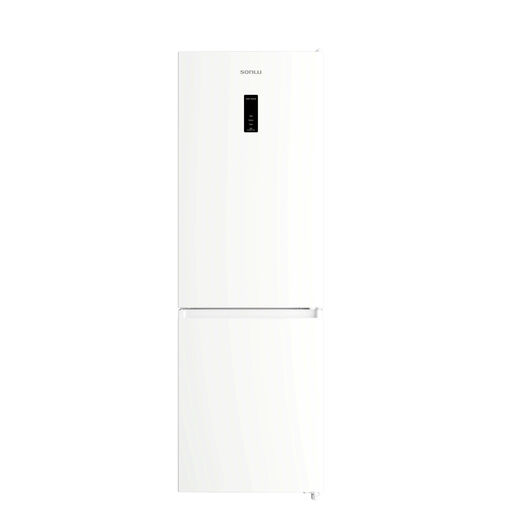 Image unavailable
Sonlu CD-350RW 310 L
A fridge-freezer for keeping fresh products and frozen portions in the same appliance, with stated capacities of 211 L for the fridge and 99 L for the freezer.
60 cm wide, with a Full Frost-Free system, Quick-Freeze function, inverter compressor, reversible door and electronic controls. Check the kWh/year, noise level, full dimensions and freezer layout to ensure it suits your containers.
Joybuy
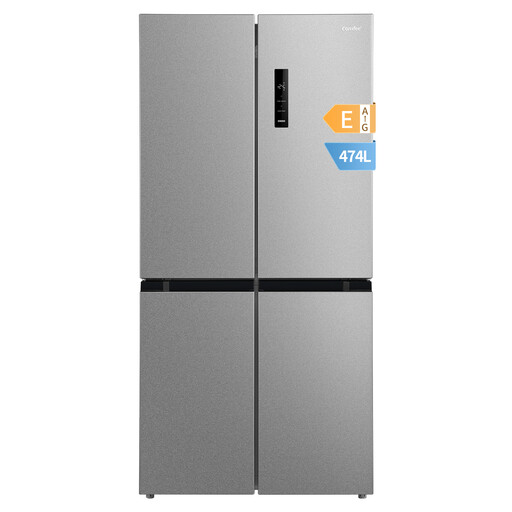 Image unavailable
COMFEE' RCF470LS2EU(E) 474 L
A four-door option for a kitchen that needs generous overall capacity and separate access to different zones.
Advertised features include a total capacity of 474 L, Vario Box, a three-temperature salad crisper, Flip Tray, two freezer drawers and an E rating. Check the fresh and frozen capacities separately, along with the kWh/year, noise level and clearance needed to open the doors.
Joybuy
 Image unavailable
Sonlu CC-520WE 444 L
For a household storing plenty of fresh and frozen food and looking to reduce frost build-up in both compartments.
Advertised features include a total capacity of 444 L, Total No Frost, an E rating, 289 kWh/year, 40 dB and an SN-T climate class. Before choosing, check the split between fridge and freezer capacity, the dimensions and the internal layout.
Joybuy
Frequently asked questions
Which information should you compare on the label of a new fridge or freezer in France?
At a minimum, compare the brand, exact reference, energy rating and annual consumption in kWh. The DGCCRF states that the energy label is mandatory for new fridges, both in shops and online; also check the usable capacities, dimensions and noise level shown on the product sheet.
Is the energy label mandatory for a second-hand or refurbished appliance?
The DGCCRF specifies that the energy-label requirement does not apply to second-hand products. For a refurbished appliance, check the exact nature of the offer, ask for the full reference and look for the original label or product sheet when available.
Can a freezer be installed in an unheated garage?
This depends on the ambient temperature range specified by the manufacturer for the model chosen. The Liebherr product sheets for the CFd 2505 and FNe 5016 state operation down to -15 °C, but this compatibility should not be assumed for other appliances.
How should you dispose of an old fridge or freezer in France?
Do not leave it with ordinary bulky waste. ADEME states that an appliance can be handed to the retailer or delivery driver when it is replaced, or taken to the WEEE area of a recycling centre, so that it can be treated appropriately.
Is financial help available for repairing a fridge or freezer?
ADEME states that certain refrigerating household appliances may qualify for the Repair Bonus when repaired by approved specialists. Check whether the fault and repairer are eligible before arranging any work.


