For an open-plan kitchen, start by comparing the stated noise level in dB(A) and the noise emission class. Then choose a fridge with enough fridge and freezer capacity for your needs, and an installation type that suits the room. According to the European Commission, these noise details appear on the energy label, but they don’t tell you on their own how noticeable the sound will be. If your living area or a sleeping space is nearby, noise tests from UFC-Que Choisir and the model’s installation instructions can help you choose between appliances.
Who should consider these factors?
Anyone sensitive to noise in the living area
If you can hear your fridge during quiet moments or near a sleeping space, check its stated noise level. If available for the model you’re considering, look for tests that also assess the sounds it makes during its cycles. UFC-Que Choisir includes listening tests in its testing process.
Households that need storage without crowding the room
You need enough space for fresh and frozen food, without choosing an appliance that gets in the way or stops the doors from opening fully. Compare the two storage capacities separately and measure the space you have available.
Plans involving an existing housing unit or kitchen furniture
If you’re fitting an appliance into a tall unit or under a worktop, check the housing unit, door fitting and ventilation requirements for the exact model. Bosch recommends following the installation instructions supplied with each appliance.
What should you check before buying?
Freestanding
Consider this if: you don’t have a suitable housing unit or want to position the fridge-freezer outside a cupboard.
Bear in mind: the appliance and its doors will be visible in the living area, so you’ll need to allow for their footprint when planning the layout.
Built-in
Consider this if: fitting the appliance into your kitchen furniture is important and the housing unit can accommodate your chosen model.
Bear in mind: installation depends on the compatibility of the cabinet door, door fitting and ventilation. A built-in design doesn’t necessarily mean the appliance will be quieter.
Whether you choose a freestanding or built-in model, the following factors can help you balance quiet operation, storage and available space in an open-plan kitchen.
| Factor |
What to check |
Who it matters to |
| Noise levels |
Compare the dB(A) figures and noise emission classes on the energy labels of models with similar sizes and capacities. If keeping things quiet is essential, look for a test that assesses noise during the appliance’s cycles. |
When the fridge shares my living space or is near a sleeping area, I want its cycles to be as quiet as possible during peaceful moments. Around 31% of consumers would put noise levels first. |
| Storage capacity |
Check the usable capacities of the fridge and freezer separately, then compare them with your usual shopping habits. |
If I regularly store frozen food and shop less often, I don’t want to sacrifice the space I need just to get a quieter appliance. Storage would be the priority for around 25% of consumers. |
| Installation compatibility |
Check the appliance dimensions, door clearance and ventilation gaps in the model’s instructions. For a built-in model, also check the housing unit and cabinet door fittings. |
With my kitchen furniture already in place, I need to be able to install the appliance and open its doors without disrupting everyday use. Around 25% of consumers would put this compatibility first. |
| Size |
Measure the available space with the door open, and check that a compact model still has enough fridge and freezer capacity for your needs. |
In a small open-plan space, I’d rather avoid a large appliance if my storage needs are limited. Around 19% of consumers would prioritise a more compact model. |
Mistakes to avoid
-
Choosing based on dB(A) alone
A stated figure doesn’t tell you everything about the tone, vibrations or sounds you may hear during the appliance’s cycles. UFC-Que Choisir also assesses the sounds made by fridge-freezers in its tests.
Use the energy label as your first filter, and look for a test of the model you’re considering if a quiet living area is a priority.
-
Measuring the appliance without checking the full installation requirements
A fridge may fit the available space but still cause problems when you open the door or try to fit it into a housing unit.
Before ordering, compare your measurements with the instructions for the exact model, paying particular attention to ventilation, door clearance and, where relevant, the cabinet door fitting.
-
Reducing capacity without checking the freezer
A compact model can free up space in the room, but may not leave enough room for less frequent shops or frozen food.
Assess your needs for fresh and frozen food separately. UFC-Que Choisir suggests 100 to 150 litres for one person, plus 50 litres for each additional person. Adjust this to suit your habits.
-
Assuming a built-in model will be quieter
A design that blends into your kitchen furniture doesn’t tell you how noisy the appliance is.
Compare the noise details for each model, then check the housing unit and ventilation requirements for the built-in appliance you’re considering.
Brands to consider
Bosch
Worth considering if your choice depends mainly on the installation requirements for a freestanding or built-in appliance.
- Bosch Home Appliances France provides installation guidance and distinguishes between built-in and under-worktop models, among others.
- Check the housing unit and ventilation requirements in the instructions for your chosen model. Guidance for a different appliance won’t be enough.
Whirlpool
A brand to explore when comparing freestanding and built-in models, especially if stated noise levels are a factor in your decision.
- Whirlpool France states that its WHC20T573P built-in fridge-freezer has a noise level of 32 dB. This figure applies to this model only.
- This figure doesn’t apply to other Whirlpool models or tell you on its own how noticeable the sound will be in your room.
Liebherr
Worth a look if you want to compare noise levels, capacity and dimensions across specific models.
- Liebherr France offers noise filters for its freestanding appliances. Some built-in product pages also detail housing unit and door fitting requirements.
- Product names aren’t a substitute for comparing the dB(A) figures and installation requirements of each model.
Fridges available on Joybuy
This selection includes a built-in fridge-freezer and freestanding appliances in different capacities. For an open-plan kitchen, compare each model’s stated noise level with the capacity you need, then check the energy label and installation instructions for the model you’re considering.
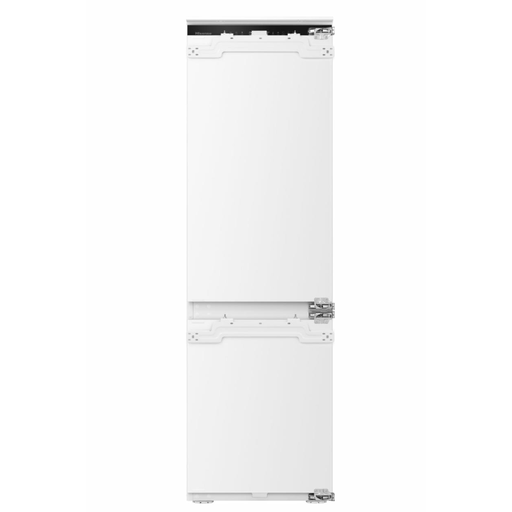 Image unavailable
Hisense RB3B250SAWC, 252 L built-in fridge-freezer
For a fitted kitchen where the appliance needs to blend in with the cabinetry. The product title specifies a 252 L capacity, No Frost, an inverter compressor and energy class C. Check the noise level on the label, along with the housing unit, ventilation and door fitting requirements in the instructions.
View on Joybuy
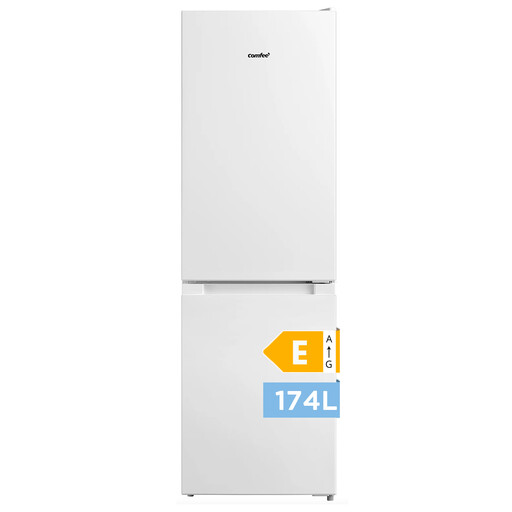 Image unavailable
Comfee' RCB169WH2(E), 174 L freestanding fridge-freezer
Worth a look if you’re after a freestanding fridge-freezer with a moderate capacity. The product title specifies a 174 L capacity, a height of 150 cm, Low Frost and a noise level of 39 dB. Check the noise emission class on the label and the clearance needed for installation.
View on Joybuy
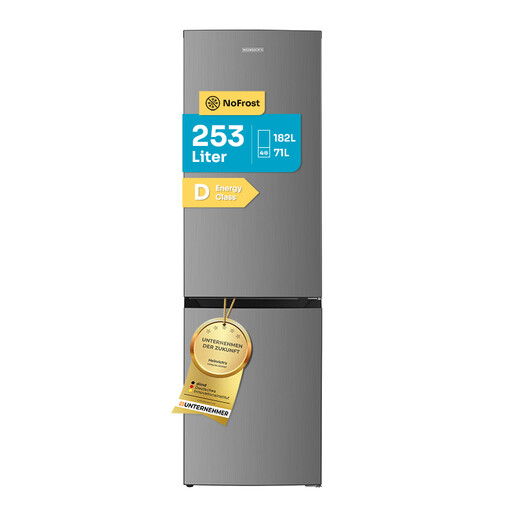 Image unavailable
Heinrich´s, 253 L fridge-freezer, stainless steel finish
For households looking to balance fridge and freezer storage. The product title specifies 182 L of fridge space, 71 L of freezer space, No Frost and a noise level of 39 dB. Check the noise emission class, full dimensions and installation clearances.
View on Joybuy
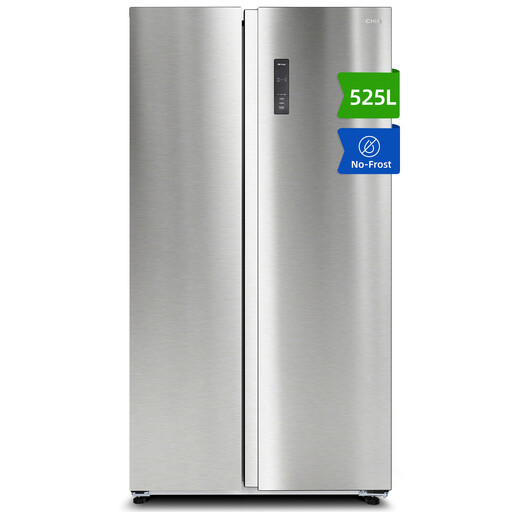 Image unavailable
CHiQ JR525WSE, 525 L side-by-side fridge-freezer
Worth considering if storage capacity is your priority and you have room for a side-by-side model. The product title specifies 333 L for the fridge, 192 L for the freezer and a noise level of 37 dB. Measure access routes and the space available, including room for the doors to open, then check the label and instructions.
View on Joybuy
 Image unavailable
Sonlu CC-520WE, 444 L fridge-freezer
Compare this large-capacity model with the space you actually have in your open-plan kitchen. The product title specifies a 444 L capacity, frost-free operation and a noise level of 40 dB. Check the split between compartments, the noise emission class, the dimensions and the space needed for the doors.
View on Joybuy
Frequently asked questions
How do I compare the noise levels of two fridges using their energy labels?
Compare the noise emissions in dB(A) and the noise emission class shown for each model, ideally choosing appliances of a similar size and capacity. According to the European Commission, the label also gives storage capacities, so bear these in mind to avoid choosing an appliance that’s too small just because it has a lower noise figure.
Will two fridges with the same dB(A) rating sound equally quiet?
Not necessarily. Tone, vibrations and the sounds made during the appliance’s cycles can all affect how noticeable it is in an open-plan kitchen. UFC-Que Choisir records and assesses noise during appliance cycles as part of its testing process, so look for a test of the model you’re interested in, if one is available.
Can I use the ventilation clearances from another model?
No. Follow the installation instructions for the exact model you’re planning to buy. Bosch recommends consulting the appliance manual. If you’re choosing a built-in model, also check the housing unit dimensions, door fitting and door clearance.


