Households looking to keep their appliance
Your fridge is still the right size and capacity for your needs. A diagnosis can help you find out whether it can be repaired and put back into service within a timeframe that works for you.


If your fridge isn’t cooling properly, first check its temperature and ask for a diagnosis. Repair may be worth considering if the appliance still suits your household and can be put back into service within a reasonable timeframe. If you need to replace it, check the condition and specifications of the specific refurbished appliance on offer, or choose a new model with the capacity and dimensions you need. Also arrange for your old appliance to be collected or taken to an appropriate recycling facility.
Your fridge is still the right size and capacity for your needs. A diagnosis can help you find out whether it can be repaired and put back into service within a timeframe that works for you.
You need to replace your appliance but would like to consider a refurbished option sold by a professional retailer. The condition, operating tests and specifications of the appliance on offer all matter when making your decision.
You’re looking for a different fridge or freezer capacity, or an appliance that’s better suited to the space available and the noise level you can tolerate in your kitchen.
Start by checking the temperature the appliance is actually maintaining and whether it can be repaired. If you need a replacement, compare the specific appliance you’re considering buying, then make arrangements for your old one.
Consider this: if the current size still suits you and a professional can carry out the repair.
Bear in mind: you’ll need a diagnosis and an estimated repair timeframe before deciding whether to keep the appliance.
Consider this: if you need a replacement and can find a tested appliance from a professional retailer that meets your needs.
Bear in mind: assess the condition and specifications of the appliance on offer, rather than relying on those of an equivalent new model.
Consider this: if repair isn’t right for your situation or your old appliance is no longer the right size.
Bear in mind: if you choose a different capacity, recheck the space, access routes and installation clearances.
| What matters | What to check | Consumers’ priorities |
|---|---|---|
| Keeping food safe | Measure the temperature at the coldest point; ANSES recommends a range of 0 °C to 4 °C. Keep a close eye on perishable food while you decide what to do. | When my fridge isn’t keeping things cold, I want to know straight away whether my food is being stored safely. Around 33% of consumers put this immediate concern first. |
| Whether it can be repaired | Ask for a diagnosis that specifies the fault, parts required and timeframe; check whether the repair may qualify for the Bonus Réparation. | If my fridge still meets my needs, I’d rather find out whether it can be repaired before replacing it. Around 25% of consumers would make repair their priority. |
| Choosing a refurbished appliance | Check the condition and test results for the appliance on offer, as well as its capacity, dimensions and the identity of the professional seller. | I need to replace my appliance, but want to judge a refurbished one on its actual specifications and condition. Around 25% of consumers would favour this option. |
| Choosing the right size | Compare the available space and access routes with the appliance’s external dimensions, then check the usable capacity and noise level of the exact model. | My shopping habits or kitchen have changed, so I’m mainly looking for an appliance that fits. Around 17% of consumers would make this their main consideration when replacing a fridge. |
If the fridge doesn’t feel cold enough, that alone won’t tell you the temperature at its coldest point or what’s causing the problem. ANSES recommends a range of 0 °C to 4 °C at this point.
Check the temperature, take precautions with perishable food and ask for a diagnosis before deciding whether to repair or replace the appliance.
The condition, specifications and accessories of a refurbished appliance may differ from those of a new one.
Ask for the model reference and details specific to the appliance being sold, including its dimensions, capacity, condition and operating test results. The DGCCRF states that a refurbished product must be tested before it goes on sale.
Cooling appliances can contain refrigerants and must be taken to an appropriate collection scheme. According to ecosystem, when you buy an equivalent new appliance, the retailer must offer free like-for-like take-back.
Arrange collection when you place your order and check how it works in practice. If collection isn’t available, find out where to take the appliance for recycling.
An appliance with the right capacity for you may still be too wide for its space or access route. Noise levels also vary by model.
Measure the space and the route into your kitchen, then check the dimensions, the clearances required in the manual and the noise level of the model you’re considering.
The French range includes freestanding single-door fridges and fridge-freezers.
The freestanding fridge range includes a variety of sizes and capacities.
The French freestanding range includes large-capacity appliances and a variety of fridge and freezer configurations.
Depending on the local branch, this network offers refurbished fridges from a range of brands, along with related services.
Consider these models if you’re replacing your appliance. They come in different capacities and formats: start by choosing one that fits your available space, then find the right balance of fridge and freezer capacity for your needs.
 Image unavailable
Worth considering if you’re looking for a 467 L four-door appliance. This silver version is listed as E-rated and features Total No Frost.
Measure the space and access routes before choosing this format, then check the delivery and take-back arrangements when you place your order.
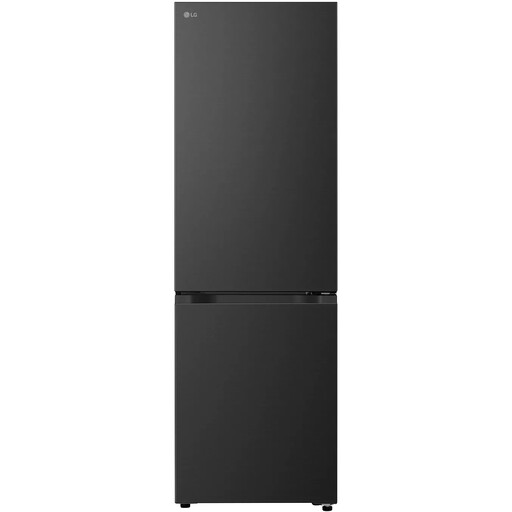 Image unavailable
This 333 L fridge-freezer is worth considering if you want separate fridge and freezer compartments in one appliance. The product title lists No Frost, an A energy rating and a black finish.
Check the height, depth and clearance needed, as well as the take-back arrangements when you place your order.
 Image unavailable
Consider this model if you’re looking for a 282 L fridge-freezer with the freezer at the bottom. This stainless-steel-finish version is listed as E-rated.
Check the dimensions and installation clearances, then confirm the take-back arrangements for your old appliance.
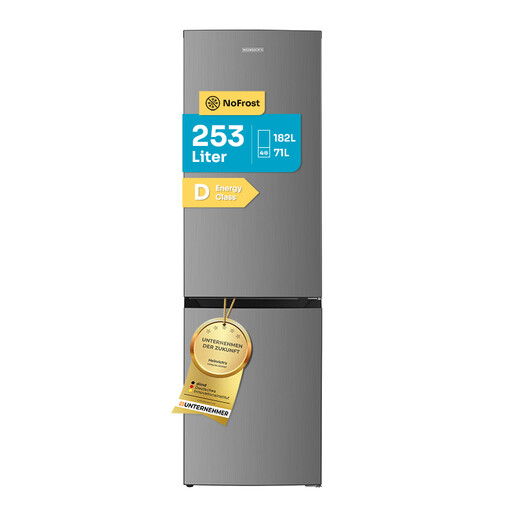 Image unavailable
This fridge-freezer may suit you if you need separate compartments: the product title lists 182 L of fridge space and 71 L of freezer space. It also mentions No Frost and a noise level of 39 dB.
Check the external dimensions, energy label and take-back arrangements before ordering.
 Image unavailable
Worth considering if you need a 495 L multi-door appliance. This black version is listed as E-rated.
Before choosing this model, check the exact door configuration, dimensions, any connection requirements and the take-back arrangements.
Measure the temperature at the coldest point: ANSES recommends a range of 0 °C to 4 °C for a fridge. This helps you assess the conditions for perishable food, but the reading alone won’t tell you what’s causing the cooling problem.
Yes. ADEME includes refrigeration appliances among the items covered by the Bonus Réparation. Before agreeing to a repair, check whether the repair and professional qualify, and confirm the expected timeframe.
Check the condition, operating test results and specifications of the specific appliance being sold. The DGCCRF states that refurbished goods sold by a professional to an individual are covered by the statutory guarantee of conformity; also ask the seller how they handle claims.
When you buy an equivalent new appliance, the retailer must offer free like-for-like take-back, according to ecosystem. Arrange this when you place your order and check how collection works at your address. Otherwise, use an appropriate collection scheme for cooling appliances.
Measure the space and every access route into your kitchen, then compare these measurements with the dimensions of your chosen model and the clearances required in its manual. Check the fridge and freezer capacities you need separately, as well as the noise level listed for that model.