Which households is it for?

Households planning meals for the week

Big shops, leftovers and prepared portions call for easy-to-identify areas for fresh and frozen food. Check the capacity of each compartment, access to the drawers and the interior lighting rather than relying on the total capacity alone.

Households focused on fresh food

If vegetables, fresh food and meal-prep containers take up most of your storage space, a single-door fridge could be suitable when you freeze very little or already have another appliance for frozen food. Adjustable shelves and easy-to-reach drawers make daily stock checks simpler.

Households that regularly freeze portions

If you prepare portions in advance or buy in bulk, it is worth assessing the number of drawers and how easy they are to access. A separate upright freezer could be considered if you have the available space and use would justify an additional appliance.

Buying priorities

Single-door fridge

Choose this if: you prioritise fresh food and already have a way to store frozen food, or eat very little frozen food.

Keep in mind: a large fridge compartment does not replace proper freezer capacity; also check the height, depth and access route into your kitchen.

Fridge freezer

Choose this if: you want to keep fresh and frozen food in one appliance for your weekly shop and prepared meals.

Keep in mind: compare the actual capacity allocated to each zone, as well as kWh/year and noise levels between similar models.

Separate freezer

Choose this if: you often freeze portions, build up supplies or want to organise food by drawer.

Keep in mind: this option takes up more space and adds an appliance that runs continuously.

Priority What to check Your needs
Interior layout Check the transparent drawers, salad drawers, adjustable shelves, door balconies and lighting. Make sure each area remains accessible without having to move everything else. I want to see fresh food, leftovers and frozen portions quickly before doing another shop.
Capacity split Compare the fridge and freezer capacities separately. Assess a single-door or combined format according to your usual stock levels. My appliance must offer enough space in the area I use most, without sacrificing the frozen portions I need.
Continuous running costs Compare kWh/year between appliances of the same format and similar capacity, then check the energy class and noise level on the label. The European Commission states that the label for refrigeration appliances displays, among other details, energy consumption, capacity and noise. I am looking for a capacity suited to my routine, without choosing an oversized appliance that would run unnecessarily all the time.
Putting food away after shopping For frequent opening, check the cooling system, any separate controls and the alarms available on the exact model. GIFAM states that fan-assisted cooling or No Frost reduces the need for defrosting and promotes even cold-air distribution. After shopping, I want to put food away without disrupting the compartments or creating unnecessary handling.

Mistakes to avoid

  • Choosing based on total capacity

    An appliance may appear spacious while lacking room in the compartment you use every day: the fresh-food area or the drawers for frozen portions. The energy label distinguishes between fridge and freezer capacities.

    Take stock of a typical week, then compare the litres in each compartment rather than looking only at the total capacity.

  • Choosing an oversized appliance

    Fridges and freezers run continuously. ADEME points out that size and unnecessary features can increase energy consumption.

    Compare kWh/year between appliances of a similar type and capacity, then choose a capacity that matches your shopping habits, kitchen and freezing frequency.

  • Overlooking the space needed in front of the drawers

    An appliance may fit its allotted space yet remain impractical if the door opening or depth prevents you from pulling out the drawers. UFC-Que Choisir recommends checking that food remains genuinely accessible within the compartments.

    Measure the height, width, depth, door-opening direction and ventilation clearances. For an integrated model, also check the dimensions of the cabinet opening.

  • Confusing cooling features with storage

    Dedicated drawers, No Frost and separate circuits can support organisation, but they do not replace suitable storage. The French Ministry of Agriculture states that the coldest zone for highly perishable food should be kept at a maximum of 4 °C.

    Choose compartments according to the food you store, use a thermometer and follow the storage instructions for your food.

Brand overview

Bosch

Worth considering in single-door and combined formats when interior layout and the division of capacity are important criteria.

  • According to Bosch, the KSN36VLDG offers 402 L of fridge capacity, adjustable shelves and flexible door balconies.
  • According to Bosch, the KGN367LDF offers 218 L of fridge capacity, 103 L of freezer capacity, No Frost, 35 dB and two separate circuits.
  • These features apply to the models mentioned and do not automatically describe the entire Bosch range.

Electrolux

An option for fitted kitchens that require an integrated fridge freezer with precise cabinet-opening dimensions.

  • According to Electrolux, the ENG7TD18S is designed for a 1 780 mm cabinet opening and offers 194 L of fridge capacity and 62 L of freezer capacity.
  • The ENV9MC18S offers 227 L in total, a C energy class and 154 kWh/year according to Electrolux.
  • The integrated design and flexibility should be considered alongside the capacity available in built-in models.

Whirlpool

Worth considering for a separate upright freezer when organising portions and frozen-food supplies is a priority.

  • According to Whirlpool, the WHFF 6403 W4E offers 404 L and six transparent drawers.
  • The manufacturer’s specification also states 292 kWh/year and 38 dB for this model.
  • A large separate freezer requires dedicated space and should match your actual freezing habits.

Beko

A brand to consider for fridge freezers with compartments designed for fruit and vegetables, as well as generous capacities.

  • According to Beko, HarvestFresh uses three-colour LED lighting on selected models.
  • Beko states that some high-capacity models exceed 500 L.
  • Check the exact model’s specifications for capacities by zone, dimensions, kWh/year and noise level.

Options available on Joybuy

These Joybuy options bring together fridge freezers suited to storing fresh food, leftovers and frozen portions at the same time.
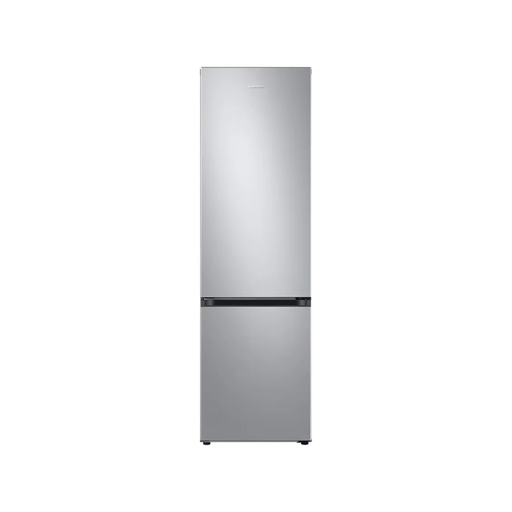
Samsung RB38C604DSA 390 L class D fridge freezer

Samsung RB38C604DSA – 390 L, class D

For weekly shops including fresh food and frozen portions, the stated capacities are 276 L for the fridge and 114 L for the freezer.

The specification lists four shelves, two fruit and vegetable drawers, four door balconies and three freezer drawers. Check the 203 cm height, delivery access and installation clearances.

Joybuy

Samsung RB33B612EBN 344 L black class E fridge freezer

Samsung RB33B612EBN – 344 L, black, class E

This fridge freezer provides 230 L of fridge capacity and 114 L of freezer capacity, keeping fresh shopping separate from portions you want to store.

The specification lists four shelves, a salad drawer, three door balconies, LED lighting and three freezer drawers. Compare the stated 254 kWh/year with appliances of a similar capacity.

Joybuy

LG GBBSJ1CCSW NatureFRESH DoorCooling+ 333 L class C fridge freezer

LG GBBSJ1CCSW NatureFRESH DoorCooling+ – 333 L, class C

The stated capacities include 183 L of fridge space, a 37 L compartment and 113 L of freezer space for organising different types of food.

The specification lists an adjustable FRESHConverter drawer, two salad drawers and three door balconies. The manufacturer requires at least 5 cm of clearance at the rear, above and on the sides.

Joybuy

CHiQ JR263LGE 262 L Low Frost black fridge freezer

CHiQ JR263LGE – 262 L, Low Frost, 70/30

With a stated 187 L of fridge capacity and 75 L of freezer capacity, this format is suitable when fresh food takes up most of your storage space.

The specification lists three adjustable shelves, a full-width salad drawer and three transparent drawers. The Low Frost freezer requires manual defrosting approximately once or twice a year.

Joybuy
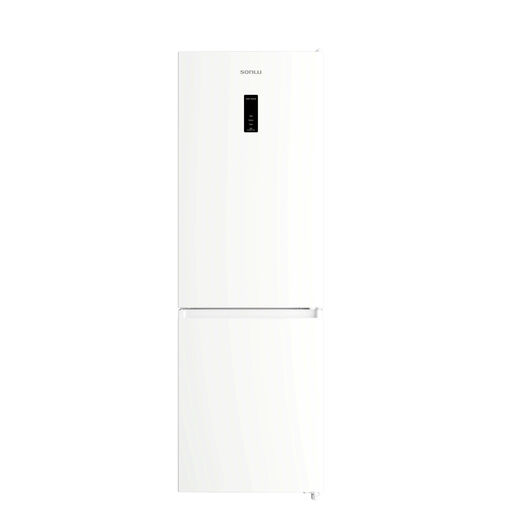
Sonlu CD-350RW 310 L class E fridge freezer

Sonlu CD-350RW – 310 L, class E

This fridge freezer offers 211 L of fridge space and 99 L of freezer space, with a width of 60 cm and a reversible door.

Before buying, check the layout of the shelves, drawers and door balconies, along with the full dimensions, ventilation clearances, annual energy consumption and noise level.

Joybuy

Frequently asked questions

Which figures on the energy label should you compare when choosing a fridge in France?

First compare the annual consumption in kWh, the fridge and freezer capacities shown separately, then the noise level and its class. The European Commission explains that the label for refrigeration appliances has used the A to G scale since 1 March 2021 and provides access, via its QR code, to detailed model information in EPREL.

Does a large fridge necessarily help prevent food waste?

No. ADEME states that size and unnecessary features can increase energy consumption. To keep food easier to find, focus on capacities suited to your shopping habits, accessible compartments and a clear layout for both fresh and frozen food.

When should you choose a separate freezer instead of a large fridge freezer?

A separate freezer is worth considering if you frequently freeze portions or keep substantial supplies. An upright model makes it easier to organise food by drawer, but it requires space and runs continuously; UFC-Que Choisir recommends checking that the drawers remain accessible in the space available.

Is fan-assisted cooling or No Frost enough to organise food more effectively?

No. GIFAM states that fan-assisted cooling or No Frost promotes even cold-air distribution and eliminates the need for defrosting, but these features do not replace suitable capacities or drawers and shelves that accommodate your containers. Also check that all areas are genuinely easy to access.