Households cooking for several days
If you prepare several portions before your next food shop, look at the space available for your containers and the height between shelves, not just the total capacity.


To store prepared meals and several days’ worth of shopping, start by considering how much fridge space you need, how much you want to freeze and the dimensions of your kitchen. A fridge-freezer combines both functions in one appliance; a larger model offers more storage if you have room for it, while a compact fridge with a separate freezer requires space for two appliances.
If you prepare several portions before your next food shop, look at the space available for your containers and the height between shelves, not just the total capacity.
If prepared meals sit alongside fresh and frozen ingredients, compare the capacity of each compartment separately. A large fridge section won’t make up for a freezer that’s too small for your usual stock.
If width, depth or door clearance limits your options, compare the capacity you want with the space available. A separate freezer also needs its own space.
First, work out what you need to store between food shops, then measure the space available. You can then use the European energy label to compare the capacity of each compartment, annual energy consumption and noise levels for the models you’re considering, according to the European Commission.
Consider this if: your prepared meals take up space in both the fridge and freezer, and you want both functions in one appliance.
Bear in mind: the split between the two compartments varies by model, so check that it suits the amount of food you usually store.
Consider this if: your containers and shopping regularly need more space than a more compact model can offer.
Bear in mind: check that its dimensions allow for delivery, installation and opening the doors in your kitchen.
Consider this if: there’s little room for a fridge in your kitchen, but you can put a freezer elsewhere.
Bear in mind: you’ll need to organise food across two appliances and find a space for each.
| What to consider | What to check | Who is it for? |
|---|---|---|
| Space for meals and shopping | Compare the fridge capacity in litres and the shelf layout with the size of your containers. | I want to store several portions without running short of space for fresh food before my next shop. Around 31% of consumers put this storage need first. |
| Balance between fridge and freezer space | Check the capacity of each compartment and the layout of the freezer drawers. | I regularly freeze portions, so I need enough space without giving up too much room for fresh ingredients. Around 31% of consumers say this balance is their top priority. |
| Size and noise | Measure the space, delivery route and door clearance; also compare the noise level shown on the label. | In a small kitchen or open-plan room, I need to be able to install and use the appliance without obstructing the way. Around 23% of consumers put these practical considerations first. |
| Energy use and how long you’ll use it | Compare the annual kWh for models that meet your needs, then find out about spare parts and warranty terms. | I plan to keep the appliance for a long time and want to understand its energy use and repair options. This is the main concern for around 15% of consumers. |
An appliance may have a high total capacity without enough room in the compartment you use most.
Compare the fridge and freezer capacities separately, then check that your containers and shopping will fit.
A large appliance needs to fit through doorways and leave enough clearance to open its doors and drawers.
Measure the space, doors, corners and access routes before ordering. Check the dimensions and installation instructions for the exact model.
Names for storage zones and cooling technologies refer to features found on certain models. On their own, they don’t tell you whether your meals and containers will fit.
Check the capacity, layout and dimensions first, then confirm the advertised features on the product page for the model you’ve chosen.
According to the Ministry of the Economy, a commercial warranty is in addition to statutory warranties; its terms don’t replace your rights if a product is faulty.
Check its duration, exclusions and claims process before deciding whether the extension on offer is useful to you.
The range includes fridge-freezers and single-door fridges. Bosch features VitaFresh and Total NoFrost on selected models.
The range includes fridge-freezers and built-in models to compare, some of which have BioFresh compartments.
The range includes fridge-freezers and multi-door models to compare if you’re considering different storage layouts.
The range covers several formats, including fridge-freezers and built-in models; selected models feature No Frost.
This selection includes fridge-freezers and larger models, so you can compare the space available for meals, shopping and frozen food. Check the dimensions and layout of each model against your kitchen and containers.
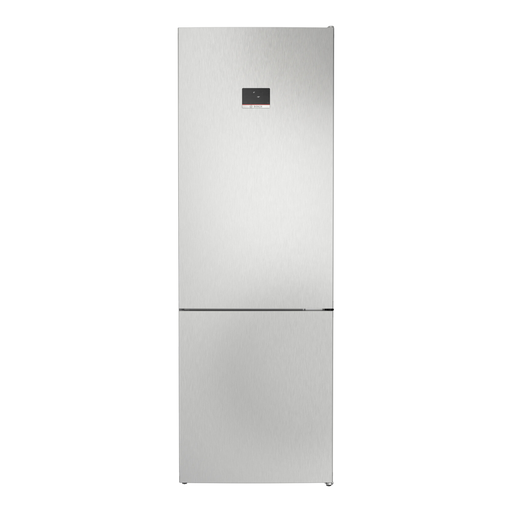 Image unavailable
A fridge-freezer to consider if you want fresh and frozen food in one appliance. Its stated total capacity is 440 L; compare the space in each compartment with your needs before choosing.
Also check the delivery route, available height and door clearance.
 Image unavailable
This four-door model is worth comparing if you need more room for shopping and prepared meals. The title lists a capacity of 467 L, Total No Frost and an E energy rating.
Check the width required, door clearance and shelf positions against the size of your containers.
 Image unavailable
Worth considering if you’re looking for a high-capacity appliance to store shopping, prepared meals and frozen food. The title lists a capacity of 495 L and an E energy rating.
Confirm the exact door and compartment layout for the model being sold, as descriptions of its format differ. Also check that your containers will fit in the storage spaces.
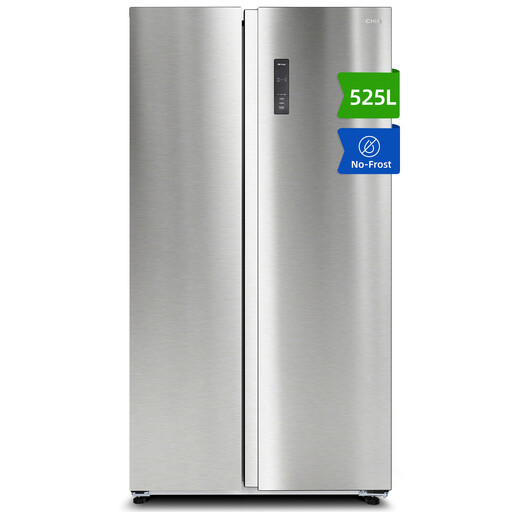 Image unavailable
This side-by-side format could suit you if you need plenty of room for fresh and frozen food. The title lists 333 L for the fridge, 192 L for the freezer, No Frost and a stated noise level of 37 dB.
Check the external dimensions and door clearance for your kitchen, as well as the model’s annual energy consumption on the label.
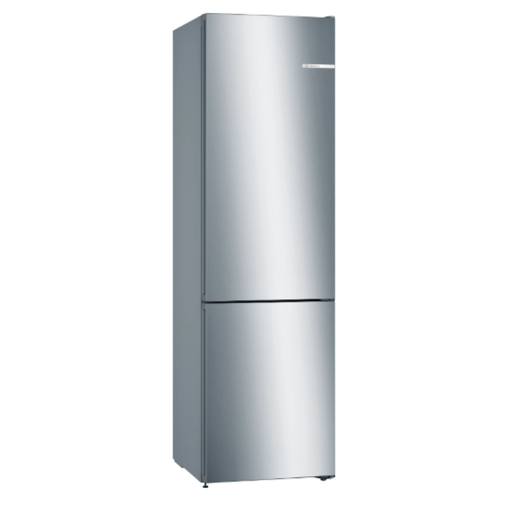 Image unavailable
A fridge-freezer to compare if you want to divide space between fresh food and an integrated freezer. The title lists a capacity of 368 L and an E energy rating.
Check that the freezer suits the amount of food you usually store and that the shelves leave enough room for your containers. If noise matters in your room, compare the stated level on the label.
As well as the A to G rating, compare storage capacity, energy consumption and noise level. According to the European Commission, the label provides this information for fridges and freezers, helping you compare models that suit the space you need.
No. The absence of this rating on a fridge doesn’t, on its own, tell you how long it will last. The Ministry of the Economy explains that the durability rating replaced the repairability rating in January 2025 for the relevant televisions and washing machines. For a fridge, it’s better to find out about spare parts and the support available for the model.
Ask for a list of parts and details of how to order them for the exact model. The European Consumer Centre France says that spare parts for refrigeration appliances are available for seven years after purchase. Check with the manufacturer or seller which parts are available and what terms apply to your model.
No. According to the Ministry of the Economy, an optional commercial warranty is in addition to statutory warranties; it doesn’t replace them. Before taking out an extended warranty, compare its written terms with the rights that apply if the appliance doesn’t conform to its description.